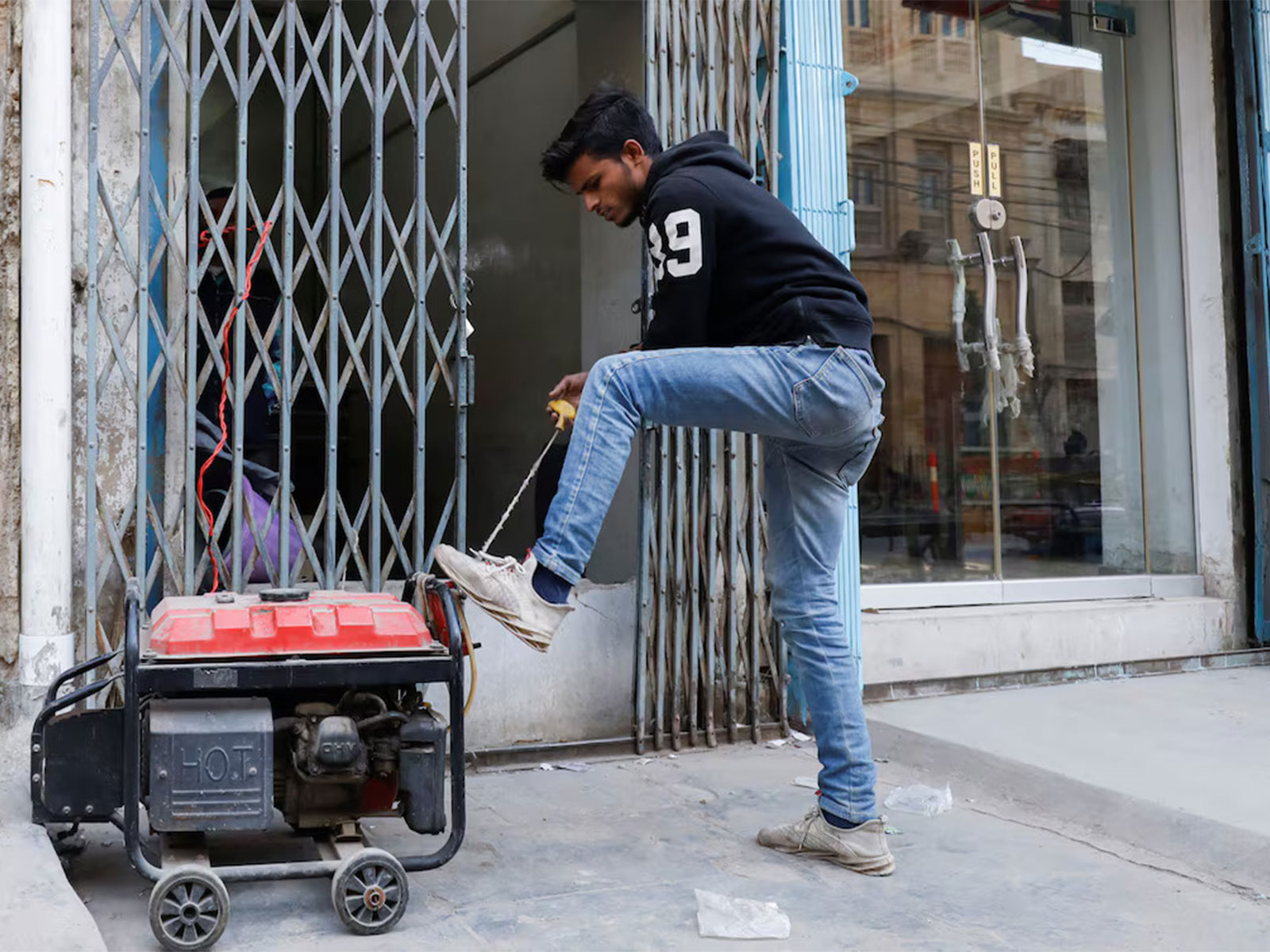
Lahore [Pakistan], August 24 (ANI): Amid persisting hot and humid weather conditions, Pakistan’s crippling power sector crisis has escalated as severe power tripping, along with forced, scheduled, and unscheduled load-shedding, continues to severely disrupt the daily lives of consumers, Dawn reported.
On the other hand, hours-long shutdowns, particularly on Sundays under the pretext of “repair and maintenance”, are also spoiling the leisure time for residents of various localities in Lahore.
“For the last couple of days, worst power tripping and unscheduled load-shedding has been continuing in our area, especially in the evening and night hours. But, there is literally no one to listen to the gripes of the consumers and resolve their issue despite such a hot and humid weather,” deplored a Johar Town resident near Ayub Chowk, as quoted by Dawn.
“Besides, scheduled load-shedding for a couple of hours and power shutdowns for over six hours, on the pretext of ‘maintenance’ on every Sunday, are also being observed. Previously, such shutdowns used to be observed on any working day,” the resident added, criticising the Lahore Electric Supply Company (LESCO) administration for taking the least interest in resolving the severe hardships faced by citizens.
Another resident from Khayaban-e-Jinnah highlighted the “pathetic” performance of LESCO, noting that persistent brownouts over recent days have caused damage to household electrical appliances. The consumer also complained of poor service delivery and harassment by company officials who aggressively force residents to pay their utility bills despite failing to provide reliable power supply, according to Dawn.
Urban and sub-urban areas experiencing frequent forced load-shedding, sudden tripping, and system failures include Johar Town, Ichhra, Old Anarkali, Rehmanpura, Gulberg, Multan Road, Thokar Niaz Baig, Chuburji, as well as localities near Batapur, Shahdara, and Manga.
“Sudden faults are also disturbing us badly. A couple of days ago, our area transformer went out of order due to the overloaded system, leaving many houses without light for almost 18 hours or so. The issue was finally resolved after we approached someone influential,” a resident maintained, exposing how basic public utility management in the country relies heavily on political influence and cronyism.
Speaking to Dawn, a LESCO official cited an overloaded grid infrastructure and systemic electricity shortfalls, particularly during peak evening and night hours, as the primary causes for the widespread power breakdowns.
“In fact, the use of air conditioners has increased manifold during the evening and night hours, increasing the power demand of the LESCO. This leaves no option for the company to observe forced load-shedding,” the official argued, illustrating the power distributor’s inability to manage basic consumer demand load.
The official further noted that during daytime hours, rooftop solar power installations by individual consumers temporarily prevent total grid collapse. “But as soon as the use of solar power ends in the evening and consumers switch to LESCO system, the system becomes overloaded, resulting in forced load-shedding,” he stated.
Another LESCO official, speaking on the condition of anonymity, acknowledged that extensive load-shedding in areas such as Batapur, Manga, and rural pockets of the Kasur district stems directly from the company’s punitive “high-loss feeders policy”. Under this policy, entire communities face collective punitive blackouts if localised power theft is detected, as reported by Dawn.
“The areas where power theft is frequent fall under ‘loss-making feeders’. So under the policy, such areas must face load-shedding,” the official explained. “However, the LESCO must ensure availability of the best possible services in the areas where the consumers are paying their bills regularly and are not involved in power theft or other illegalities.”
Exposing the lack of public accountability and management failure within Pakistan’s power sector, both the LESCO Chief Executive Officer (CEO) and the official spokesperson remained completely unavailable to respond to questions regarding the crisis.
Meanwhile, the LESCO administration claimed it was continuing operations against widespread electricity theft and non-payment. According to an official press release, LESCO teams disconnected six transformers and seven electricity meters while arresting three individuals during anti-theft operations in the Kasur Circle, specifically across the Jambar Kalan and Kanganpur subdivisions. The teams also recovered PKR 200,000 in outstanding dues from five defaulters, alongside seizing PVC cables. (ANI)
Related reading