New York [US], October 21 (ANI): India has asserted that human rights should not be used as an instrument of political pressure or selective country targeting, while calling for accountability, transparency and cooperation to address enforced disappearances at the United Nations General Assembly’s Third Committee.
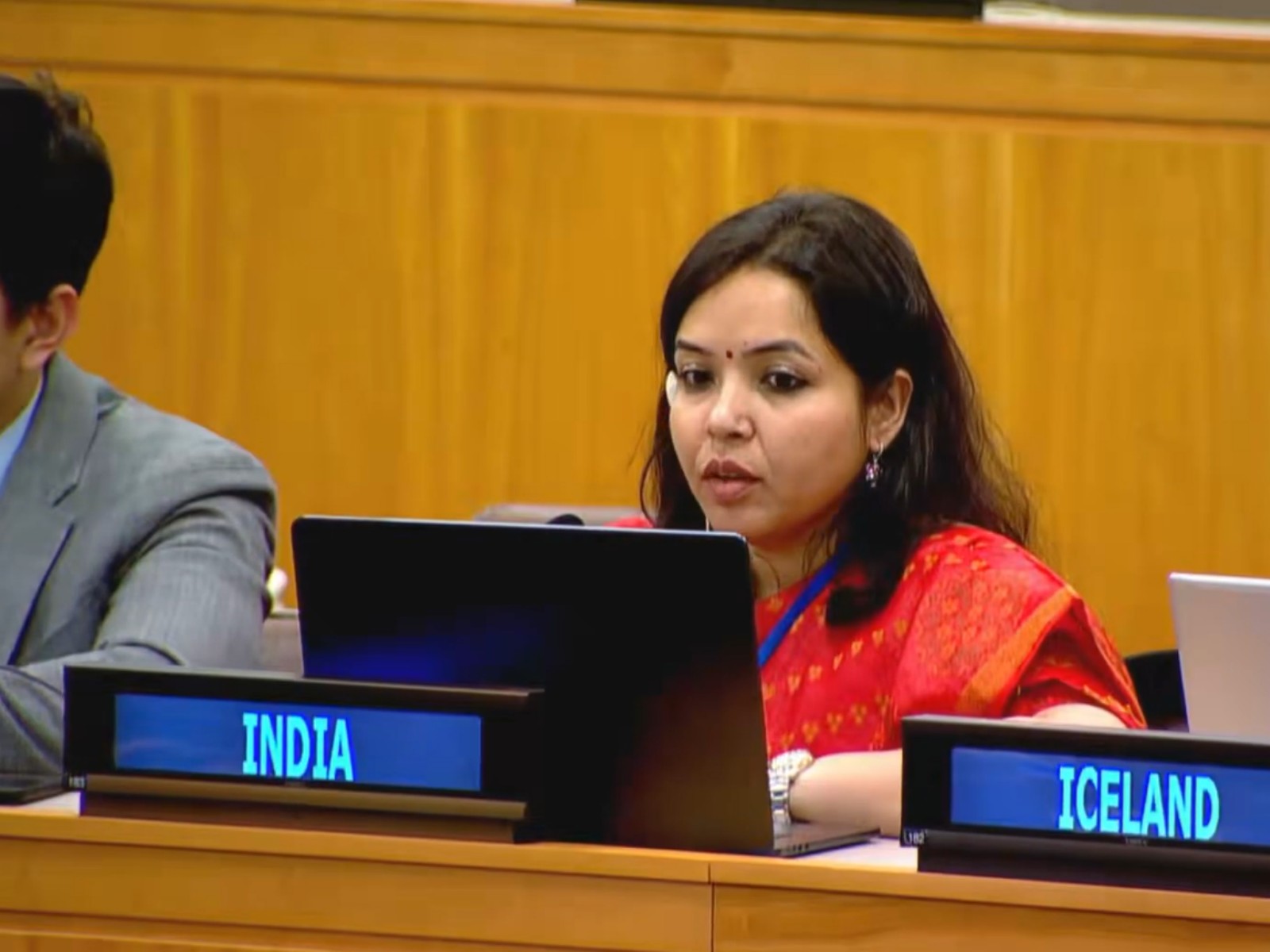
Delivering India’s statement on the agenda item concerning the Working Group on Enforced or Involuntary Disappearances, Ministry of External Affairs Deputy Secretary Barkha Tamrakar highlighted the constitutional and institutional safeguards available in India to address allegations of human rights violations.
In a post on X on Monday (local time), the Permanent Mission of India to the UN said Tamrakar reaffirmed the role of Article 21 of the Constitution, judicial remedies, human rights commissions, independent media and civil society in ensuring transparency and providing avenues for redressal.
“Human rights not to be used as an instrument of political pressure or selective country targeting,” Tamrakar said in her statement.
She described India as a vibrant democracy anchored in the rule of law and emphasised that constitutional provisions and independent institutions provided safeguards against alleged enforced disappearances.
“Article 21 of our Constitution guarantees the right to life and personal liberty. Our independent judiciary is fully empowered to issue the writs of habeas corpus, thus providing a strong and readily accessible safeguard against any alleged disappearances,” she said.
Tamrakar further stated that law enforcement authorities in India were bound to operate within the framework of the law. She cited the National Human Rights Commission (NHRC), State Human Rights Commissions and the Right to Information Act as mechanisms that strengthen accountability and provide avenues for complaints and redressal.
“Enforced disappearances are clear violations of human rights and deeply affect the families of victims. We call upon States to eradicate instances of this grave human rights violation through preventive measures, accountability, and the protection of civil society,” she said.
India also noted that it had signed the International Convention for the Protection of All Persons from Enforced Disappearance and reiterated its engagement with international human rights mechanisms.
However, Tamrakar stressed that such engagement must be guided by dialogue, consultation, cooperation, non-selectivity and transparency.
She urged delegations to accurately reflect the findings of reports and cautioned against concluding unverified allegations or incomplete statistics.
“India remains prepared to clarify specific properly documented cases through established channels,” she said, adding that India opposed attempts to portray the country negatively on the basis of unverified claims or reports containing no country-specific observations on India.
Separately, reports of alleged enforced disappearances in Pakistan’s Balochistan province have continued to raise concerns among rights groups and families of missing persons. According to The Balochistan Post, two men were reportedly detained from Mastung and Gwadar districts, while two previously missing men returned home in October.
The report said 26-year-old mechanic Muhammad Asif was allegedly taken from his home in Mastung on October 12, while 19-year-old student Rahim Lal was reportedly detained from Pasni in Gwadar district on June 27. Their whereabouts were not known, according to the publication.
Meanwhile, Mumtaz Baloch, who had allegedly gone missing on June 5, was reportedly recovered in Quetta on October 16. Abdul Ghaffar, who was allegedly taken away on October 9, was reportedly found in Uthal on October 15.
The developments came amid a continuing protest by the Voice for Baloch Missing Persons outside the Quetta Press Club. Separately, the Baloch Yakjehti Committee documented 507 alleged enforced disappearances in Balochistan between January and June 2026, while the Human Rights Council of Balochistan reported 87 cases in August, according to the information provided by the respective groups. (ANI)
Related reading