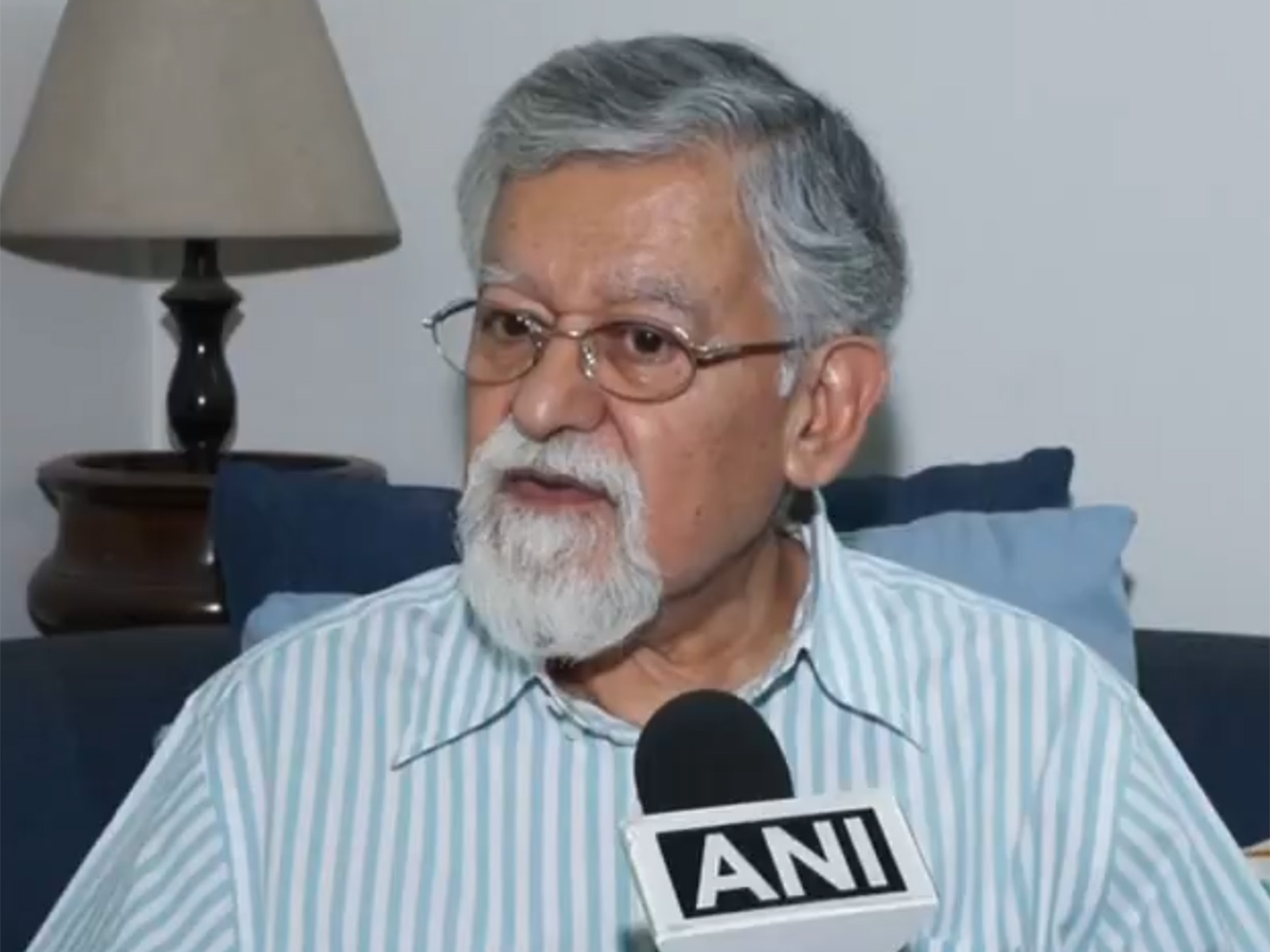
New Delhi [India], May 17 (ANI): Former NITI Aayog member Arvind Virmani on Sunday said India needs major process reforms, skill development, and stronger support for fast-growing exporters to help Micro, Small and Medium Enterprises (MSMEs) become a key part of global supply chains emerging under the “China Plus One” strategy.
In an exclusive interview with ANI, Virmani said MSMEs are closely linked to India’s growing role in global manufacturing and Free Trade Agreements (FTAs).
“MSMEs are really a critical part of these supply chains,” Virmani said while referring to the China Plus One strategy, under which multinational companies are diversifying manufacturing and supply chains beyond China to reduce risks arising from geopolitical tensions and supply chain disruptions.
India is emerging as a key beneficiary of this global shift, with companies increasingly looking at the country as an alternative manufacturing hub.
According to Virmani, Indian electronics manufacturers are also trying to reduce dependence on imported components from countries such as China and Taiwan by building stronger domestic supplier ecosystems.
“As of now, they were saying that when we have to import a lot of these components, intermediate from China or Taiwan or wherever, the cost goes up by roughly 10 to 15 per cent,” he said.
To curb this problem, Virmani added that companies are now identifying smaller Indian firms that can manufacture industrial tools and components locally, helping deepen domestic supply chains.
However, he said supply chain expansion alone will not be enough unless India also addresses long-standing structural and regulatory bottlenecks affecting MSMEs.
Calling for major reforms in the regulatory system, Virmani said excessive controls and procedural burdens continue to affect small businesses.
He said many entrepreneurs continue to face problems with government portals, repeated KYC requirements and complex procedures.
“I’ve heard this in many different contexts, KYC, repeated KYC requests, ordinary people were saying, why do we have to do 10 banks or 3 banks. You have to do it in all 3… but the whole point of KYC is you do it once,” he said, adding that “a lot of process reforms are still needed.”
Virmani also stressed the need to improve job skills among self-employed workers and micro entrepreneurs, whom he described as “nano entrepreneurs”.
“What we have neglected… in the last 75 years, we have not provided these people with job skills,” he said.
He said state governments must play a larger role in improving grassroots productivity and income generation through skill development programmes.
Virmani also criticised the tendency to focus only on struggling MSMEs while ignoring successful exporters and startups that are growing rapidly.
“What we are not doing, look at the top, which are the MSMEs which are doing well,” he said.
“We don’t get enough advice from those who are growing, find out what they need, keep helping them because that’s how countries grow,” he added.
He further said many innovative startups in India are struggling despite developing globally relevant technologies.
Citing one example, Virmani spoke about a startup that had developed an AI-enabled distributed food processing system suited for India’s decentralised food sector.
“We only focus on who is failing, how to protect them, not how to make sure the people who are good, who are successful, can grow bigger,” he said.
According to Virmani, India’s long-term growth will depend on helping competitive MSMEs scale up and integrate into global manufacturing ecosystems. (ANI)
Related reading