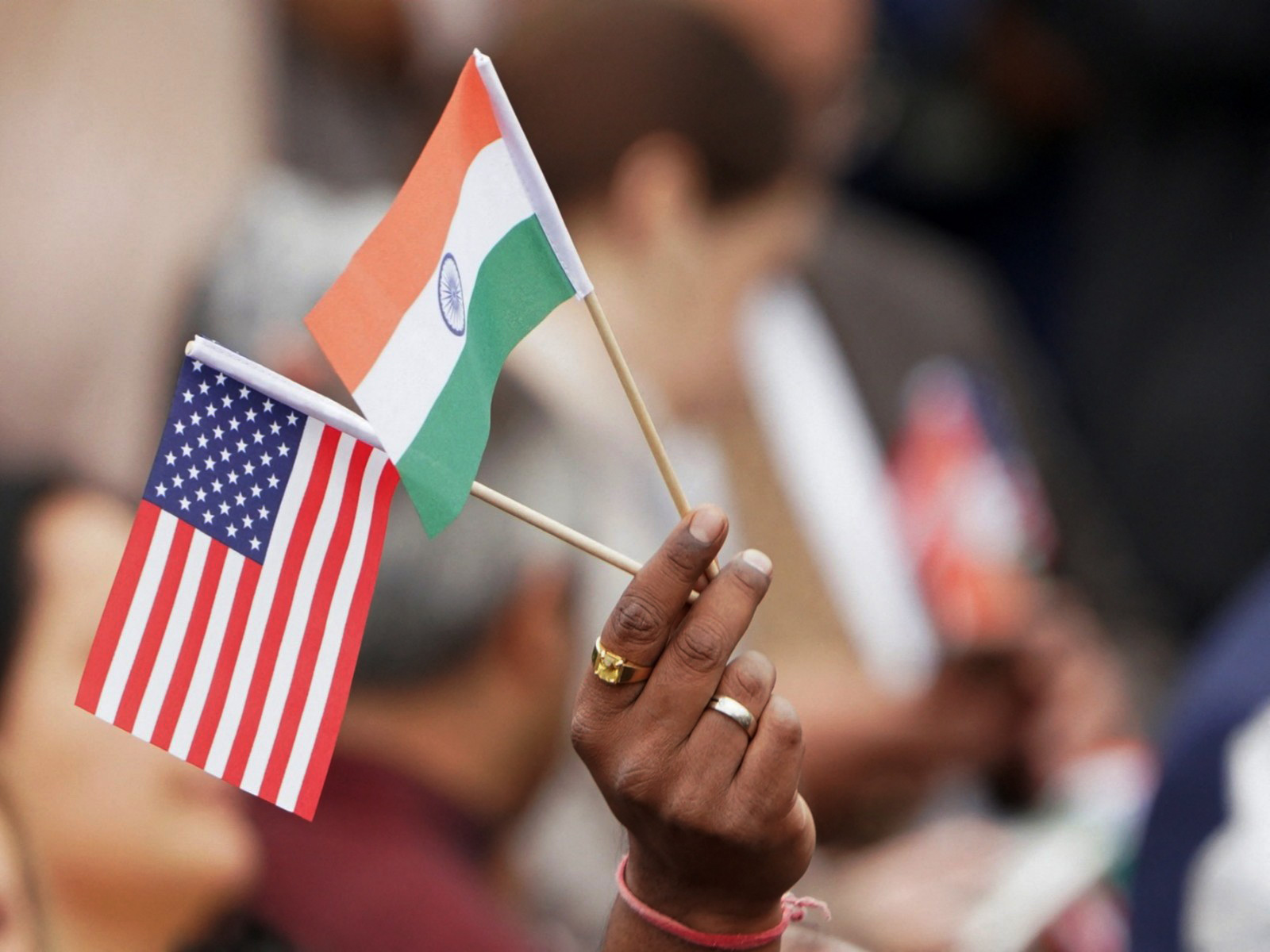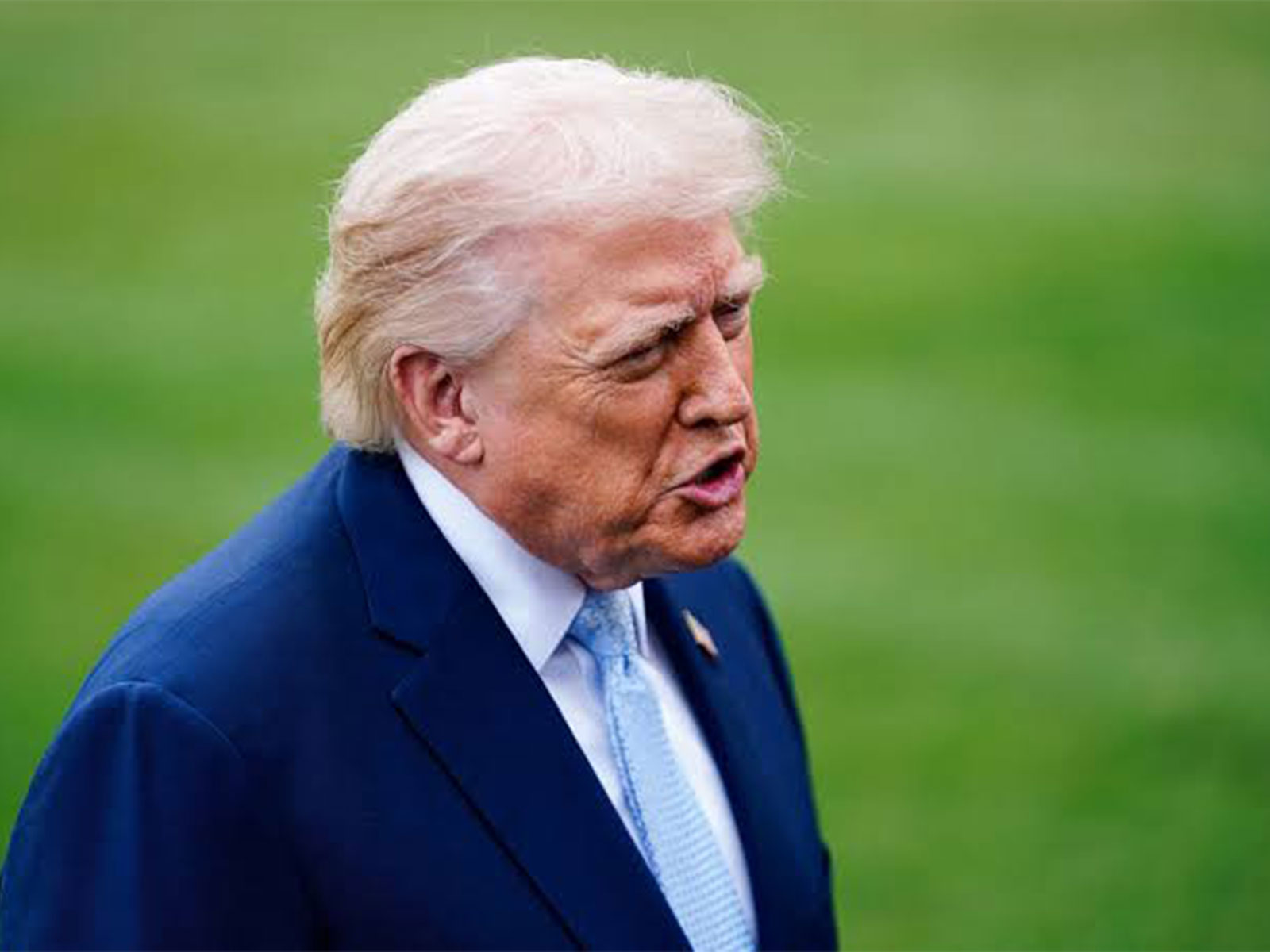
Washington, DC [US], November 16 (ANI): The White House itinerary confirmed that US President Donald Trump will participate in a multilateral meeting with Quad leaders in Manila on Tuesday, November 17, marking the first in-person Quad leaders’ summit in two years, on the sidelines of the ASEAN Summit.
Following his arrival at Manila’s Ninoy Aquino International Airport, US President Donald Trump is scheduled to welcome the Quad leaders for an official photo opportunity, which will be immediately followed by the high-level multilateral meeting.
The strategic alignment comes as the regional grouping recalibrates its footprint. The Quad was formed in 2007 but became largely inactive the following year amid concerns about provoking China.
Donald Trump revived the grouping in 2017 to address growing concerns over China’s increasing economic, diplomatic and military influence in the Indo-Pacific, although he did not hold a leaders’ summit during his earlier term.
The Manila meeting will be the first Quad leaders’ meeting during his current term as US President, following five ministerial-level sessions since Trump began his second term on January 20, 2025.
US Secretary of State Marco Rubio had indicated last month that the Quad leaders could meet on the sidelines of the Association of Southeast Asian Nations summit in Manila, where the Philippines is hosting the gathering as the current chair of the 11-member ASEAN.
Against this diplomatic backdrop, India has joined the United States and several partner nations in executing a new pact designed to protect critical technologies and artificial intelligence (AI) supply chains amid growing concerns about Beijing’s acquisition of advanced technology, particularly high-end semiconductor processors.
This diplomatic step comes as Washington intensifies oversight of the movement of advanced Nvidia microchips into China, following a recent controversy involving the company’s Chief Executive, Jensen Huang, and his association with an individual flagged by American authorities over suspected ties to Chinese intelligence.
The agreement is designed to reduce reliance on supply networks controlled by Beijing and strengthen cooperation among allied states across vital technological domains.
Specifically, New Delhi has joined the San Francisco Declaration on the Secure Foundations of Enduring Prosperity, alongside the US, Japan, Australia, Israel, the United Kingdom, South Korea, Qatar and the United Arab Emirates.
The accord functions as a core component of Washington’s broader Pax Silica initiative, which seeks to build robust and dependable supply networks for the global artificial intelligence sector, encompassing semiconductors, critical minerals, advanced manufacturing, energy infrastructure and data hubs.
The San Francisco Declaration aims to establish a unified framework among participating nations to identify and protect technologies and infrastructure considered vital to the development of artificial intelligence.
The initiative recognises that the global AI supply chain spans multiple jurisdictions. While a semiconductor might originate on a drawing board in one country, the fabrication equipment could come from another, with transportation and final deployment involving several additional territories.
US Under-Secretary of State for Economic Affairs Jacob Helberg told the Financial Times that this distribution makes international collaboration essential for safeguarding the technological ecosystem.
“The know-how to design a chip, the machine that makes it and the port that ships it can all be in different countries,” Helberg said. He further noted that the pact makes the security of critical technologies and supporting infrastructure a collective responsibility shared among Pax Silica partners.
Signatory states are expected to establish dedicated working groups to identify vulnerabilities, share intelligence and explore the creation of economic hubs capable of attracting investment in AI-linked industries.
Launched in December 2025, Pax Silica represents a Washington-led framework aimed at strengthening cooperation across the entire AI and semiconductor spectrum.
Its scope extends beyond chip manufacturing to include essential minerals, energy inputs, advanced production methods, AI infrastructure and logistics networks, seeking to reduce overreliance on centralised supply chains and prevent states from using control over critical resources as instruments of economic coercion.
India formally joined the Pax Silica coalition in February 2026 during the India AI Impact Summit, making the recent San Francisco Declaration another step towards expanding multilateral partnerships.
The agreement comes as Washington expresses serious concerns about Beijing’s acquisition of advanced American AI processors, particularly those manufactured by Nvidia.
The US has consistently restricted direct shipments of advanced semiconductor hardware to China over concerns that such capabilities could strengthen Beijing’s military apparatus and artificial intelligence capabilities.
Nevertheless, chip shipments through third-party countries and the use of offshore data facilities have emerged as significant challenges for American export regulations.
US President Donald Trump has reportedly ordered a strict crackdown on companies suspected of illegally diverting advanced Nvidia microchips to China, bringing renewed attention to indirect channels through which advanced American technology could reach Chinese entities despite direct trade restrictions.
Earlier this month, foreign ministers representing the Quad alliance, comprising India, the US, Japan and Australia, announced plans to provide more than USD 85 million in technical and financial assistance to expand access to trusted AI infrastructure across the Indo-Pacific.
This was alongside a separate USD 10 million allocation from Washington to support critical mineral recycling efforts across India and ASEAN member states.
The new agreement comes as Trump prepares to meet Chinese President Xi Jinping this week at the Asia-Pacific Economic Cooperation (APEC) summit in Shenzhen, amid intense strategic competition between Washington and Beijing over leadership in advanced technologies. (ANI)
Related reading