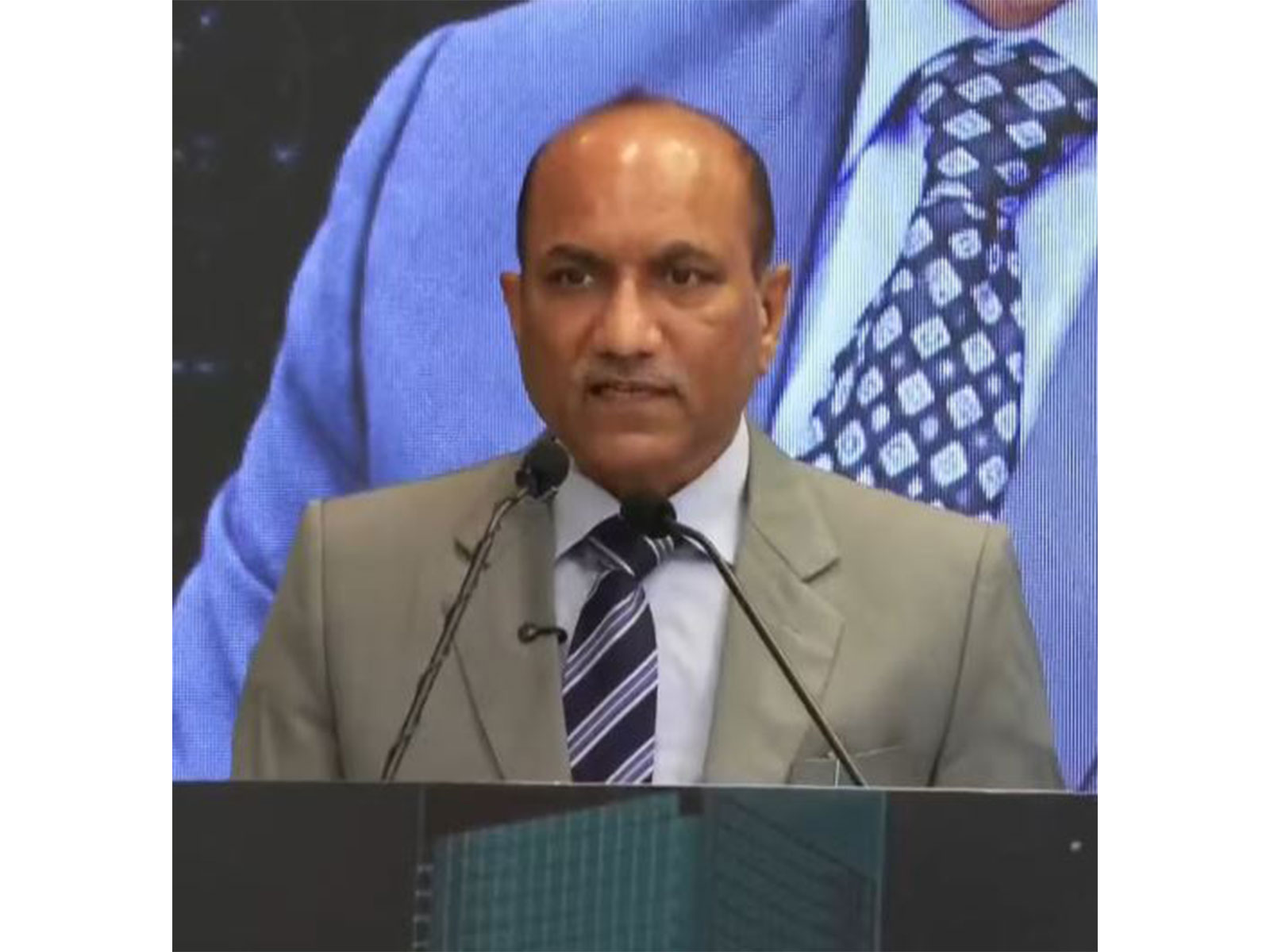
New Delhi [India], November 16 (ANI): Secretary of the Department of Defence Production, Sanjeev Kumar, on Monday said that India’s defence self-reliance must go beyond designing and manufacturing indigenous platforms to ensuring control over critical components, subsystems and supply chains, warning that dependence on foreign suppliers could become a major vulnerability during wartime.
Addressing the ANI National Security Summit 3.0 in Delhi, Kumar said self-reliance meant ensuring that the country could meet its defence requirements independently during adversarial situations and prolonged conflicts, without worrying about disruptions in global supply chains.
“Self-reliance, very clearly spelt out by the Prime Minister, means that we should not be dependent on other nations for our defence requirements. That means self-reliance, and it starts with understanding that during adversarial times, during the time of war, we should be able to fend for ourselves without really worrying about supply chains across the globe beyond our boundaries,” he said.
Emphasising that indigenous manufacturing alone was not sufficient, Kumar said India must also develop the ability to upgrade its equipment, integrate indigenous weapon systems and maintain and modify its platforms independently.
“One can say self-reliance means that we design our own platform. Design is a very critical word. We should design our own weapons and platforms. Not only should we design, but we should also manufacture. Not only should we manufacture, but we should have control over the supply chain, on the critical components, critical LRUs, critical assemblies, sub-assemblies; we should not be dependent in a manner in which we can be choked,” he said.
Citing the Light Combat Aircraft (LCA) Tejas as an example, the Defence Production Secretary said that despite being an indigenous platform, some of its critical components continued to come from abroad, exposing it to supply chain disruptions.
“So merely self-design and manufacturing may not be enough. A prime example we can see is LCA Tejas – though it is a homegrown product, still critical components come from abroad and even in normal time we feel the impact of disruptive supply chains, but in abnormal times this would be felt much harsher,” he said.
Kumar said the changing geopolitical environment, the possibility of prolonged wars and uncertainty over support from other countries had made defence self-reliance more important.
“There was no time in the industry when self-reliance was not needed. Why has it become relevant now? A couple of factors which have become more important now are long-run war, blurring lines between friends and not-so-friends and a widespread situation of war where even friends are also stressed out. So, despite their desire, they may not be able to help you,” he said.
“So, the geopolitical situation today makes it more important… We have to learn lessons today and be prepared for the future,” he added.
Speaking about India’s progress in defence manufacturing, Kumar said the country was witnessing increased participation from private companies and micro, small and medium enterprises (MSMEs), with around 20,000 MSMEs contributing to the defence sector.
He said defence production was no longer restricted to public sector undertakings, with established private companies and newer players increasingly emerging as prime contractors.
Highlighting the government’s efforts to prioritise domestic companies in defence procurement, he said nearly 90 per cent of the defence acquisition capital budget was being contracted through Indian companies.
“Our approach in the last 10 years has been to give priority to the Indian companies. And those priorities are being given through the mechanism of IDDM and by Indian. Almost 90% of the defence acquisition capital budget is being contracted through Indian companies,” he said.
However, he pointed out that the share of procurement under the Indigenous Design, Development and Manufacturing (IDDM) category remained relatively low, while expressing confidence that it was increasing.
Kumar also highlighted initiatives such as the SRIJAN portal and Positive Indigenisation Lists (PIL), through which the armed forces and defence public sector undertakings were identifying components and equipment for domestic manufacturing. He said private sector prime contractors would also be encouraged to identify imported components that could be indigenised.
Turning to the lessons from recent conflicts, including the Russia-Ukraine war, the West Asian conflict, Operation Sindoor and the Azerbaijan-Armenia conflict, Kumar said modern warfare required economic and supply chain endurance as conflicts were becoming increasingly prolonged.
He identified drones and anti-drone systems, electronic warfare, missiles, artificial intelligence and space capabilities as important areas requiring greater indigenous development.
On drones, Kumar said their growing use in modern conflicts had transformed the nature of warfare, with requirements ranging from short-range systems to platforms capable of travelling hundreds of kilometres and operating for extended durations.
He said India had a large number of companies working in the drone sector, but continued dependence on foreign suppliers for critical components remained a concern.
“What we would be requiring would be self-reliance in terms of motors, propulsion of the drones, flight control system, navigation system, batteries and payloads. Here still we have critical dependence on the outside world,” he said.
He stressed that India would need a deep domestic supply chain capable of manufacturing drone components and subsystems at scale to meet the requirements of a prolonged conflict.
On missile capabilities, Kumar said India had developed a strong domestic ecosystem, with expertise in DRDO laboratories also being shared with private sector companies. However, he emphasised the need to increase production capacity to meet the requirements of future conflicts.
He identified advanced seekers, materials capable of withstanding the demands of high-end missiles, propulsion technologies and electronics as areas requiring further development.
Highlighting the growing importance of artificial intelligence in defence, Kumar said AI could significantly improve the speed and precision of military decision-making by enabling faster collection, analysis and utilisation of battlefield data.
He said India had a large pool of software engineers and experience in civilian AI applications, but would need to develop dedicated computing capabilities within the defence sector.
More importantly, he stressed the need for the armed forces to generate and share labelled data with selected industries and research partners to train AI models for practical defence applications.
“Even the best AI model won’t be of practical use,” he said, underlining the importance of defence-specific data.
On electronic warfare, Kumar said India had credible capabilities in DRDO and both public and private sector industries, but these needed to be enhanced continuously as technologies and countermeasures were rapidly evolving.
He said India would have to strengthen its ability to protect its own communication and electronic systems while disrupting those of adversaries.
Kumar also highlighted the growing importance of space-based capabilities for communication, surveillance and situational awareness, calling for greater private sector participation and the development of more capable sensors and communication systems.
Concluding his address, the Defence Production Secretary said a common priority across all these sectors should be greater emphasis on indigenous design, development and manufacturing, including critical components and subsystems.
He said dependence on imported critical systems could undermine the benefits of even the most advanced platforms manufactured domestically, making complete control over the defence supply chain essential for achieving meaningful self-reliance. (ANI)
Related reading