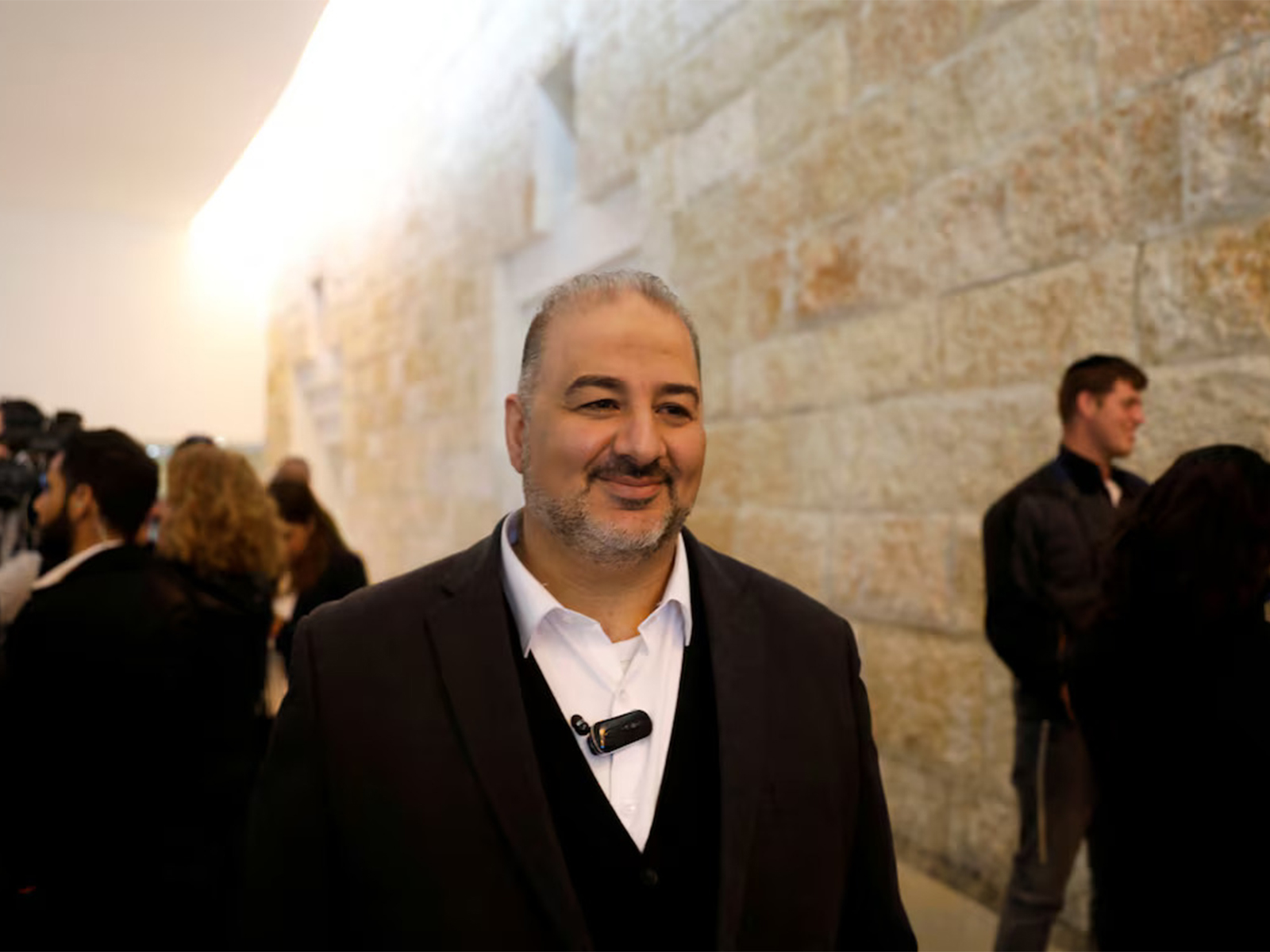
Jerusalem [Israel], October 30 (ANI): The establishment of a minority government led by Yashar party chair Gadi Eisenkot, with outside support from Arab parties, is considered unlikely or impossible by Ra’am party leader Mansour Abbas, according to Channel 12 News, as cited by The Times of Israel.
Abbas expressed this view during a meeting with party members.
This comes after the Jewish-led bloc opposed to Prime Minister Benjamin Netanyahu failed to secure a majority on its own in the election.
Only The Democrats have expressed openness to including Arab-majority parties, as reported by The Times of Israel.
Building on this parliamentary deadlock, the official counting of votes in Israel’s election has confirmed Prime Minister Benjamin Netanyahu’s Likud as the largest party in the next Knesset, though his right-wing bloc fell short of securing a parliamentary majority.
According to official figures released by Israel’s Central Elections Committee (CEC) and cited by The Jerusalem Post, Netanyahu’s bloc secured 53 seats, while the opposing bloc striving to unseat him won 48. These results leave both political camps well short of the 61 seats required for a majority in the 120-member Knesset, positioning Arab parties as pivotal powerbrokers after capturing a combined 19 seats.
The final tally, which incorporated the remaining double-envelope ballots, confirmed Likud as the leading party with 27 seats. United Torah Judaism and Otzma Yehudit captured seven seats each, while Shas and the Religious Zionist Party secured six seats apiece.
These tallies contrasted with several pre-election television polls that had forecast fewer seats for Likud, alongside stronger performances by specific allies. With neither faction able to command an outright majority independently, the focus has shifted sharply towards coalition negotiations, alongside the possibility of a minority or unity government.
Addressing these next steps, Israeli President Isaac Herzog is expected to consult party representatives following the formal publication of the final results before nominating the candidate deemed to have the strongest prospects of forming a government. Should that designated leader fail, an alternative figure may receive the mandate, while an inability to complete the process within the mandated timeframe could ultimately precipitate fresh elections.
Exploring potential configurations, a unity government encompassing Likud alongside opposition factions such as Gadi Eisenkot’s Yashar, Naftali Bennett’s Together movement and Avigdor Lieberman’s Yisrael Beytenu could theoretically command 66 seats.
Nevertheless, such an arrangement appears unlikely at present, given the opposition’s campaign pledge to remove Netanyahu from power and his dependence on far-right and ultra-Orthodox allies. Alternatively, the combined tally held by Arab parties could prove decisive should Eisenkot’s bloc attempt to establish a minority administration supported from outside the governing coalition, reinforcing Abbas’s earlier scepticism.
Amid these ongoing political manoeuvres, the final vote count has unfolded amid intense controversy surrounding allegations of election interference and voter fraud. CEC chairman Noam Sohlberg formally requested Shin Bet chief David Zini to investigate suspicions that foreign entities may have sought to influence voting patterns within the Arab sector.
However, the committee maintained that there was no empirical basis to support claims of systematic compromise to the integrity of the ballot. (ANI)
Related reading