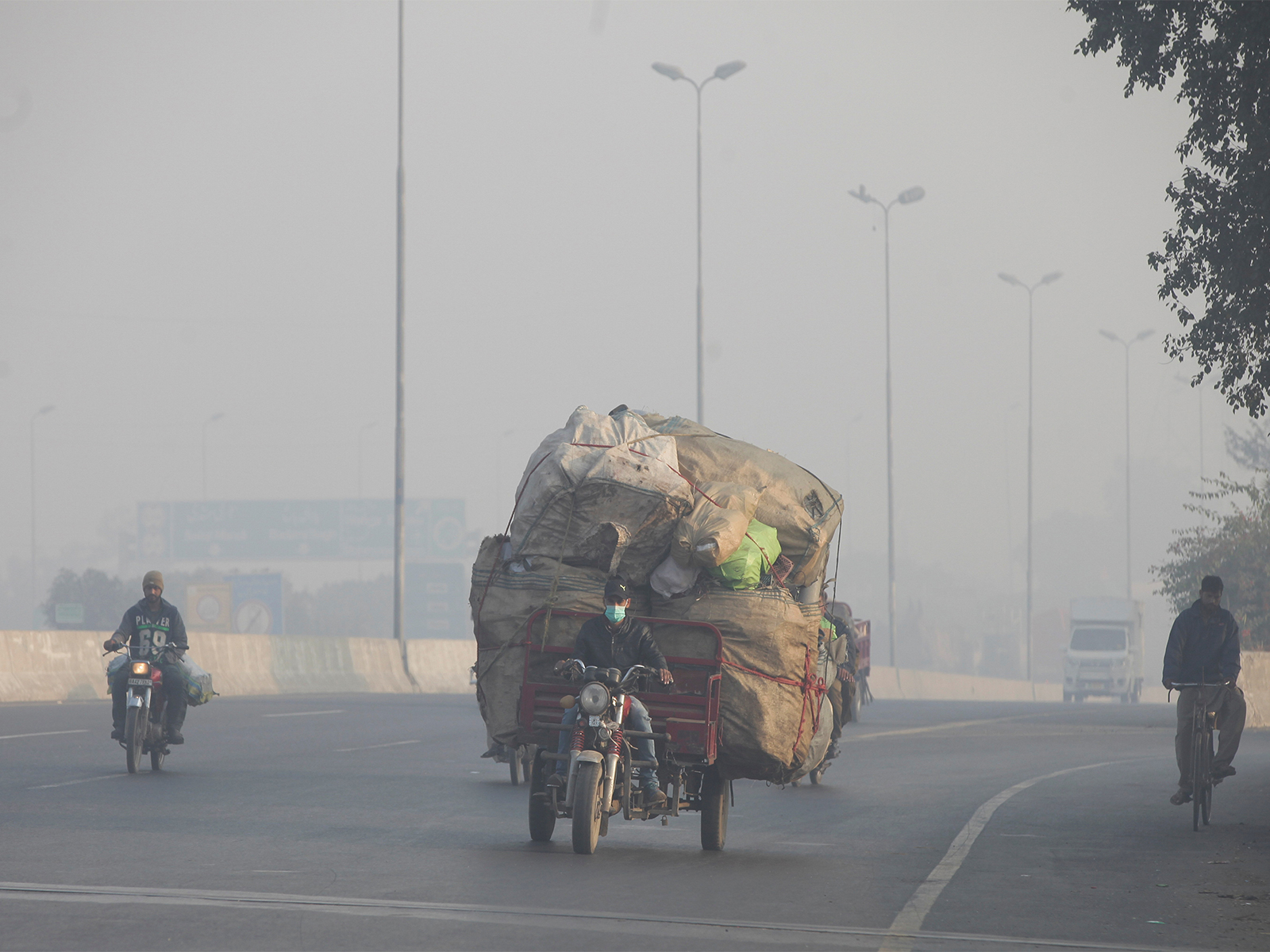
Lahore [Pakistan], October 30 (ANI): Lahore attained the unenviable distinction of being named the world’s most polluted city on Thursday, registering an alarming Air Quality Index (AQI) of 419, amid mounting evidence that severe smog and toxic air pollution are reducing life expectancy across Pakistan by an estimated 3.9 years while driving roughly 128,000 premature deaths annually.
According to global monitoring metrics provided by IQAir covering the period from 10 am to 11 am on October 29, Lahore secured the top spot globally for hazardous air, followed by Egypt’s Cairo, which recorded an AQI of 274. Meanwhile, Karachi placed eighth globally, with an AQI of 165, as documented by Dawn.
Simultaneously, data extracted from the Punjab government’s air quality monitoring dashboard underscored perilous pollution readings across multiple provincial urban centres, with Kasur emerging at the top of the provincial severity list.
Specific AQI figures included Nankana Sahib at 261, Hafizabad at 250, Sahiwal at 210, Sheikhupura at 205, Jhang at 203 and Rajanpur at 201. Additional high pollution readings were recorded in Multan and Gujranwala at 194 each, alongside Bhakkar at 186 and Vehari at 181.
In parallel, data published by the Pakistan Air Quality Initiative (PAQI) highlighted that chronic exposure to toxic air imposes a significant economic toll equivalent to 6.5 per cent of Pakistan’s Gross Domestic Product (GDP), with long-term exposure threatening to reduce residents’ life expectancy in Lahore by as much as seven years.
The comprehensive study, entitled ‘Unveiling Pakistan’s Air Pollution: A National Landscape Report on Health Risks, Sources, and Solutions’, delivered the country’s inaugural unified, multi-sector emissions inventory alongside multi-city evaluations of atmospheric degradation.
The document scrutinised pollution trends across urban hubs, including Karachi, Islamabad, Rawalpindi, Lahore and Peshawar, identifying primary emission sources while outlining potential mitigation measures capable of cutting pollutants by up to half, The Express Tribune reported.
The assessment tracked carbon dioxide, fine particulate matter (PM2.5), nitrogen oxides (NOx) and sulphur dioxide (SO2), delivering a detailed sector-by-sector breakdown across four major airsheds.
The findings revealed that Lahore’s average annual PM2.5 concentration exceeds 110 micrograms per cubic metre, surpassing the World Health Organisation’s (WHO) annual guideline of five micrograms per cubic metre by more than 22 times.
The report identified vehicular transport as the primary source of PM2.5 emissions in Lahore, followed by industrial operations at 28 per cent and traditional brick kilns contributing 17 per cent, The Express Tribune noted.
These urban emission sources continue to exacerbate the city’s particulate pollution, a crisis further compounded by adverse winter weather conditions. (ANI)
Related reading