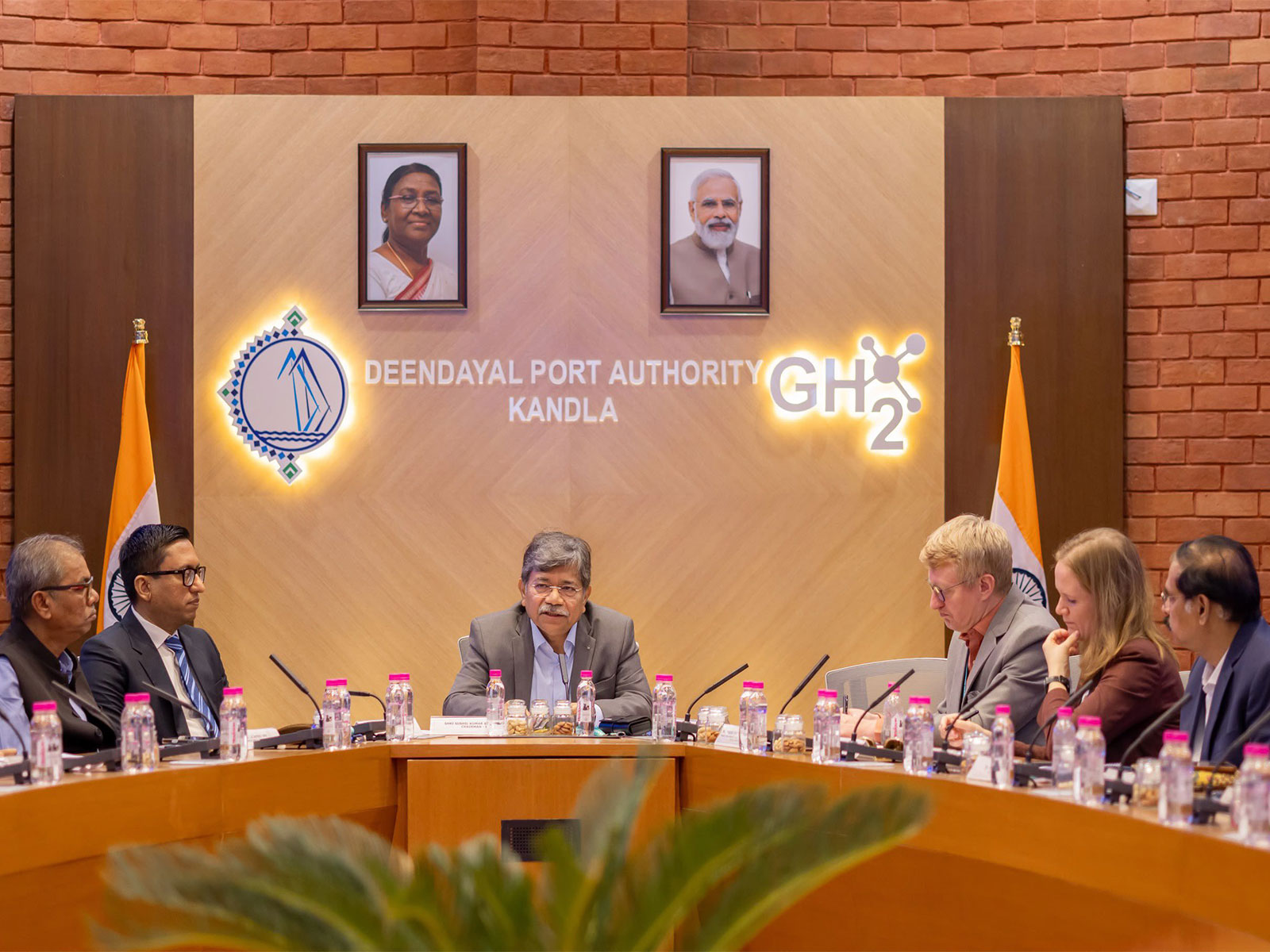
Gandhidham (Gujarat) [India], August 21 (ANI): Deendayal Port Authority, Kandla, organised the Kandla Green Hydrogen Conclave 2026 on Friday at its Administrative Office Building, Gandhidham, bringing together thought leaders, industry experts and delegates from across the globe.
As per DPA Kandla, the Conclave commenced with a virtual video message by Union Shipping Minister Sarbananda Sonowal.
The Conclave was held in the presence of Sushil Kumar Singh, Chairman, DPA Kandla; Erik Solheim, former Minister, Kingdom of Norway & President, International Advisory Board (GH2 India) and other dignitaries.
The Conclave witnessed insightful discussions and deliberations on Green Hydrogen, clean energy transition, sustainable port development and emerging green technologies, fostering global collaboration and exchange of ideas towards accelerating India’s green maritime ambitions, DPA stated.
As part of the Kandla Green Hydrogen Conclave 2026, the GH2 delegation visited India’s first Make-in-India 1-MW Green Hydrogen Plant at Kandla.
The delegation also toured key Port facilities, gaining valuable insights into DPA’s robust infrastructure, operational capabilities and its growing focus on green energy and sustainable maritime development.
Chairperson of the Deendayal Port Authority, Kandla, Sushil Kumar Singh on Friday called for adoption of greener fuels and energy-efficient technologies to bring down the carbon footprint of operations in the maritime sector.
During the Kandla Green Hydrogen Conclave 2026, Singh highlighted that the maritime sector contributes around three per cent of the total green hydrogen gas annually, and the sector has to take the initiative to bring down the Greenhouse gas (GHG) intensity in line with the Paris Agreement at the UN Climate Change Conference (COP21) in 2015.
The DPA chairperson said, “As we all know, the maritime sector contributes around three per cent of the total green hydrogen gas annually, and it’s one of the sectors which has to take initiative to bring down the Greenhouse gas (GHG) intensity in line with the Paris Agreement where the member countries and member states have agreed to restrict the temperature rise to ambient increase below 1.5 degrees Celsius.”
He noted the limitations of the energy efficiency component of the technologies, saying it cannot translate into zero-carbon emissions.
“The adoption of greener fuels, cleaner fuels, sustainable zero-emission fuels, along with the energy-efficient technologies that can help in bringing down the carbon footprint of operations in the maritime sector, that becomes important. The energy efficiency component of the technologies has its own limitations; it cannot translate into a zero-emission kind of output. So, the adoption of greener fuels is essential,” Singh said. (ANI)
Related reading