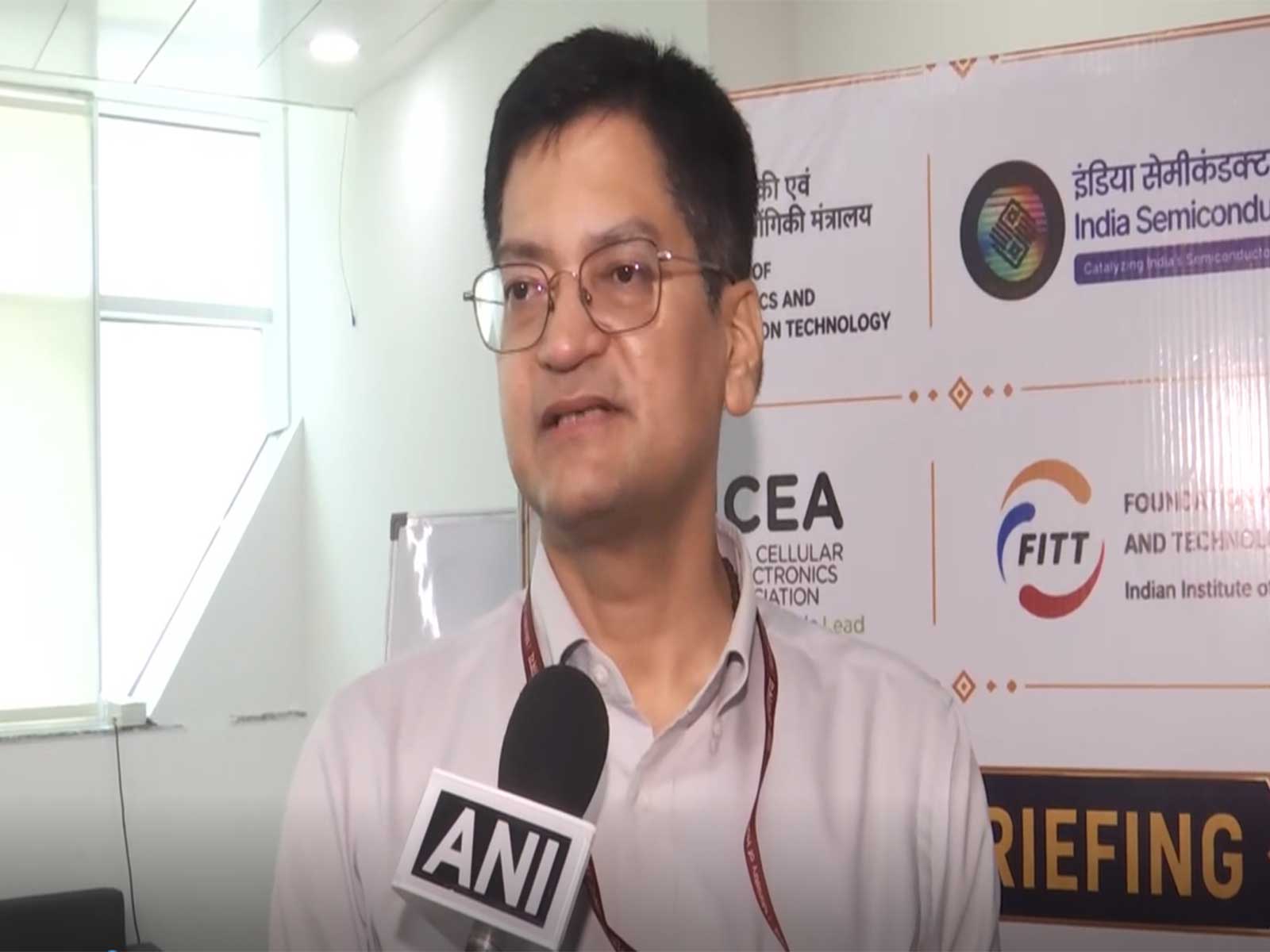
New Delhi [India], July 31 (ANI): The government’s target of nurturing 100 fabless semiconductor companies under the Semicon 2.0 programme is achievable, although approvals will continue to be based on the quality of proposals, Amitesh Kumar Sinha, Additional Secretary in the Ministry of Electronics and Information Technology (MeitY) and CEO of the India Semiconductor Mission (ISM), said on Friday.
“Actually, this 100 number is doable. Right now, we have given approval to 24. But let us not put a number to any kind of scheme. Because it depends upon the credibility of the proposal,” Sinha told ANI on the sidelines of the India Fabless Semiconductor Design Acceleration Workshop.
He said the same principle adopted under Semicon 1.0 would continue under the new programme, with approvals based on the strength of proposals.
“So, you have to develop a lot of IPs and chips. For that, there is an incentive structure in Semicon 2.0… the government policy is clearly an enabler,” he said.
According to Sinha, the India Semiconductor Mission is supporting startups through financial assistance, Electronic Design Automation (EDA) tools, infrastructure, intellectual property support and by facilitating chip tape-outs.
Meanwhile, India Cellular and Electronics Association (ICEA) Chairman Pankaj Mohindroo said the revamped Semicon 2.0 framework removes the funding cap that existed under the previous programme and allows significantly larger financial support for semiconductor design projects.
“The new structure that is being built in ISM 2.0… has a lot of flexibility. There is no limit to it. Like last time, there was a limit of Rs 15 crore for support. There is no limit in this. The government can provide support of Rs 50 crore… or up to Rs 1,000 crore,” Mohindroo told ANI.
He added that the guidelines are being finalised and the framework “will create an enabling environment for end-to-end support.”
Mohindroo said semiconductor design offers India one of the biggest opportunities in the electronics value chain because of the country’s strong engineering talent.
“You see, NVIDIA is basically a fabless design company… this is a lower hanging fruit for India because we have the raw material talent,” he said, adding that the long-term effort aims to eventually create 500 semiconductor design companies.
On the industry’s talent pipeline, he said the government has already equipped 320 institutes with EDA tools to strengthen semiconductor design skills and indicated that more institutions could be covered based on future requirements. (ANI)
Related reading