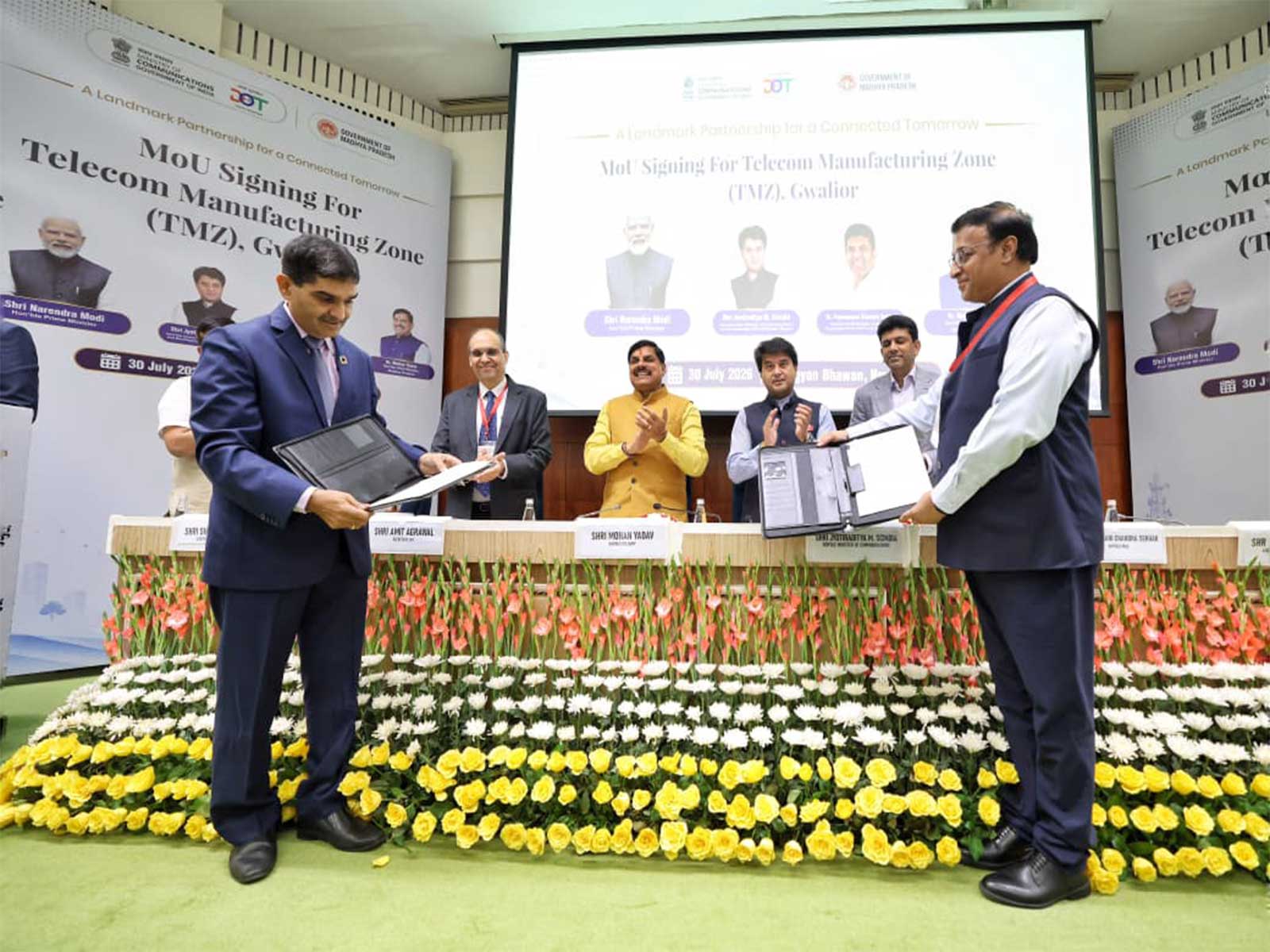
New Delhi [India], July 30 (ANI): India on Thursday signed an agreement to set up the country’s first Telecom Manufacturing Zone (TMZ) in Gwalior, with the Centre expecting investments of Rs 2,000 crore and creation of over 4,500 jobs in the first phase, while targeting investments of at least Rs 10,000 crore in the next stage.
The Memorandum of Understanding (MoU) was signed between the Department of Telecommunications (DoT) and the Madhya Pradesh government’s Industries Department in the presence of Union Minister for Communications Jyotiraditya Scindia, Madhya Pradesh Chief Minister Mohan Yadav and Minister of State for Communications Chandrashekhar Pemmasani.
“Today is a historic day for the telecom sector, Madhya Pradesh, Gwalior, and the entire nation… Today alone, investments worth Rs 2,000 crore have been finalised, and 4,500 job opportunities will be created. However, our goal extends far beyond this. We aim for investments of at least Rs 10,000 crore in the next stage,” Scindia told reporters on the sidelines of the event.
According to an official release, the Telecom Manufacturing Zone will be developed over nearly 350 acres on a plug-and-play model, with the Centre providing Rs 500 crore as 100 per cent financial assistance for infrastructure development in the first phase.
“It will feature a ‘plug-and-play’ system where the Government of India will set up comprehensive infrastructure and testing capabilities,” Scindia said.
The integrated manufacturing hub will support research, design, testing and production of mobile phones, telecom network equipment, fibre optics, semiconductors, and 5G and 6G technologies.
The official release said companies including Dixon Technologies, HFCL and Tejas Networks are among the anchor investors in the first phase. Overall, the project is expected to attract up to Rs 9,000 crore in investment and generate more than 10,000 long-term jobs.
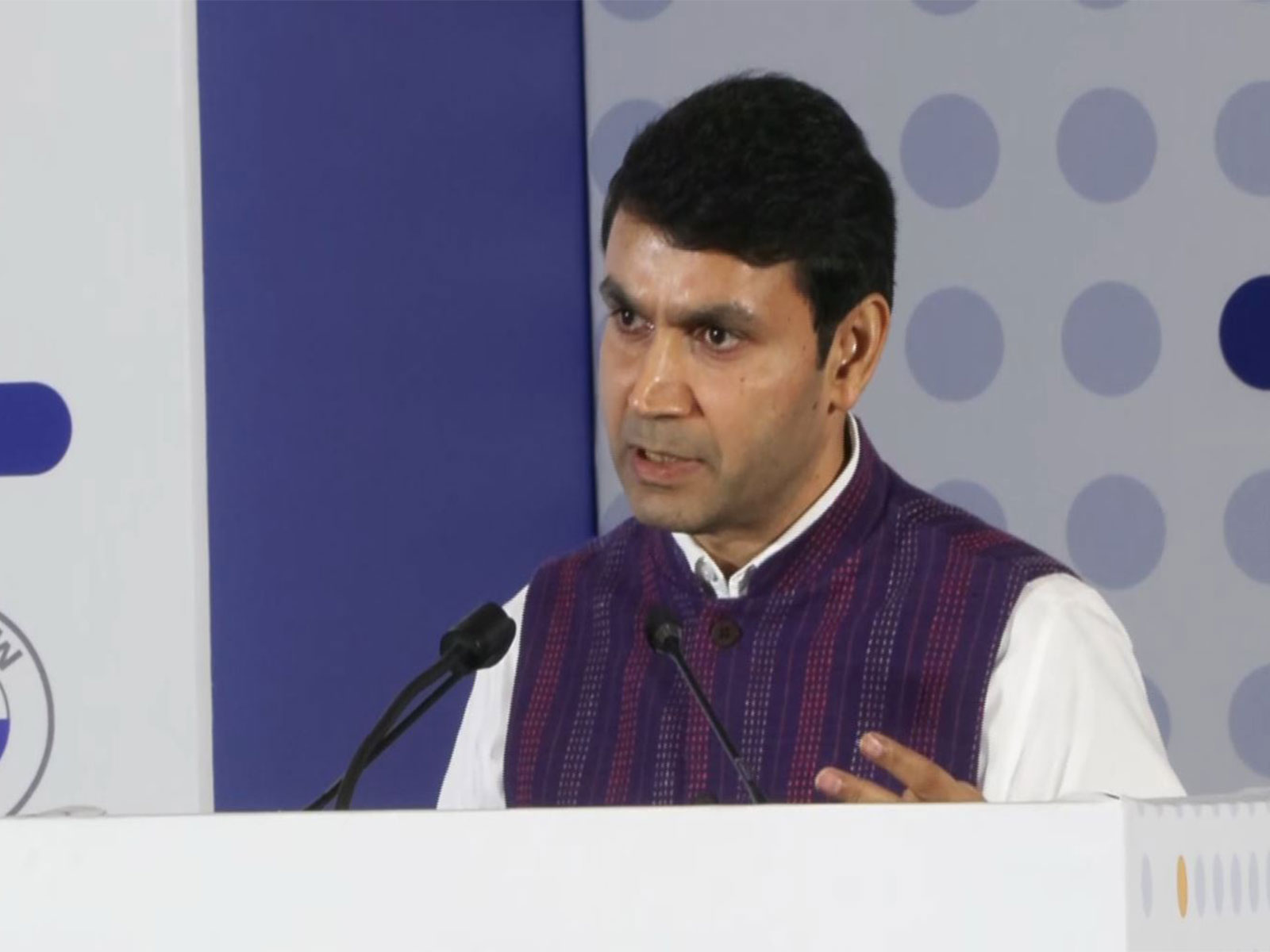
Speaking at the event, Minister of State for Communications Chandrashekhar Pemmasani said the zone is aimed at strengthening India’s telecom manufacturing ecosystem beyond assembly.
“Only 20 per cent of the components that go inside the phone are manufactured in India… We don’t want to be an assembly line country. We want to have design labs. We want to have patents. We want to have intellectual property,” Pemmasani said.
Scindia said the first phase would be completed over the next three years, after which work on the second phase would begin.
“Our first phase spans the next three years… Simultaneously, we will initiate the second phase. This will be a continuous process, building upon the infrastructure already established in Gwalior,” he said. (ANI)
Related reading