Kyiv [Ukraine], October 31 (ANI): Ukrainian President Volodymyr Zelenskyy has welcomed the US State Department’s decision authorising Kyiv’s procurement of Patriot interceptors to counter incoming Russian ballistic missiles, while pressing Washington for an accelerated delivery timeline to meet immediate winter security needs.
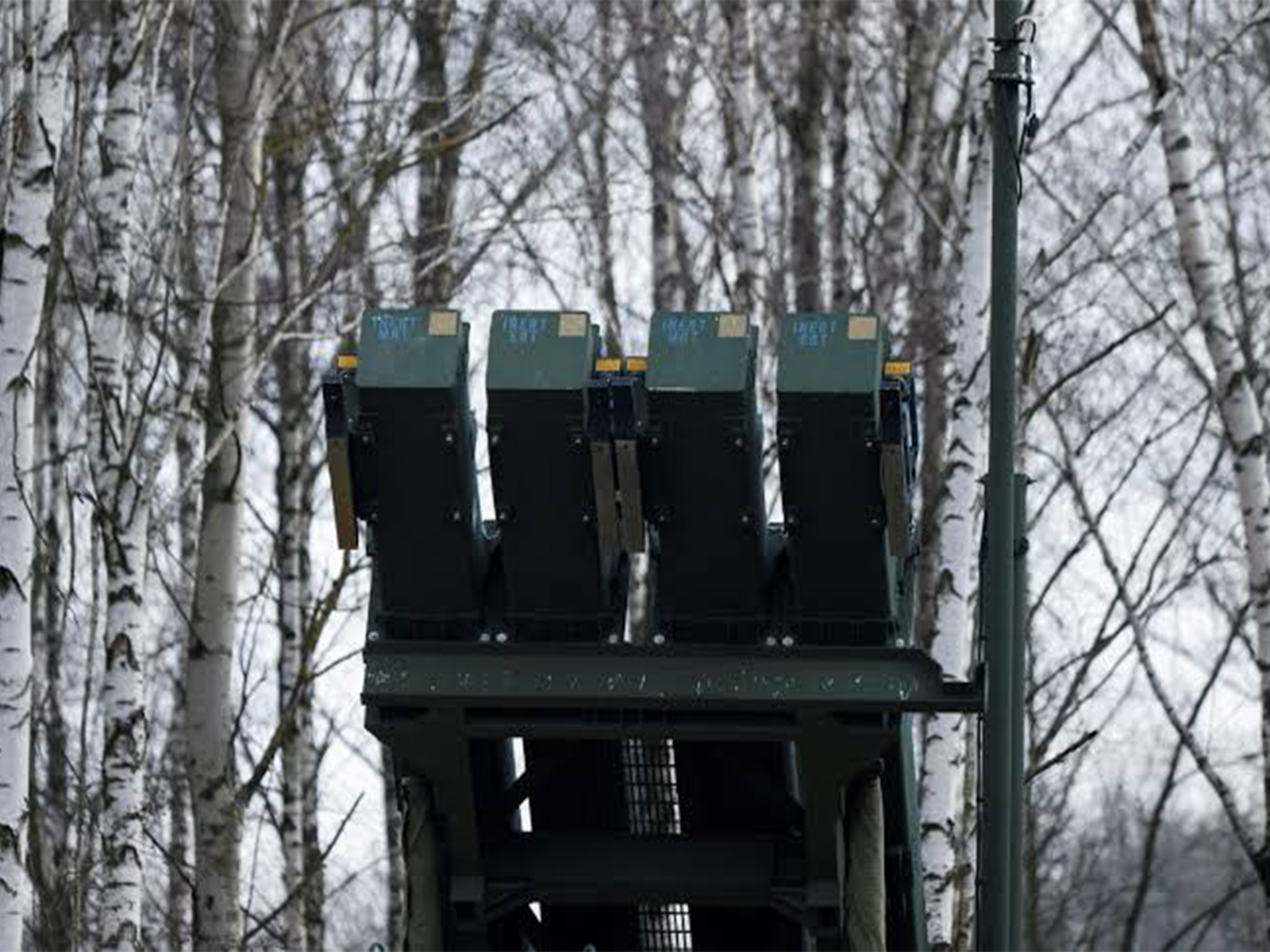
In a post on X, Zelenskyy described the clearance as a “strong decision”, noting that 500 PAC-3 interceptors constitute a substantial inventory that “could make for a highly effective defence package” during the winter season. However, he cautioned that current stipulations dictate that deliveries may begin “only in a few years”.
“We are asking our American partners to find a solution for the time when there is a real danger and a real need to use PAC-3 interceptors,” Zelenskyy stated, emphasising that Russian forces are targeting energy infrastructure daily.
He reported that over the preceding two weeks of October, Ukraine had endured more than 30 Russian strikes directed at critical elements of the power grid. Warning that President Vladimir Putin had initiated operations to incapacitate life-sustaining systems ahead of winter, Zelenskyy stressed that the primary targets encompassed electricity, heating, water supplies and bridges.
Highlighting operational requirements, Zelenskyy noted that Kyiv had requested a winter support package averaging 100 Patriot interceptors monthly, asserting that 500 missiles would secure airspace during the upcoming months, when maintaining a strong negotiating posture is paramount.
To bridge the immediate gap, Zelenskyy proposed that the US, European partners and global allies draw from existing warehouse stocks to supply Ukraine during the winter of 2026–2027, while backfilling partner arsenals subsequently through the newly contracted production.
Expressing appreciation to US President Donald Trump and acknowledging recent discussions with Secretary of State Marco Rubio, Zelenskyy stated, “We are grateful to the US State Department and the US Administration overall for granting this authorisation. But we are asking for decisions that can guarantee the protection of lives, not the day after tomorrow or sometime later, but at the very moment the threat is there – when Russia is killing and destroying.”
Underscoring the formal framework behind these high-level discussions, the US State Department formally announced on Friday that it has approved a potential sale of 500 Patriot PAC-3 Missile Segment Enhancement (MSE) interceptors to Ukraine for an estimated USD 2.1 billion. The department indicated that the proposed package is designed to bolster Ukraine’s air defences and missile protection against contemporary and emerging threats.
Under the arrangement, Canada, Germany and Norway are set to contribute towards the acquisition through the US JUMPSTART programme, alongside financial allocations from a European Union credit facility. Official statements confirmed that no American financial resources are involved in the deal, with Lockheed Martin serving as the principal contractor to provide the interceptors alongside classified and unclassified spare parts, logistics and programme support.
While the formal announcement omitted specific delivery timelines or whether any hardware components will be locally manufactured in Ukraine under a proposed arrangement with Lockheed Martin, the clearance arrives as Kyiv confronts persistent Russian ballistic missile attacks while striving to reinforce its air defences ahead of the winter season.
Building on these operational pressures, Zelenskyy noted earlier this week that Kyiv had spent nearly a month awaiting formal clearance from Washington for critical missile supplies designated for its Patriot and NASAMS defence grids. According to a previous CNN report, Ukraine’s existing stockpile of Patriot interceptors was entirely depleted earlier this month. The PAC-3 MSE stands as the most sophisticated iteration of the Patriot interceptor currently operational, functioning as one of the few armaments capable of neutralising incoming ballistic threats.
Zelenskyy has persistently urged the United States and broader Western allies to accelerate delivery schedules. Earlier this month, he stated that Ukraine had secured an average of merely 12 Patriot interceptors per month from the US throughout the year, whereas military requirements dictate intercepting roughly 150 incoming Russian ballistic projectiles monthly.
In a video statement published on social media on Friday, Zelenskyy drew attention to the acute deficit, reporting that Russia had targeted Ukraine with 17 ballistic missiles overnight, resulting in impacts on oil refining infrastructure in central Ukraine. During an August interview with CNN, Zelenskyy contended that even a minor fraction of the American Patriot stockpile would suffice to “destroy all the Russians’ ballistic missiles”.
This major defence clearance follows weeks of bilateral friction between Washington and Kyiv regarding the Trump administration’s strategic posture towards the ongoing war and its backing of Ukraine.
According to the CNN report, US President Donald Trump earlier this month disclosed an agreement permitting Russian diesel exports to enter global energy markets, alongside waiving additional penalties targeting Russian fossil fuel commerce that had recently been enacted into law. Furthermore, Trump threatened to withhold intelligence-sharing from Kyiv in response to Ukrainian strikes directed at Russian petroleum refineries, while Ukraine’s connectivity to the Starshield satellite system experienced a temporary restriction before being reinstated last week.
Addressing the long-term industrial prospects of the partnership, the State Department stated that it remains unaware of any finalised accord between Ukraine and Lockheed Martin regarding domestic production of interceptor parts, though it observed that Kyiv and the defence manufacturer retain the option to negotiate such terms independently.
Trump previously declared at the NATO summit hosted in Turkey in July that Ukraine would secure a licence to manufacture its own Patriot missiles. While establishing a local production facility could eventually alleviate pressure on American manufacturing lines amid munitions shortages linked to the Iran war and rising international demand, constructing a Ukrainian assembly plant would take years, and Trump has seemingly retreated from the initial proposal.
To facilitate the financial backing of these defences, the European Union’s Ukraine Support Loan allocates up to 90 billion euros in financial assistance spanning 2026 to 2027, with 60 billion euros explicitly earmarked for defence requirements. The European Commission has sanctioned Kyiv’s use of the credit facility to acquire the American-built Patriot interceptors.
Ultimately, this prospective transaction contributes to broader collaborative efforts by Ukraine and its European allies to secure advanced air defence inventories as sustained Russian bombardments persist. (ANI)
Related reading