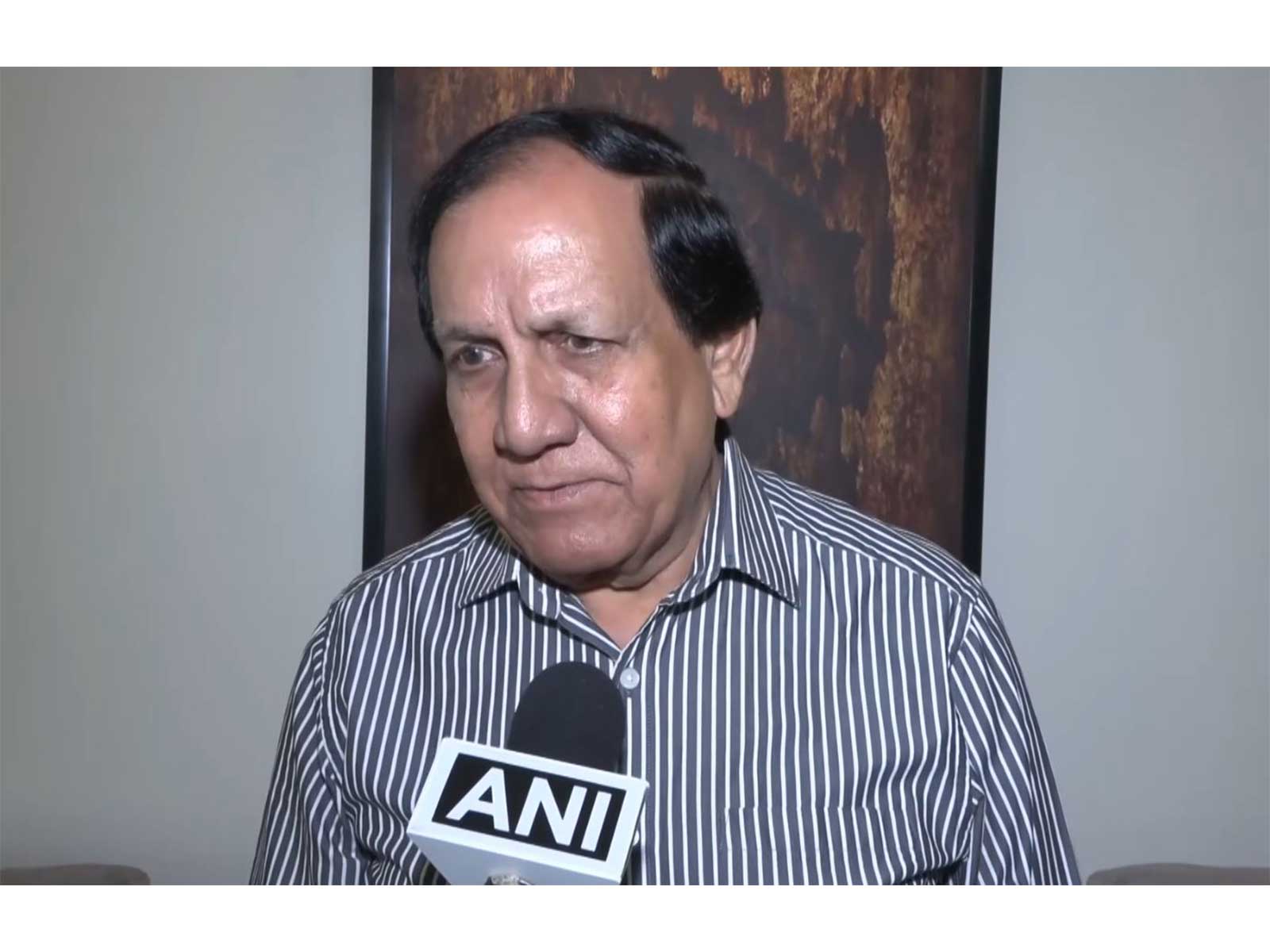
New Delhi [India], August 4 (ANI): Former senior diplomat Surendra Kumar on Tuesday criticised the US administration’s latest tariff push, saying “weaponising tariffs is wrong” and arguing that Washington cannot use Section 301 of the Trade Act of 1974 to impose blanket tariffs on several countries.
Speaking to ANI, Kumar was responding to the latest tariffs imposed by the US on imports from 60 trading partners, including India, amid a lawsuit filed by a coalition of 25 US states challenging the measures.
“I personally feel that all these countries should welcome this move. After all, you see the whole concept of weaponising tariffs is wrong, because you will have a trade surplus with some country, you’ll have a trade deficit with some country. You can discuss the technical issues; you can discuss; you can’t simply impose,” Kumar said.
He said the latest tariff action was being challenged on grounds that the US administration was attempting to bypass Congress and use Section 301 beyond its intended purpose.
“Then these people are already arguing, rightly so, that look, your own Supreme Court turned down your tariff. You are trying to impose the same thing coming southwards. I mean you are sidetracking it, you’re bypassing Congress and by bringing out almost the same thing with a different rate,” he said.
“Fact is, you are using 301, which is not meant for this. 301 says targeted country, specific trade dispute, then you use it. You can’t blanket imposition of tariffs on 60 or 50 countries,” the former diplomat added.
Kumar said the legal challenge could have implications for the latest tariff measures, noting that the previous tariff action had also faced judicial scrutiny.
“I think we should just wait and watch because even in the first case, we couldn’t do anything; no country could do anything. The Supreme Court only turned it down there, and I am sure this will also be taken note of,” he said.
He further argued that tariffs ultimately affect American consumers by raising the cost of household goods and other inputs.
“People are saying, look, this imposition of tariffs basically turns out to be a direct tax on the American consumers. Your household goods, your groceries, your many other inputs are really going up, and he doesn’t feel the pinch but other people feel the pinch,” Kumar said.
The former diplomat said the latest legal challenge could potentially have a positive impact for countries such as India that are continuing to engage with Washington on trade.
“We feel that perhaps this might have a positive effect, positive reaction or response or whatever you call it, for the countries which are waiting like India, that it will not be accepted because once the Supreme Court has turned down 10 per cent or 12.5 whatever percentage it was, it is wrong and it should not be imposed,” he said.
The remarks came on the same day that the Ministry of External Affairs said India and the United States continue to work towards finalising an interim bilateral trade agreement, with both sides having made substantial progress.
Addressing a bi-weekly media briefing in New Delhi, MEA Spokesperson Randhir Jaiswal said that discussions on the proposed agreement remain ongoing.
“The conversation between India and the United States on the proposed bilateral trade agreement is ongoing. Both sides have done a lot of work in this regard,” Jaiswal said.
Earlier in July, the United States unveiled fresh tariff slabs of 10 and 12.5 per cent on several economies under its Section 301. India has been placed in the lower 10 per cent tariff category.
Jaiswal further said that some issues still require finalisation and that New Delhi and Washington remain engaged on them.
“There are certain issues which need finalisation, and both countries are working towards finalisation of the interim bilateral trade agreement,” he said.
His remarks came as a coalition of 25 US states has filed a lawsuit against the Trump administration, challenging its latest round of tariffs on imports from the European Union and nearly 60 other countries to prohibit imports produced with “forced labour”, arguing that the measures exceed the administration’s legal authority and would raise costs for American consumers and businesses.
The lawsuit, filed in the US Court of International Trade and led by California Attorney General Rob Bonta along with the attorneys general of Arizona and Oregon, contests tariffs imposed following an investigation conducted under Section 301 of the Trade Act of 1974 in the US. (ANI)
Related reading