Tehran [Iran], August 19 (ANI): As Donald Trump continued his assertions over control of the Strait of Hormuz through an AI-generated image depicting the strategic waterway as “NEW U.S. Territory”, Iran hit back at the US President, warning that his claims would be “corrected”, while labelling his claims as delusions.
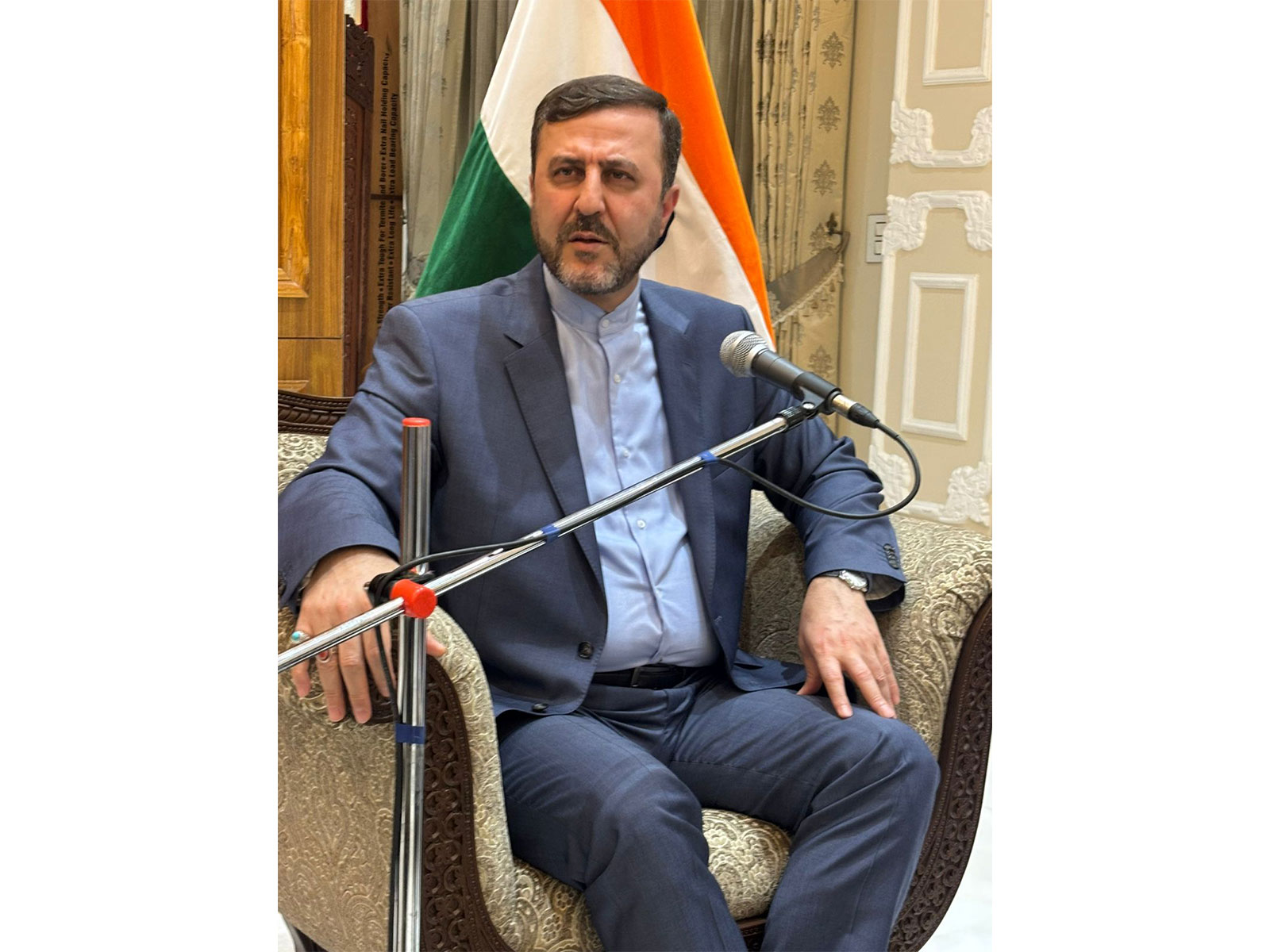
Sharing the image in a post on X, Iranian Deputy Foreign Minister Kazem Gharibabadi, who described the US President as a “deluded man”, said on Tuesday that while Trump had correctly referred to the “eternal Persian Gulf”, his claims over the Strait of Hormuz would soon be corrected, either by circumstances or by Iran itself.
“Just as Trump correctly wrote the name of the eternal Persian Gulf, soon his delusion regarding the Strait of Hormuz will either be corrected or we will correct the delusions of this deluded man,” Gharibabadi said in a post on X.
https://x.com/Gharibabadi/status/2089677314275549344
Iran’s newly appointed head of the Supreme National Security Council (SNSC), Mohsen Rezaei, also criticised Trump’s remarks, saying there was a wide gap between Washington’s claims and its ability to influence the strategic waterway.
“The gap between America’s inability to reopen the Strait of Hormuz and its claim to own it is greater than the 7,000-mile distance between Washington and the Strait itself. Welcome to the post-American order in the Persian Gulf,” Rezaei said in a post on X.
https://x.com/ir_rezaee/status/2089763608146088296
This comes after Trump, earlier on Tuesday, shared an AI-generated image of the Strait of Hormuz on his Truth Social platform, depicting the strategic waterway between Iran and the Arabian Peninsula in blue and enclosing it within a frame labelled “NEW U.S. Territory” in bold letters.
The post came amid Trump’s continued assertions that Washington has control over the strategically vital waterway, through which a significant share of the world’s energy supplies passes.
Trump had made similar remarks a day earlier, claiming that the United States has “total control” over the Strait of Hormuz and expressing support for the idea of declaring the strategic waterway a US territory.
Speaking to reporters, Trump said the Strait was open, and oil prices were falling, while warning that Iran was facing severe economic and military pressure.
“I think it’s a great idea. I mean, we control it with the blockade. I like the idea of declaring it a territory. We have total control over the Strait,” Trump said.
He added that Iran could still “be a nuisance” by placing mines in the water but maintained that the US blockade had been effective.
Meanwhile, Iran, however, had rejected Washington’s assertions over the strategic waterway.
Iranian Parliament Speaker Mohammad Bagher Ghalibaf said Tehran would not reopen the Strait of Hormuz until the US fulfils commitments under the 14-point memorandum of understanding, including lifting the blockade, releasing frozen Iranian assets and lifting oil sanctions.
Addressing the 180th open session of Iran’s 12th Parliament, Ghalibaf said the time had come for Iran’s military and diplomatic tracks to work together to respond to what he called the US “breach of covenant”.
“Until America’s commitments in the memorandum of understanding – including lifting the blockade, releasing frozen assets, lifting oil sanctions, ending threats and military operations on all fronts, and other conditions to which America committed – are implemented, the ‘Strait’ will not be opened,” the Iranian Parliament Speaker said.
Ghalibaf had also warned that Iran was prepared to mount a renewed military response to what it described as US violations of the ceasefire understanding, saying the military and diplomatic tracks would work together to respond to any breach.
The conflicting statements highlight the continuing uncertainty over the status of the Strait of Hormuz amid heightened tensions between the two countries, particularly in the West Asia region.
The Strait of Hormuz is a critical global energy route, making the conflicting claims over its status particularly significant for international shipping and energy markets. (ANI)
Related reading