New Delhi [India], August 11 (ANI): India’s recent wave of high-level diplomatic engagements across South Asia is a direct reflection of its strategic “Neighbourhood First” policy, the Ministry of External Affairs (MEA) clarified on Tuesday, addressing questions regarding coordinated regional outreach ahead of the upcoming BRICS Summit.
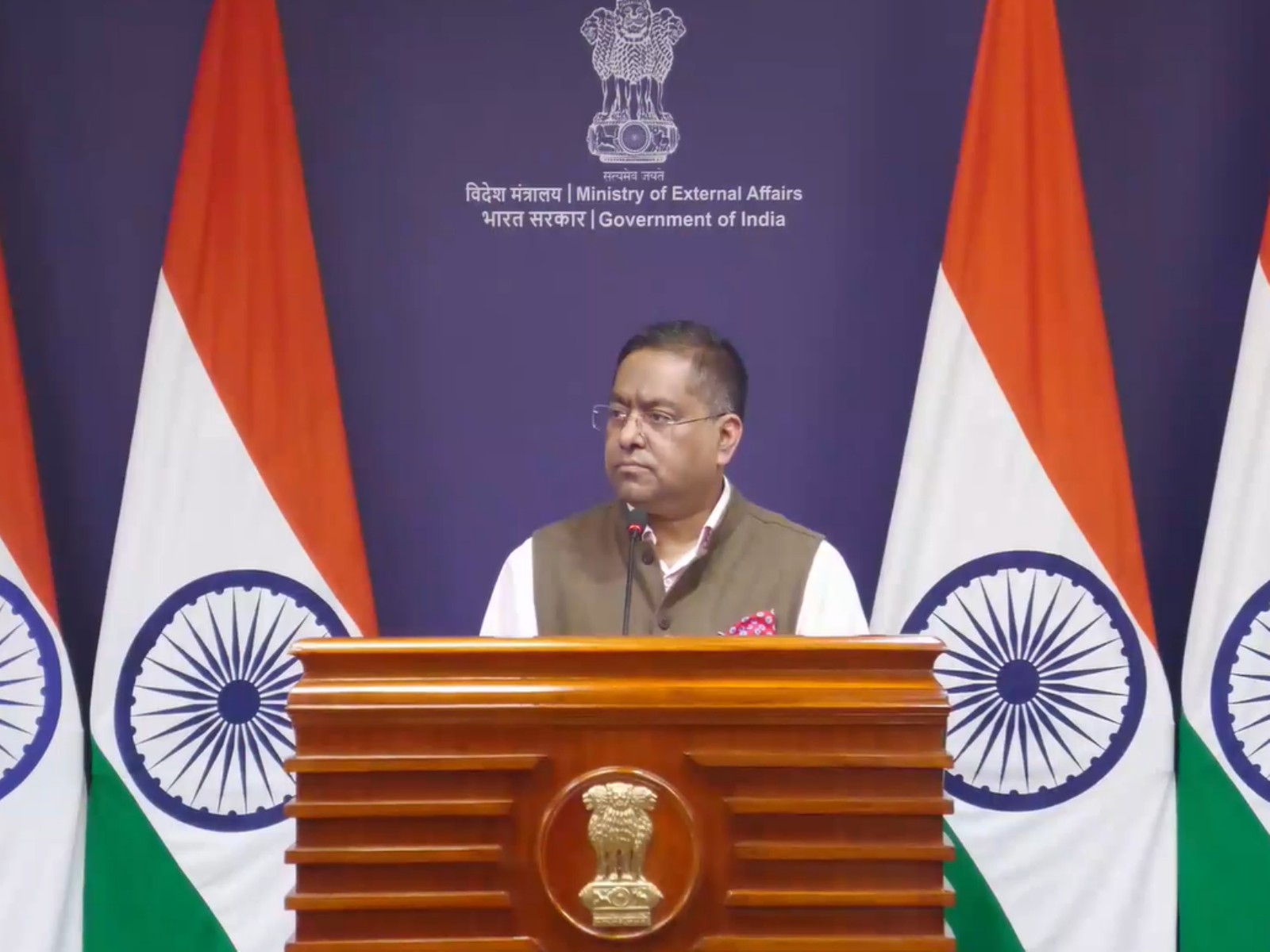
Responding to media queries during a biweekly briefing, MEA spokesperson Randhir Jaiswal highlighted that recent visits and bilateral talks with Bhutan, Sri Lanka, Bangladesh, and Nepal reflect New Delhi’s ongoing drive to reinforce development partnerships and strategic ties across various domains.
“We have a policy of Neighborhood First. We want to strengthen our ties with countries in our neighbourhood,” Jaiswal said.
“The Foreign Secretary visited Bhutan as well as Sri Lanka. We had a detailed readout from these visits, and the idea is that we want to deepen our relationship and our ties with these countries in the various domains that we are engaged in,” he said.
Highlighting development cooperation as a key area of engagement, Jaiswal said, “Development partnership happens to be a very important part of that cooperation and several other issues that were detailed in our press release. So it is part of our overall engagement.”
On India’s invitations for the upcoming BRICS Summit, Jaiswal said BRICS member countries and partner countries had been invited, along with leaders from regional groupings for the outreach session.
“On the other aspect of the invitation, we have invited BRICS countries and also BRICS partner countries to attend the BRICS summit here. In addition, we also invited several leaders from regional groupings for the outreach session,” he said.
“We will keep you updated in regard to the invitations,” Jaiswal added.
India is set to host the 18th BRICS Summit on 12-13 September 2026, marking its official presidency of the bloc.
Centred on the theme “Building for Resilience, Innovation, Cooperation and Sustainability”, New Delhi’s chairship emphasizes a human-centric approach across the expanded 11-member grouping and its global partners.
On August 11, reaffirming India’s core “Neighbourhood First” policy, Indian diplomatic envoys held high-level meetings with the Prime Ministers of Bangladesh and Nepal on the same day, focusing on regional cooperation, bilateral development, and strategic engagement.
In Dhaka, India’s High Commissioner to Bangladesh, Dinesh Trivedi, paid a courtesy call on Bangladesh Prime Minister Tarique Rahman at the Prime Minister’s Office in the Secretariat.
The meeting served as a crucial step to foster constructive dialogue and steer bilateral ties forward amidst recent diplomatic friction. Discussions touched upon enhancing people-centric cooperation across multiple domains, trade, and regional stability.
Simultaneously in Kathmandu, India’s Ambassador to Nepal, Naveen Srivastava, paid a courtesy call on Nepal Prime Minister Balendra Shah at the Prime Minister’s Office in Singha Durbar.
The 45-minute interaction marked a significant milestone as PM Balendra Shah–who had previously maintained a strict policy of avoiding individual, one-on-one meetings with foreign diplomats–broke his self-imposed rule to meet directly with the Indian envoy.
Earlier on August 5, Foreign Secretary Vikram Misri wrapped up his official visit to Colombo, during which he reiterated India’s commitment to Sri Lanka under its ‘Neighbourhood First’ policy and Vision MAHASAGAR, according to the Ministry of External Affairs (MEA).
A key highlight was the exchange of two INR-denominated Line of Credit agreements: USD 250 million dedicated to railway initiatives and USD 100 million for livestock and priority sectors. The agreements were exchanged in the presence of President Dissanayaka by the High Commissioner of India and Sri Lanka’s Treasury Secretary.
Meanwhile, on July 30, Foreign Secretary Vikram Misri met his Bhutanese counterpart, Dasho Pema Lektup Dorji, in the Bhutanese capital to review the implementation and status of India-assisted developmental initiatives across diverse sectors under Bhutan’s 13th Five-Year Plan.
During the engagement, the two diplomats co-chaired the 5th India-Bhutan Development Cooperation Talks, which form part of the established institutional framework for ongoing bilateral development engagement between the two neighbouring nations.
The bilateral dialogue in Thimphu centred on evaluating the ground-level implementation of India-backed development projects spanning multiple sectors, illustrating the extensive scope of the strategic growth partnership shared by the two countries. (ANI)
Related reading