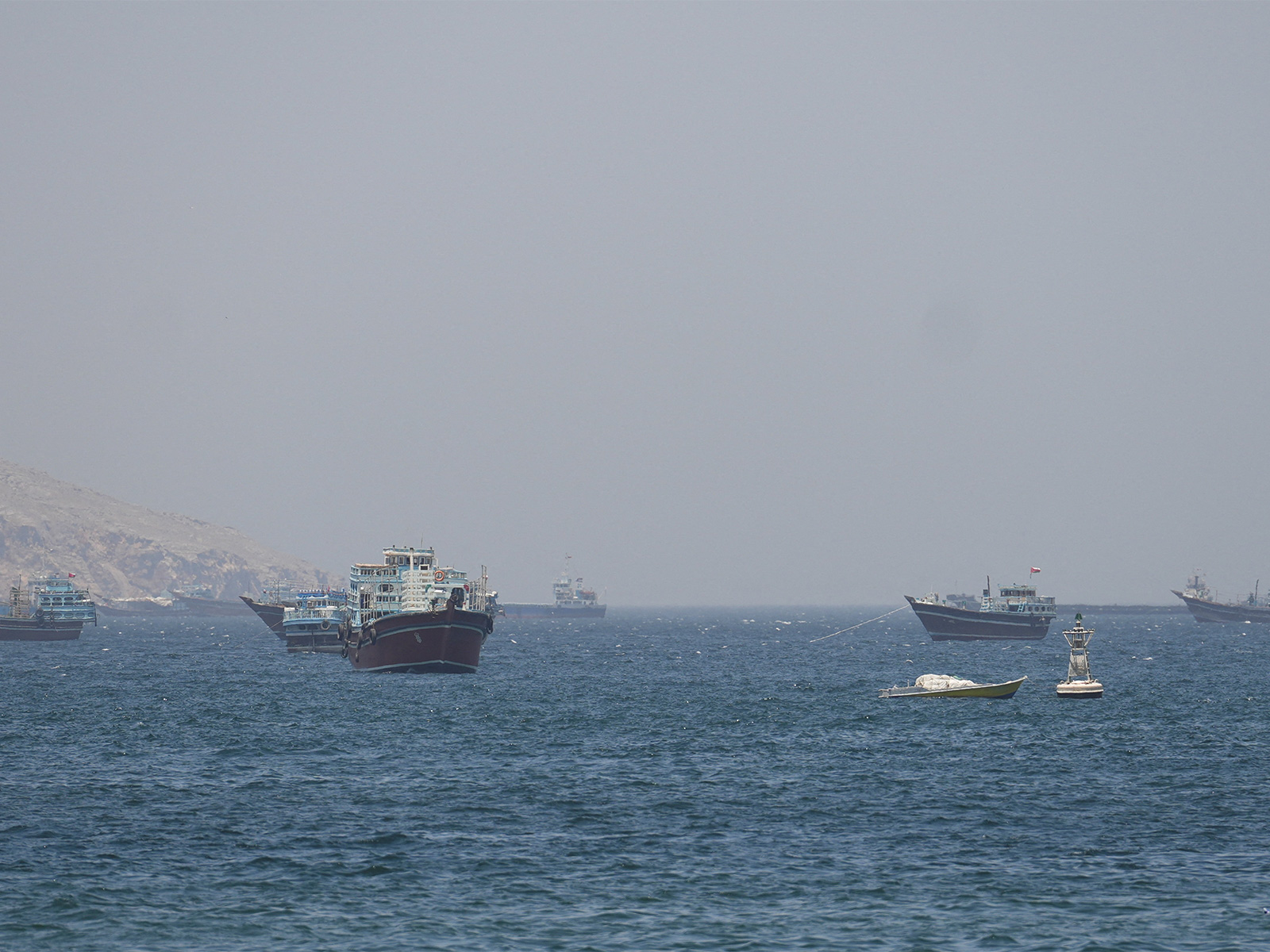
Florida [US], June 7 (ANI): The United States military has intercepted and destroyed two Iranian attack drones that posed an immediate hazard to commercial shipping lanes in the Strait of Hormuz, according to an official statement by the US Central Command late Saturday.
The kinetic engagement underscores a fresh escalation of hostilities in West Asia, severely straining the existing ceasefire framework just a day after Iran targeted the strategic waterway and its Gulf neighbours, including Kuwait and Bahrain, with a barrage of missiles and unmanned aerial vehicles.
“Earlier today, US forces in the Middle East shot down two Iranian one-way attack drones that threatened international maritime traffic in the Strait of Hormuz,” US Central Command announced on its X account.
https://x.com/CENTCOM/status/2063424127508037983
The military command added that “American forces remain postured and ready to continue defending against Iranian aggression.”
This drone interception is part of a broader flare-up of military confrontations between US and Iranian forces in the strategic shipping corridors of West Asia, exposing the extreme fragility of the existing ceasefire and raising significant international concern over a wider regional escalation.
The immediate cycle of friction began early on Saturday, when US forces launched targeted strikes against Iranian coastal radar installations located in Goruk and on Qeshm Island within the critical Strait of Hormuz.
According to US Central Command, this pre-dawn military operation was initiated directly after the interception of earlier Iranian drones that were deemed a threat to maritime traffic in the strategic waterway.
In direct retaliation for those radar strikes, Iran launched a barrage of missiles aimed at US military facilities situated in Kuwait and Bahrain.
Commenting on the defensive situation, Kuwaiti authorities confirmed that seven ballistic missiles crossed over populated areas, resulting in structural damage but causing no casualties, while Bahrain activated its public warning sirens and advised residents to seek shelter immediately.
An official statement from Iran’s Revolutionary Guard claimed that its retaliatory strikes successfully targeted American military installations located in both Gulf nations.
However, the US military countered that assessment, stating that six incoming missiles were intercepted by regional air defences, while another failed to reach its intended target.
Despite these intense kinetic exchanges on the ground, parallel diplomatic channels have managed to remain functional, with Pakistan continuing its active diplomatic efforts to bridge differences between the two sides.
As part of this mediation track, Pakistani Interior Minister Mohsin Naqvi arrived in Tehran on Saturday, carrying what Iranian media described as a special message from Pakistan’s military and political leadership for Iran’s Supreme Leader, Mojtaba Khamenei.
This high-level political engagement comes amidst reports that broader diplomatic negotiations have slowed down significantly, primarily because Tehran continues to pursue access to its frozen financial revenues, comprehensive relief from international sanctions heavily impacting its oil exports and maritime ports, and ultimate leverage over shipping through the Strait of Hormuz.
Highlighting the scale of the financial deadlock, an adviser to Iran’s supreme leader had previously suggested that the release of USD 24 billion in Iranian assets frozen by the United States remained a critical element of any peace arrangement.
The ongoing challenges to the ceasefire are also expanding across multiple fronts beyond the Gulf, notably in Lebanon, where three members of the Lebanese armed forces, including two officers, were killed following an Israeli strike on a military vehicle in the southern region of the country.
Israeli officials stated that they were investigating the circumstances of the incident.
This active front in Lebanon has become increasingly entangled with the wider matrix of US-Iran diplomacy, as Tehran has explicitly linked progress in its ongoing negotiations with Washington to a formal ceasefire involving Israel and Hezbollah.
Conversely, Israel has indicated its intent to continue military operations and maintain its active troop deployment.
Amid these complex diplomatic alignments, Lebanese Army Commander General Rudolf Haykal travelled to Pakistan at the explicit invitation of Pakistan’s military chief, a visit that has drawn considerable attention from regional observers monitoring the ongoing efforts involving Islamabad.
The continuing clashes across both the Gulf and Lebanon highlight the immense hurdles currently facing international negotiators who are seeking to transform the volatile ceasefire into a broader and more durable peace agreement. (ANI)
Related reading