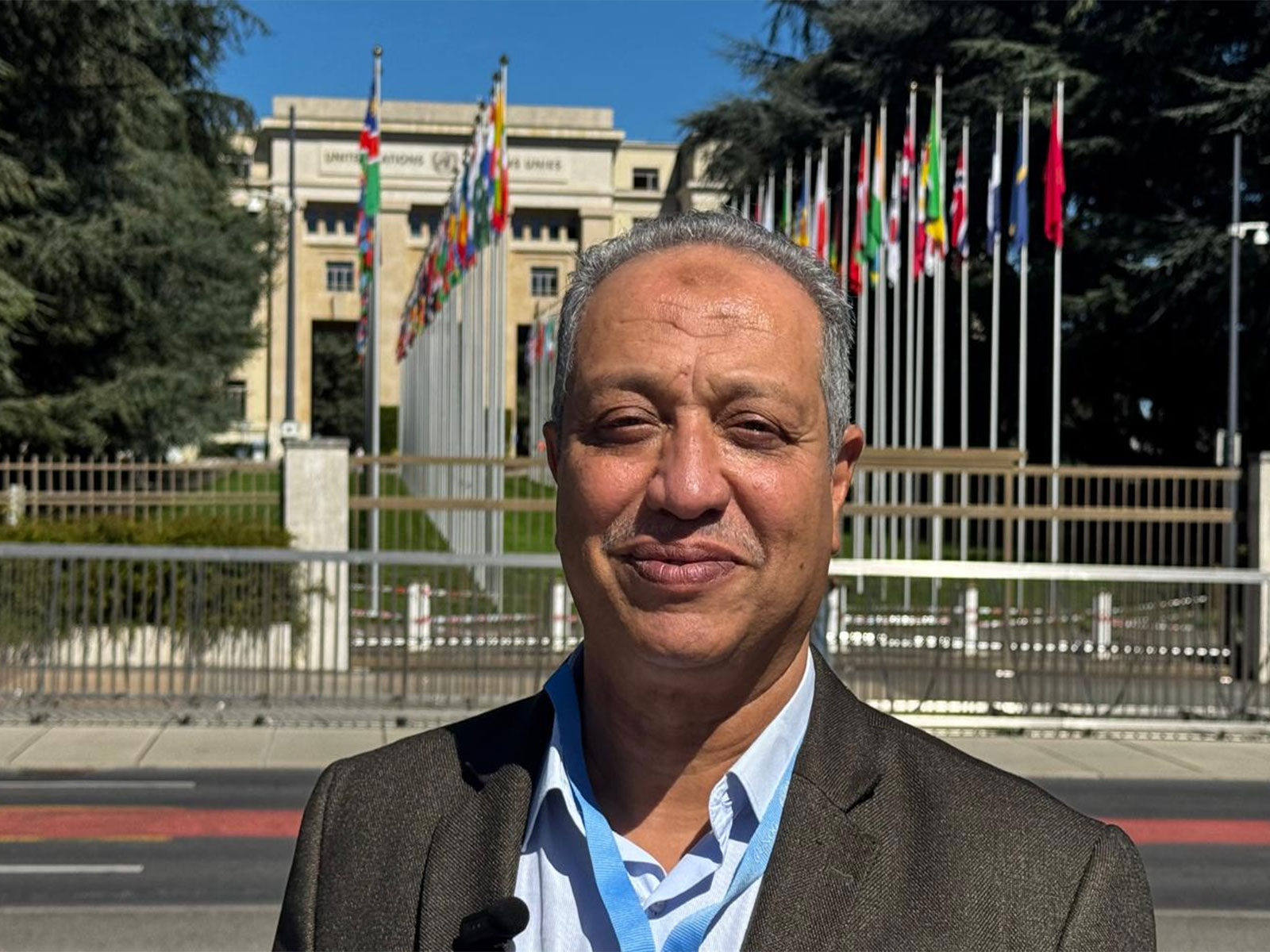
Geneva [Switzerland], September 15 (ANI): Director General of the Global Institute for Water, Environment and Health (GIWEH), Dr. Nidal Salim, highlighted India’s approach to water security and said its use of digital information and smart technology could serve as an inspiration for other countries, on the sidelines of the 63rd session of the United Nations Human Rights Council (UNHRC).
Speaking on how India’s water-security model could inspire other nations, Salim said India, with its huge population, needs a comprehensive approach to ensure water security for its people. He said India is relying on a model based on the digitalisation of information and the use of smart technology, which could attract and inspire other countries to develop similar approaches.
According to Salim, the model involves the use of artificial intelligence, management tools and an economic approach, while also focusing on the development of a green economy. He said water and environmental initiatives can help empower young people and contribute to economic revival.
He further described India’s approach as a comprehensive model that goes beyond water and also incorporates food and health-related concerns. He pointed to India’s agricultural cooperative approach and said the main source of inspiration for other countries was the digitalisation and numerical management of information.
On the role of the United Nations in protecting India’s legitimate development needs in transboundary water issues, Salim said the issue should become an avenue for dialogue, cooperation and negotiation.
He stressed that no country can manage transboundary water resources alone and said the United Nations and the international community have a role in supporting countries in developing their water resources through cooperation.
“Transboundary water resources areas must be developed in a cooperative way,” Salim said, emphasising the need for a community-based approach and economic development in areas connected to such resources. He added that the UN could support and participate in this process.
Addressing the role of the Second UN Water Conference, Salim said its title, “Water for Cooperation”, itself reflected the need to create platforms for negotiation and discussion on transboundary water resources.
He said such a platform could facilitate dialogue and cooperation, particularly in areas where agreements on transboundary water resources are absent. He added that the issue should not only be viewed from the perspective of relations between countries, but also in the context of water management between states within India.
According to Salim, stakeholders need to sit together, share information and negotiate, and the UN can provide an opening platform and facilitate this process.
He also stressed the importance of focusing on vulnerable populations, particularly through goals related to safe access to water and sanitation and transboundary water resources management.
Salim said these issues need to be evaluated together from a comprehensive perspective at the Second UN Water Conference, with cooperation, negotiation and equitable water governance forming the basis of efforts to strengthen water security. (ANI)
Related reading