Washington DC [US], September 30 (ANI): US President Donald Trump on Tuesday (local time) said Iran would “give up” and claimed that the United States had taken more oil out of the Strait of Hormuz over the previous couple of days than at any point in history.
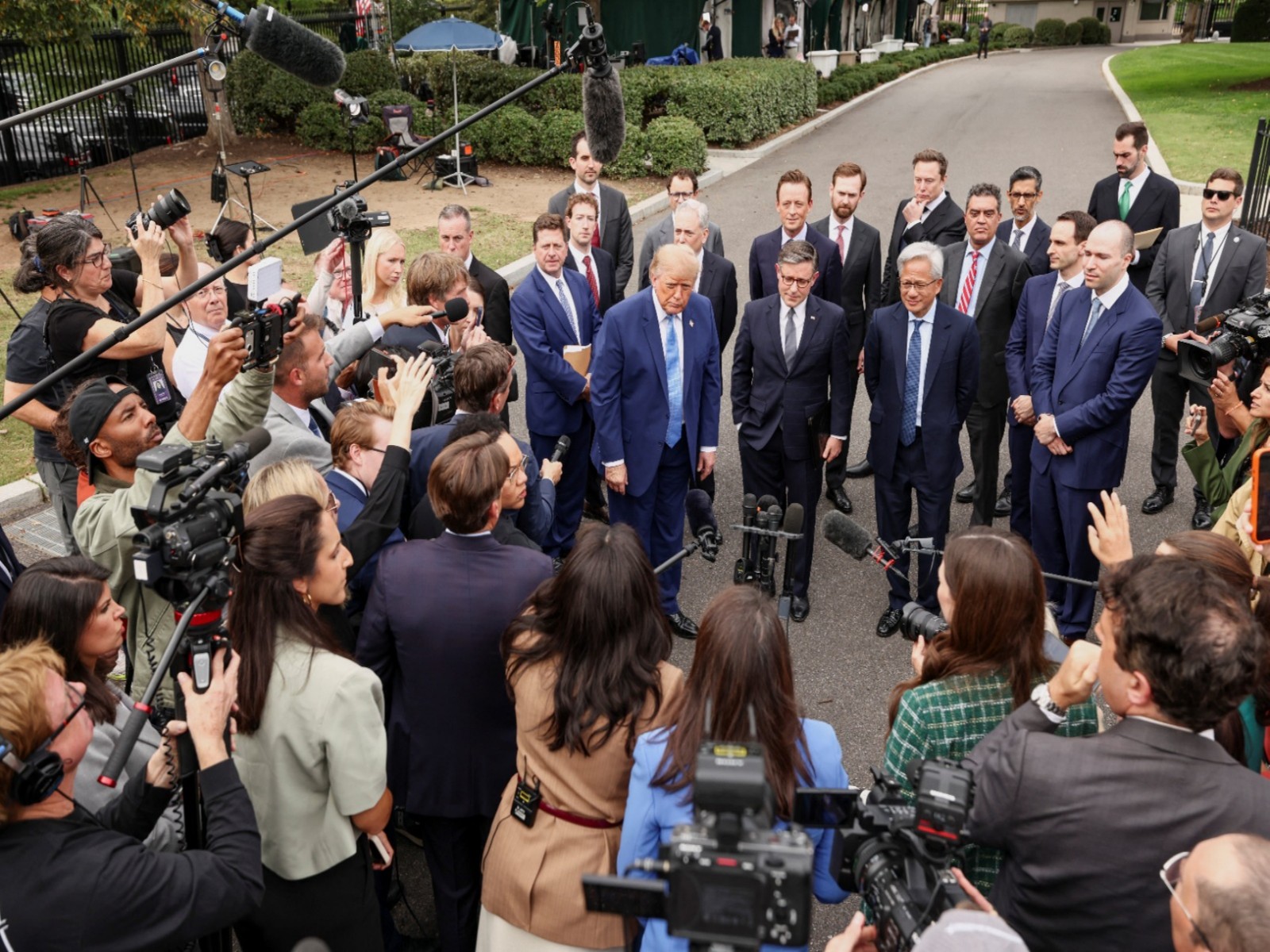
Trump made the remarks while addressing reporters at the White House following a luncheon with leading technology company executives, where he and tech leaders discussed the administration’s approach to advanced artificial intelligence and signed a joint commitment on the safety of frontier computing models.
“They will give up… We took more oil out of the Hormuz Strait over the last couple days than at any point in history,” Trump said.
The remarks came after Trump and the chief executives of leading technology companies on Tuesday signed a joint, “morally binding” accord committing to implement a comprehensive framework of “four layers of controls and audits” to govern the safety of frontier computing models, while keeping the door open to future legislative codification.
The signed document, titled “Joint Commitment on Frontier Responsibilities,” was released following the White House summit on what the administration has formally designated as “Super Intelligence,” following suggestions from tech bosses to slow the pace of Frontier AI development or risk losing control.
Trump also signed an executive order on Tuesday formally directing the federal government to replace the terms “Artificial Intelligence” and “AI” with “Super Intelligence” and “SI” across executive branch operations. The order, titled “Inaugurating the Era of Super Intelligence,” establishes that the US government will no longer recognise or use Artificial Intelligence or AI as terminology in official settings to the maximum extent permitted by law.
Meanwhile, Iranian Parliament Speaker Mohammad Bagher Ghalibaf on Tuesday warned the US and other countries over the Strait of Hormuz, saying that if Iran’s security was not ensured, “no infrastructure will be safe”.
Ghalibaf made the remarks during a public video conference on Tuesday, referring to earlier statements by US President Donald Trump regarding the Strait of Hormuz and the passage of ships.
Reacting to the US President’s earlier remarks, Ghalibaf said they were a repetition of previous claims and that their nature was known to everyone.
“The delusional US president recently made rhetoric about the Strait of Hormuz and the passage of ships through it that is a repetition of previous claims, and the truth of these delusional positions is known to everyone,” he said.
Ghalibaf then warned the US and other countries that Iran would not allow its security to be compromised, linking security in the region to the movement of oil.
“Both Americans and other countries should know: As we said before, in a region where we do not sell oil, no one will sell oil, and if our security is not ensured, no infrastructure will be safe,” he said.
The remarks came as Iranian Foreign Minister Abbas Araghchi left New York for Tehran after concluding his programs and intensive diplomatic consultations, according to IRNA.
Meanwhile, a US official on Monday (local time) told CNN that US President Donald Trump was willing to give Iran sanctions relief and release frozen funds as part of a final deal, but only if Tehran offered “concrete progress” on the nuclear issue, as mediators sought to bring both countries back to the negotiating table.
The United States was having “positive and constructive discussions through the mediators,” the official said, while noting that there would be no deal unless nuclear issues were addressed. Trump on Saturday (local time) rejected Iran’s latest proposal to reopen the Strait of Hormuz, calling it “unacceptable.”
According to the official, Iran had indicated that it was flexible on nuclear issues, but the two sides had not reached an agreement on the timing of the commitments.
Meanwhile, Iranian Foreign Minister Abbas Araghchi said on Monday (local time) that Tehran had held further indirect talks with the United States through Qatari mediators in New York, as reported by Al Jazeera. He said Iran was awaiting an official response from Washington, which he “hopefully” expected by Tuesday (local time). (ANI)
Related reading