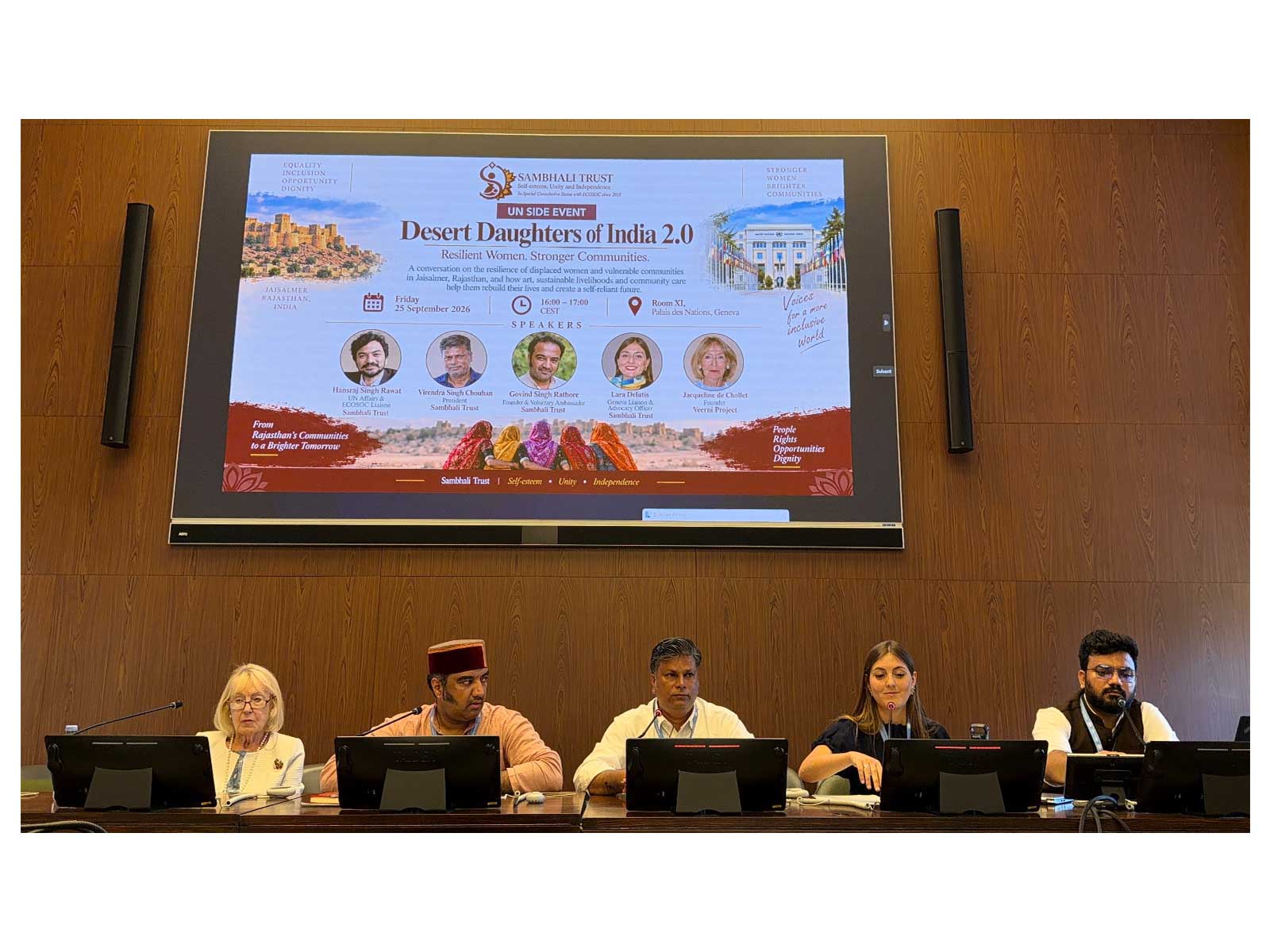
Geneva [Switzerland], September 25 (ANI): Sambhali Trust organised its side event, “Desert Daughters of India 2.0 – Resilient Women, Stronger Communities”, at the Palais des Nations in Geneva on Friday on the margins of the 63rd Session of the United Nations Human Rights Council, highlighting the experiences of displaced and vulnerable communities in Rajasthan and efforts to support women and girls through education, livelihoods, art and community initiatives.
The event brought together representatives of Sambhali Trust and the Veerni Project to discuss the experiences of women and girls, particularly those living in the desert districts of Jaisalmer, and the challenges involved in rebuilding lives following displacement. The event followed a photo exhibition on “Desert Daughters of India 2.0” held at Geneva’s Broken Chair on September 23.
Opening the substantive discussion, Govind Singh Rathore, Founder and Voluntary Ambassador of Sambhali Trust, described displacement as a human experience and reflected on the challenges faced by women who are forced to leave their homes and start again.
Rathore recalled that Sambhali was founded in Jodhpur in 2007 with 18 women and has since established Empowerment Centres in Jaisalmer, where women and girls receive training in sewing, embroidery, handicrafts, literacy, numeracy, health, financial awareness and safety.
He said the centres also provide spaces for women to find community and support. He noted that 109 women completed training at Sambhali’s Jaisalmer centres last November, with each receiving a sewing machine to help them pursue livelihoods and rebuild their lives.
Lara Delutis, Geneva Liaison and Advocacy Officer at Sambhali Trust, moderated the event and presented “Desert Daughters: Stories from the Ground”. She emphasised the importance of focusing on safety, dignity and the lived experiences of vulnerable people while discussing displacement, identity and religious communities.
Delutis said the discussion should focus on systemic issues that can contribute to violations rather than generalising about particular religions or communities. She stressed that, whether discussing India or Pakistan, the emphasis should remain on universal rights to safety and dignity.
Hansraj Singh Rawat, UN Affairs and ECOSOC Liaison at Sambhali Trust, outlined the organisation’s engagement with the international human rights system. He said that since receiving ECOSOC Special Consultative Status in 2015, Sambhali has used its UN engagement to bring issues concerning women, girls and vulnerable communities into Human Rights Council discussions.
Rawat highlighted the organisation’s oral and written statements at Human Rights Council sessions on issues including education, livelihoods, displacement and dignity. He also traced the evolution of the “Desert Daughters of India” initiative, which was first presented during the 61st Human Rights Council session around the themes of resilience, sustainable livelihoods and community care.
Jacqueline de Chollet, Founder of the Veerni Project, spoke about the role of art, community and resilience in supporting women and girls in Rajasthan. Her contribution highlighted the importance of community-based initiatives and creative expression alongside economic empowerment.
The event concluded with remarks by Virendra Singh Chouhan, President of Sambhali Trust, who focused on translating visibility and awareness into practical opportunities.
Chouhan said women who have acquired skills also need access to markets, while girls seeking education require schools and safe environments. He also highlighted the need for accessible support for women facing violence.
He said Sambhali’s approach was to work alongside communities through sustained and practical interventions, enabling women and girls to participate, develop confidence and contribute to their communities.
A significant part of “Desert Daughters of India 2.0” focuses on families who migrated from Pakistan and have been rebuilding their lives in Rajasthan. The initiative presents their experiences through stories and photographs, highlighting displacement, education, livelihoods, community support and the rebuilding of family and community life.
The event sought to connect these individual experiences with broader discussions on dignity, opportunity and self-reliance, while maintaining a focus on the lived experiences of women and families affected by displacement. (ANI)
Related reading