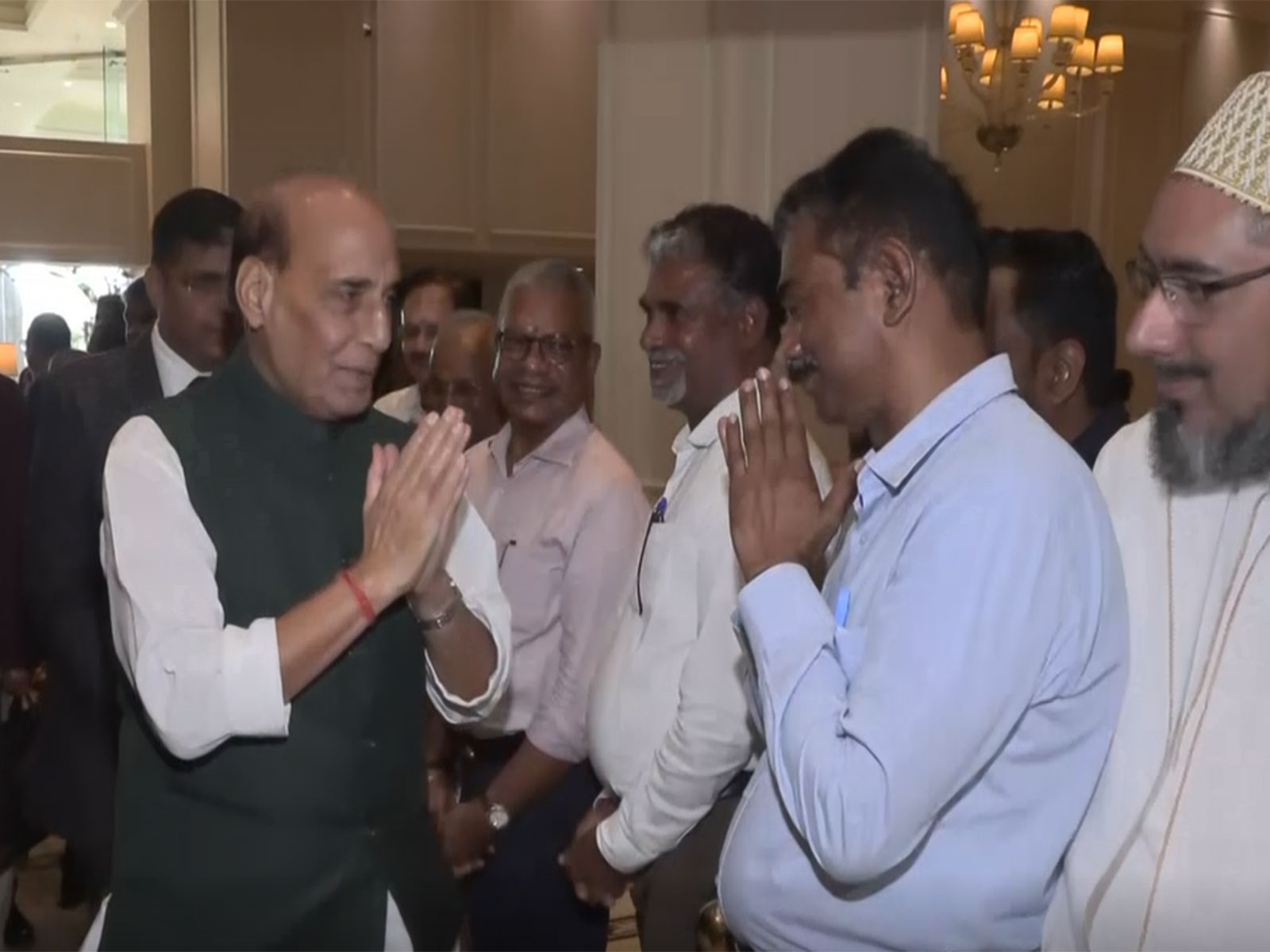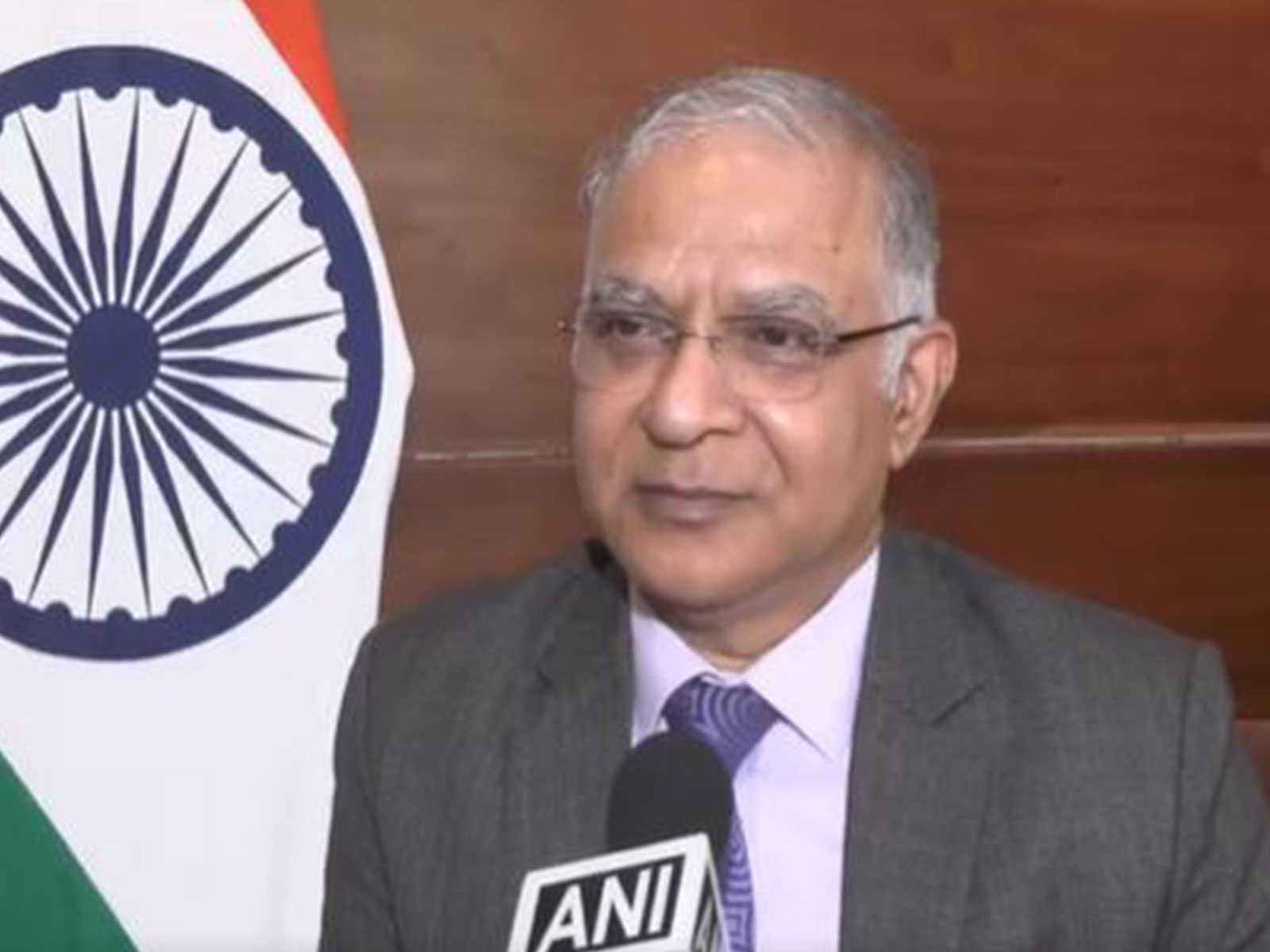
Colombo [Sri Lanka], September 8 (ANI): India-Sri Lanka relations have “never been better” in the last several decades and are witnessing unprecedented political-level engagement across security, defence, connectivity, energy, trade, investment and digital cooperation, Indian High Commissioner to Sri Lanka Santosh Jha said, as Defence Minister Rajnath Singh embarks on a visit to the island nation.
Speaking to ANI in Colombo, Jha said Rajnath Singh’s visit should be viewed not only in the context of defence and security cooperation but also as part of the broader intensification of political engagement between the two neighbouring countries.
“If you look at the last two to three years, the engagement between India and Sri Lanka has acquired a new intensity. There is regular exchange of ministerial-level visits from India to Sri Lanka and Sri Lanka to India,” Jha said.
He said defence and security remain a “very significant aspect” of the partnership and Singh’s visit would provide an opportunity to take forward ongoing initiatives and review progress in defence cooperation.
However, Jha stressed that the visit should be seen in a larger context, given Singh’s seniority and the importance of high-level political exchanges between India and Sri Lanka.
“The exchanges will not just be limited to security and defence, but will also look at other aspects of our relations, which could be developmental, which could be connectivity-related,” he said.
On areas where bilateral cooperation is expected to expand, Jha said India and Sri Lanka are building an “expansive” partnership spanning connectivity, energy, development, security, defence, people-to-people exchanges and digitisation.
He highlighted India’s cooperation in emerging areas such as artificial intelligence, new technologies and the startup ecosystem, saying efforts are underway to connect Indian startups with Sri Lankan counterparts.
Jha also pointed to growing trade and investment ties, saying India has once again become Sri Lanka’s largest trading partner, while Sri Lanka has emerged as the second-largest destination for Sri Lankan exports.
He said this was particularly significant in the context of the India-Sri Lanka Free Trade Agreement, whose original objective was to provide Sri Lankan businesses greater access to the large Indian market.
“Now this is really showing up in figures as well,” he said.
India was also the largest source of investment into Sri Lanka in 2025, with more than 50 per cent of investment coming from India, including investments by Indian companies through third countries, Jha said.
He further underlined the importance of tourism, saying India remains Sri Lanka’s largest source of tourist traffic and contributes around 25 per cent of the country’s total tourist arrivals.
“The Indian tourists are coming all through the year. So this is a very, very important aspect of a relationship,” he said.
Asked whether India now seeks to move “shoulder to shoulder” with Sri Lanka after standing by the country during its economic crisis and providing assistance following Cyclone Ditwah, Jha said being a first responder is central to India’s neighbourhood policy.
“That is the essence of the Neighbourhood First policy and the MAHASAGAR approach,” he said.
Jha said India takes pride in being a first responder during crises, but stressed that the relationship cannot be defined only by assistance during difficult times.
“It is not about having a relationship in difficult times alone, which is of course very important as neighbours, we must step up. But how we conduct ourselves, how we build our relationship in normal times,” he said.
According to Jha, India is therefore focused on building “structures, mechanisms and connections” that can sustain the partnership during normal times and deliver long-term benefits to people in both countries.
On the proposed stronger rupee-to-rupee commercial corridor, Jha said the initiative was still in its early stages, although some bilateral trade is already being conducted in Indian rupees.
“It is still early days, but I can tell you that some trade is already happening in rupees. So it’s just about scaling it up, making people aware,” he said.
He acknowledged that businesses could initially face difficulties and said the two sides were working to identify and overcome such challenges.
The Indian mission in Colombo has also begun monthly outreach programmes for exporters and importers to explain the benefits of rupee-to-rupee trade, he said.
Jha said both governments recognise the potential benefits of expanding such trade and linked the initiative to ongoing efforts to update the India-Sri Lanka Free Trade Agreement.
“A rupee-to-rupee trade with an upgraded Free Trade Agreement would be a very, very strong instrument for enhancing bilateral trade, building supply chains,” he said.
Describing the current state of bilateral ties under President Anura Kumara Dissanayake, Jha said the relationship has reached a level not seen in several decades.
“They have great relationship, but I can tell you that the India-Sri Lanka relationship, in broader sense, it’s easy to say that it has never been better, at least in the last many decades,” he said.
He said the relationship has not merely remained stable but is growing at a rapid pace, with the range of activities and intensity of political-level contacts being “unprecedented”.
“The fact that the political level contacts are so intensive would tell you that there is a very special nature that is building up in this relationship,” Jha said.
On areas where India-Sri Lanka ties still have significant untapped potential, Jha identified connectivity, energy, digitisation and trade.
He pointed to strong air connectivity and growing maritime connectivity between the two countries, noting that around 70 per cent of transshipment through Colombo Port is linked to Indian trade.
On energy cooperation, he highlighted plans for an electricity grid interconnection between India and Sri Lanka and development cooperation centred around Trincomalee.
Jha also said digitisation could open up a new frontier once Sri Lanka rolls out its population-scale unique digital identity platform.
“There will be a whole new opportunity for app developers, various people who are working in this space and building and innovating on it, to also extend benefits to Sri Lanka,” he said.
He also argued that bilateral trade has further room to grow, saying Sri Lanka should eventually aim to make India its largest export destination rather than the second-largest.
“India should remain also the largest exporter. So it should be number one on both the tables, not number two in either,” Jha said.
He added that as both economies grow and their governments remain focused on people-centric development, new opportunities for deeper economic and developmental cooperation would emerge. (ANI)
Related reading