Riyadh [Saudi Arabia], August 11 (ANI): The newly announced Mecca Joint Defence Agreement between Pakistan, Turkiye and Saudi Arabia appears to have failed its first major test after the Iran-backed Houthi rebels from Yemen struck an Aramco refinery in Jazan, with the newly formed alliance offering no visible military response or threat to the attack, said an analysis written in the Jerusalem Post.
The fire at the Aramco refinery in Jazan began on Sunday morning, with Houthi military spokesman Yahya Saree stating that the group had targeted the facility with a drone in retaliation for Saudi drone operations over Saada and Hajjah governorates.
Saudi Arabia’s Energy Ministry later confirmed the fire and said it had been extinguished.
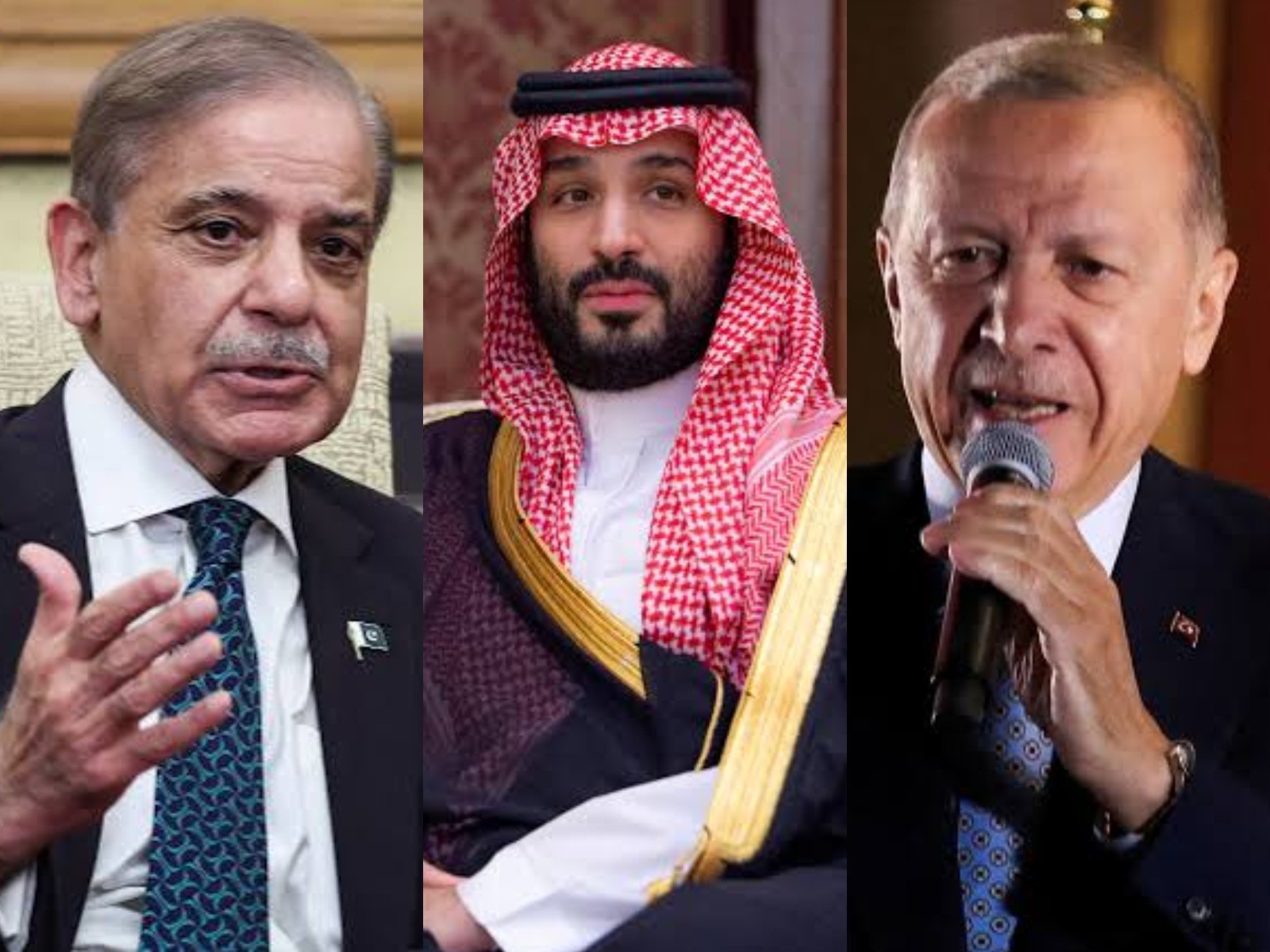
The incident came just 48 hours after Saudi Crown Prince Mohammed bin Salman, Turkish President Recep Tayyip Erdogan and Pakistani Prime Minister Shehbaz Sharif met in Mecca and signed the agreement on Friday under which an armed attack against any of the three countries would be regarded as an attack against all three.
Yet, following the Houthi strike on Jazan, neither Turkey nor Pakistan announced any response, raising questions over how the collective-defence arrangement would operate in an actual crisis.
According to an analysis by The Jerusalem Post, the pact has been portrayed in some Israeli commentary as the foundation of an “Islamic NATO” or a broader Sunni alliance, with some descriptions even suggesting a Pakistani nuclear umbrella for Saudi Arabia.
However, the available details of the agreement indicate a far less automatic arrangement.
The agreement seeks to strengthen defence cooperation and collective deterrence among the three countries. According to the summit statement, an armed attack against any one of the three signatories would be regarded as an attack against all three.
“The Agreement is intended to strengthen collective deterrence against any act of aggression, and stipulates that any armed attack against any one of the three States shall be regarded as an attack against them all. It further provides for the enhancement of all aspects of defence cooperation among the three States,” the summit statement said.
While the pact does not specify detailed operational or military commitments, it establishes a framework for enhanced defence cooperation and identifies peace, stability and security in the region and beyond as its broader objectives.
Turkish Foreign Minister Hakan Fidan provided some of the clearest details of the agreement while speaking to Anadolu Agency, where he said that the collective-defence clause was technically comparable to NATO’s Article 5 and that the arrangement would include a ministerial committee and a permanent secretariat based in Saudi Arabia.
However, Fidan also made clear that an attack would not necessarily trigger an automatic military response.
He said that if one member were attacked, the other members would first consult to determine the nature and scale of assistance.
According to The Jerusalem Post, the provision has raised questions about the practical value of the alliance, particularly after the latest Houthi attack on Saudi territory.
The distinction between a defence commitment and a guaranteed military response is significant. The agreement may provide a mechanism for consultation and coordination, but the Jazan incident has shown that the arrangement has yet to demonstrate that it can translate into immediate action on the ground, as per the analysis made by The Jerusalem Post.
Saudi Arabia has already had experience with a similar arrangement involving Pakistan.
Riyadh and Islamabad had earlier signed a defence agreement in September 2025, shortly after an Israeli strike targeting Hamas figures in Doha. Both countries said the agreement obliged each to defend the other.
Riyadh and Islamabad had earlier signed a defence agreement in September 2025, shortly after an Israeli strike targeting Hamas figures in Doha. Both countries said the pact committed each side to defend the other.
However, its practical effectiveness came under scrutiny when the United States and Israel launched strikes against Iran on February 28, with no immediate Pakistani military intervention reported, despite Saudi invoking that arrangement.
According to Reuters, citing five Pakistani and Saudi sources, Pakistan subsequently deployed around 8,000 troops, approximately 16 aircraft, mostly JF-17s, two squadrons of drones and a Chinese-built HQ-9 air-defence battery.
Pakistani personnel operated the equipment, while Saudi Arabia paid for it. Two of the sources described Pakistan’s role as mainly advisory and focused on training.
Despite the deployment, the arrangement did not prevent Iran from subsequently targeting Saudi refineries and US aircraft stationed at Prince Sultan Air Base. Two Saudi civilians were killed, while the Pakistani squadron remained in position, which meant no military intervention, while Islamabad continued to host talks between Washington and Tehran, as per The Jerusalem Post.
The latest Mecca agreement therefore appears to formalise a model in which foreign military equipment and personnel can be stationed in Saudi Arabia, with Riyadh financing the arrangement, without necessarily creating an obligation for the partners to immediately engage in combat, as per The Jerusalem Post analysis.
The Jazan incident has consequently provided an early test of the political and military credibility of the new pact, with no visible military response from the alliance members showing some potential weaknesses in the overall agreement. (ANI)
Related reading