Melbourne [Australia], July 9 (ANI): Sounding a powerful, unified note on global security, Prime Minister Narendra Modi on Thursday asserted that transnational terrorism constitutes an existential threat to global stability, reinforcing that New Delhi and Canberra remain firmly united in a common campaign to dismantle terror networks.
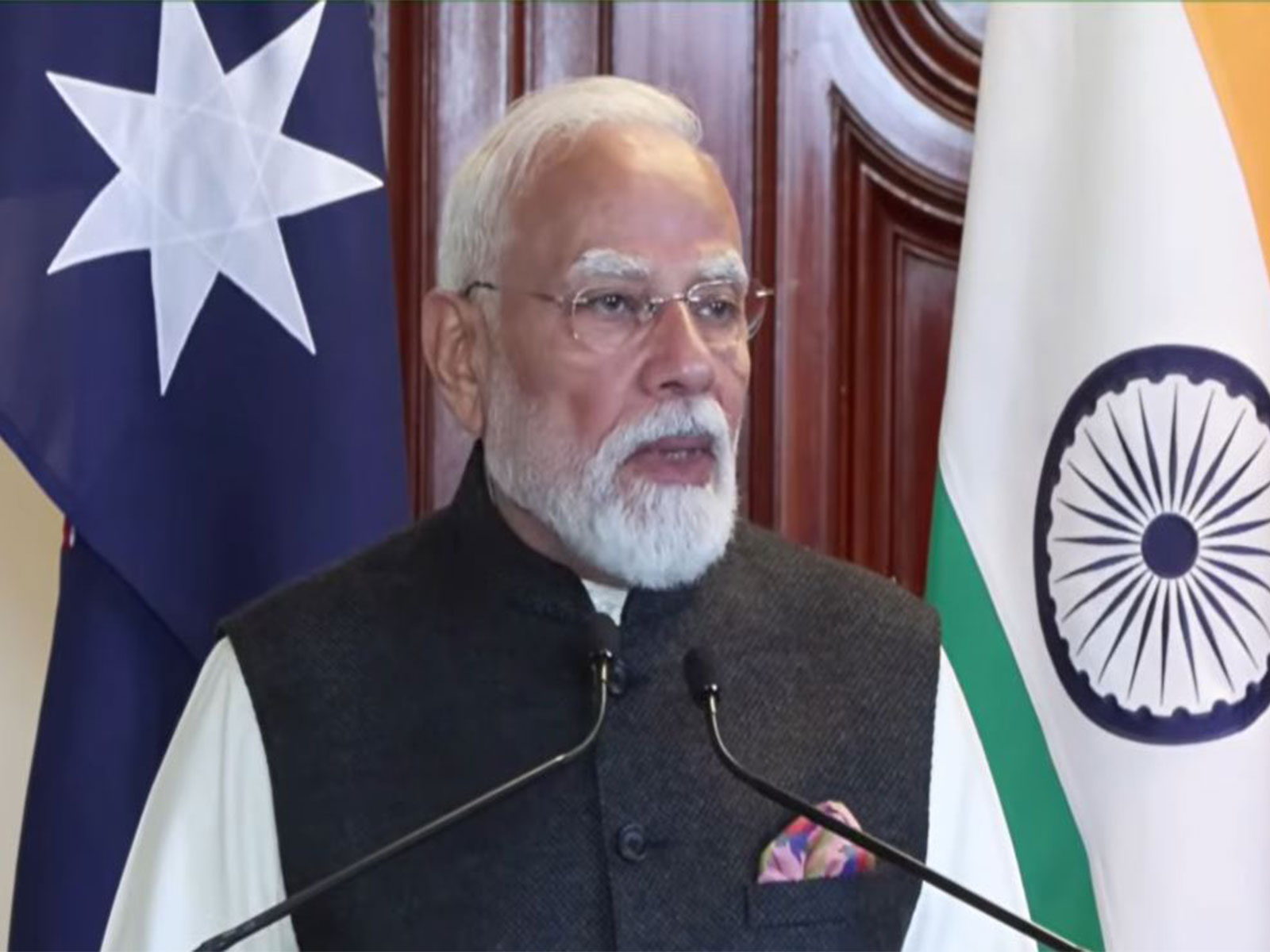
Addressing a joint press statement alongside Australian Prime Minister Anthony Albanese following the conclusion of the third India-Australia Annual Summit in Melbourne, PM Modi contextualised the deepening operational convergence between the two democracies.
“Today we held detailed discussions on many regional and international issues. India and Australia believe that terrorism poses a serious challenge not just to any one country, but to all of humanity. Therefore, our fight against terrorism is shared, our resolve unwavering, and our cooperation in this area is continuously strengthening,” PM Modi declared.
Navigating volatile global flashpoints, the Prime Minister firmly reiterated India’s principled stance that military hostility cannot yield permanent solutions, maintaining that geopolitical friction must give way to negotiated settlements.
PM Modi stated, “We also believe that the tensions and wars in many parts of the world can only be resolved through dialogue and diplomacy. Together, we will further strengthen peace, stability, freedom of navigation, and a rules-based order throughout the Indo-Pacific region.”
The Prime Minister conceptualised the strategic geography of the region as a vital arena for democratic values rather than a mere maritime intersection, noting that the two nations are uniquely positioned to anchor regional stability.
“The Indo-Pacific is not just a meeting point of two oceans, but it also represents the shared aspirations of like-minded democracies like India and Australia. To increase cooperation in the area of security, we have signed a joint declaration,” PM Modi announced.
Outlining the tangible frameworks designed to integrate their industrial bases, the Prime Minister detailed deep-rooted military-industrial and engineering alignments.
PM Modi added, “With the India-Australia Defence Innovation Corridor, we will work to connect defence start-ups and industries. Our maritime security collaboration roadmap will give new strength to our shared efforts in the Indo-Pacific. We will also work together on shipbuilding, repair, and maintenance.”
Characterising critical minerals as “vital” for the strategic security and clean energy transition of the two countries, PM Modi unveiled the formal launch of the Australia-India Partnership on Cyber, Critical Technologies, and Supply Chains (PACTS).
Alongside this mechanism, he affirmed that India and Australia would work together on the Critical Minerals Corridor to secure resilient resource pipelines.
Turning to the socio-cultural architecture of the alliance, the Prime Minister paid tribute to the strong people-to-people ties that continue to drive economic vitality across the two countries.
“The most distinctive strength of our relationship is our people-to-people ties. People of Indian origin are making positive contributions to Australia’s economic and social life,” PM Modi remarked.
The Prime Minister also spotlighted the rapidly accelerating knowledge economy, noting that institutional academic linkages are breaking fresh ground during his ongoing visit.
PM Modi observed, “Australia has been a favourite destination for Indian students. The opening of campuses by Australian universities in India marks a new chapter in our knowledge partnership. We will continue to strive to increase exchanges between students, professionals, and tourists between our two countries.” (ANI)
Related reading