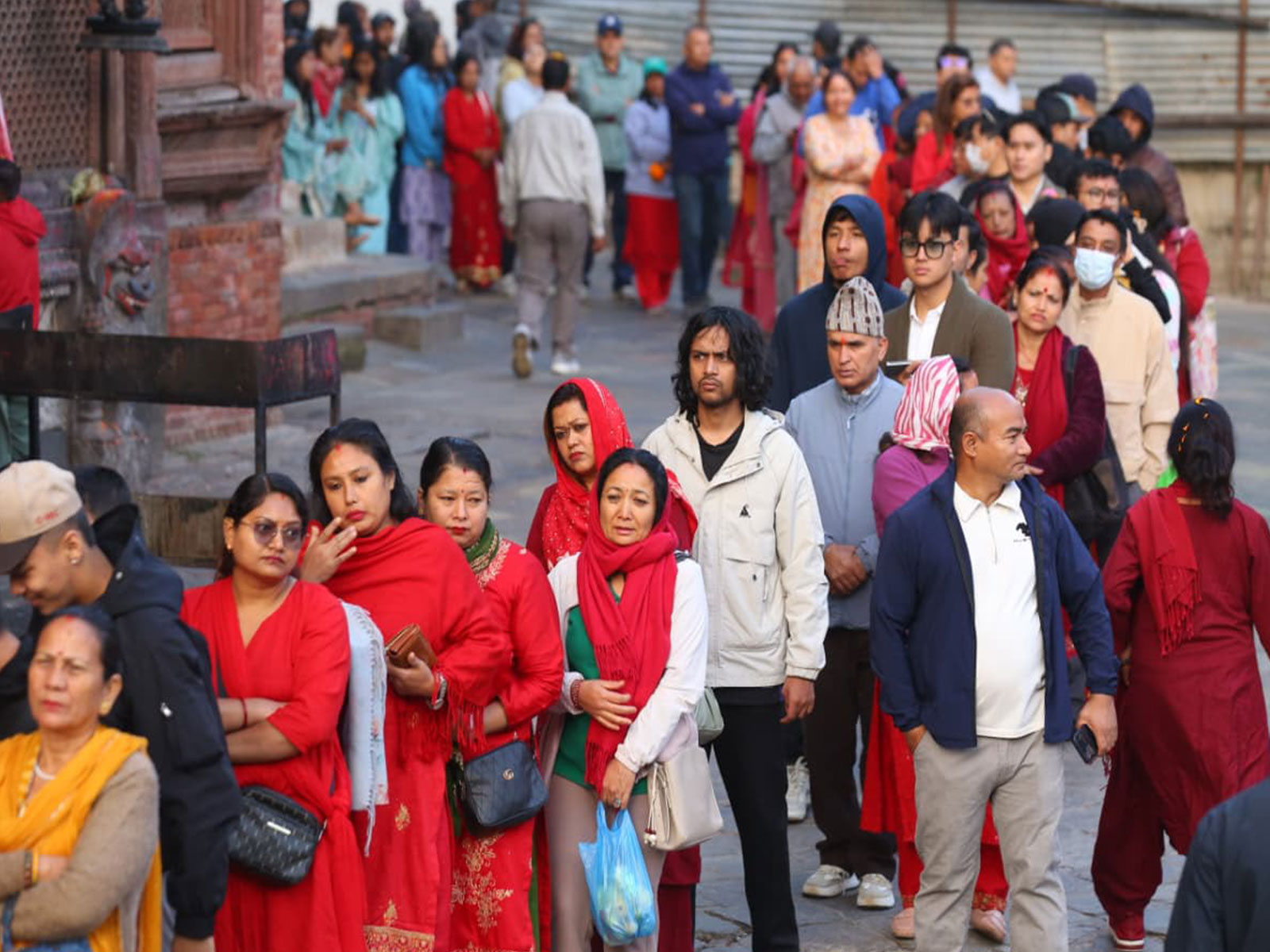
Kathmandu [Nepal], October 20 (ANI): A serpentine line stretched far and wide across the Hanuman Dhoka Durbar Square from the wee hours to get blessings and worship Goddess Taleju Bhawani, as the doors to the temple are opened just for a day in a year.
Thousands of devotees entered the temple, circumnavigating the temple that stands within the premises of the UNESCO World Heritage Site in the capital, Kathmandu, while he-goat and he-buffalo continued to be sacrificed in the open square in front of Gaddhi Baithak.
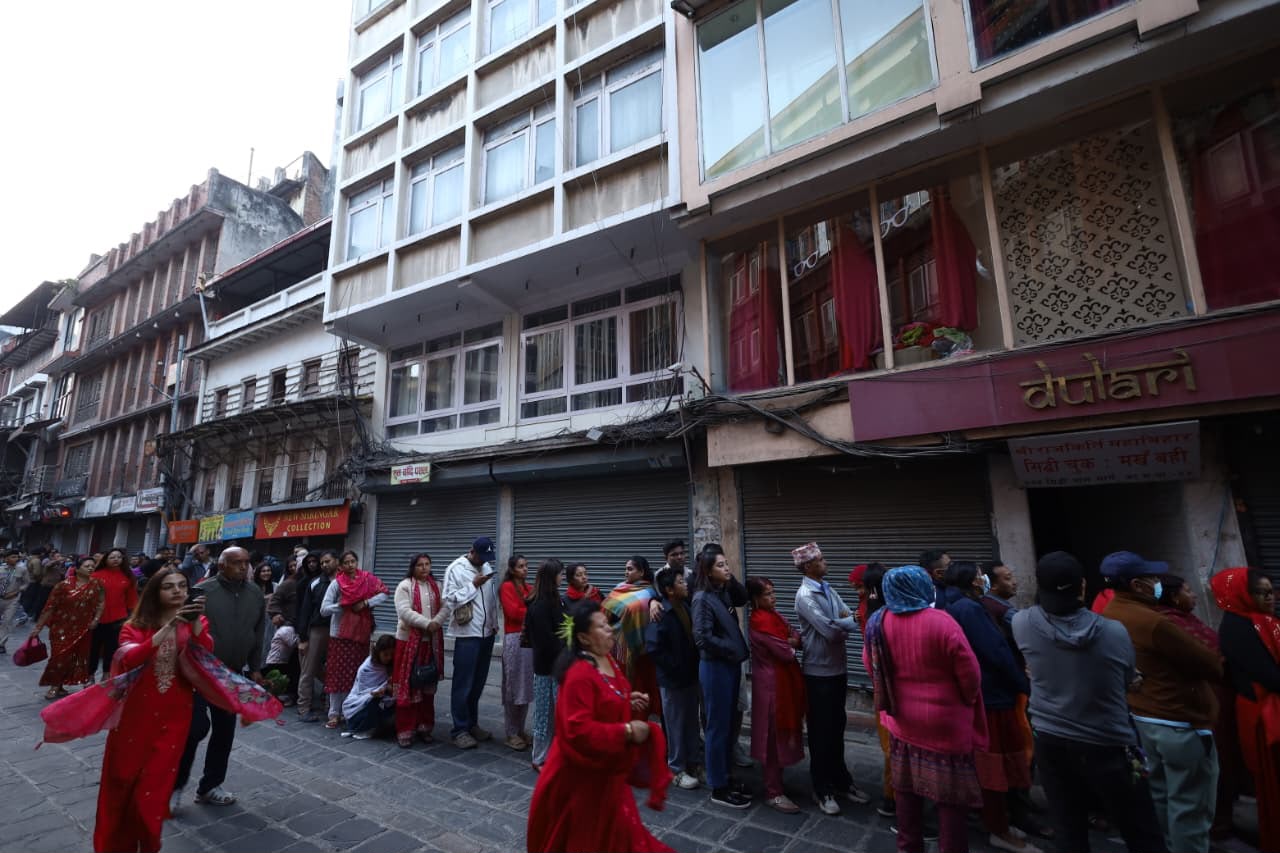
Open once a year on the day of Maha Navami, Taleju Bhawani is regarded as the main goddess of Newa, as well as the saviour of children.
“As per the beliefs, we worship Taleju Bhawani as the most powerful goddess, Taleju Bhawani. She is the mother of us all and is powerful. She is the most powerful amongst all the Nava Durga. The temple is only open today – once a year, on the day of Maha Navami. A big celebratory and worship procession is held, paying obeisance to her,” Sanumaya Khatri, one of the devotees, told ANI.
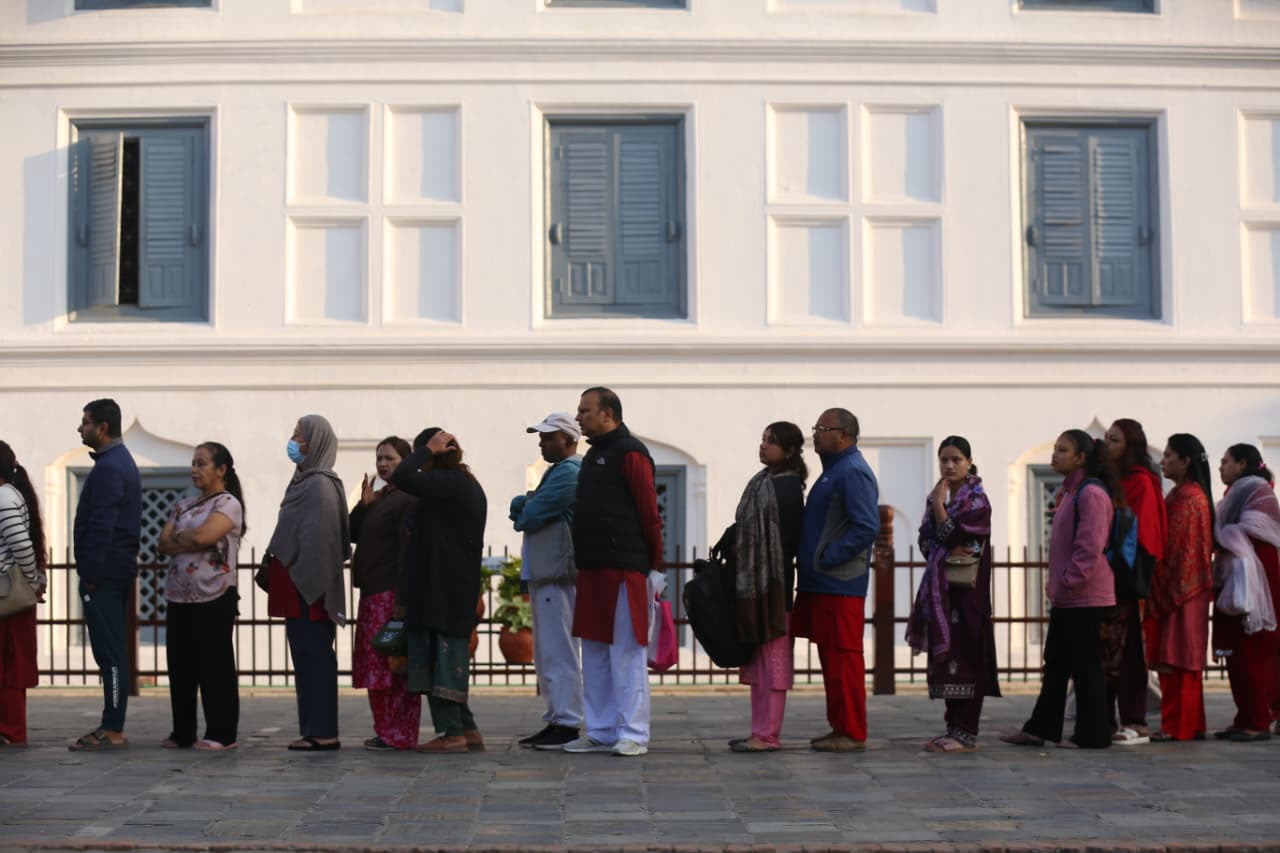
The Taleju Bhawani temple situated within the Hanuman Dhoka Durbar area is opened only on the day of Mahanavami or Ashwin Shukla Navami (the ninth day in the month of Asoj as per the lunar calendar) every year.
Meanwhile, the Taleju Bhawani goddess was taken amidst a ritualistic procession to the Mulchowk area of the Hanuman Dhoka Durbar Area at an auspicious hour. The statue of the goddess will be kept at Mulchowk, where a special puja would be offered at midnight on Mahaastami by sacrificing 54 he-goats and 54 he-buffaloes.
The statue will be worshipped at Mulchowk until the day of Bijaya Dashami. It is taken to the temple sanctum sanctorum on the morning of Bijaya Dashami amidst a religious procession. Devotees playing drums and traditional musical instruments circumnavigate the temple, paying obeisance to the powerful goddess.
“During Navaratri, we tour the temples of Goddess Durga around Kathmandu. Today we came to the Taleju Bhawani Temple; before that we have been to Pachali, Jana Bahal and on the ninth day we are here at Taleju Temple playing the traditional musical instrument to worship the goddess,” another devotee, Gyani Devi Maharjan, told ANI.
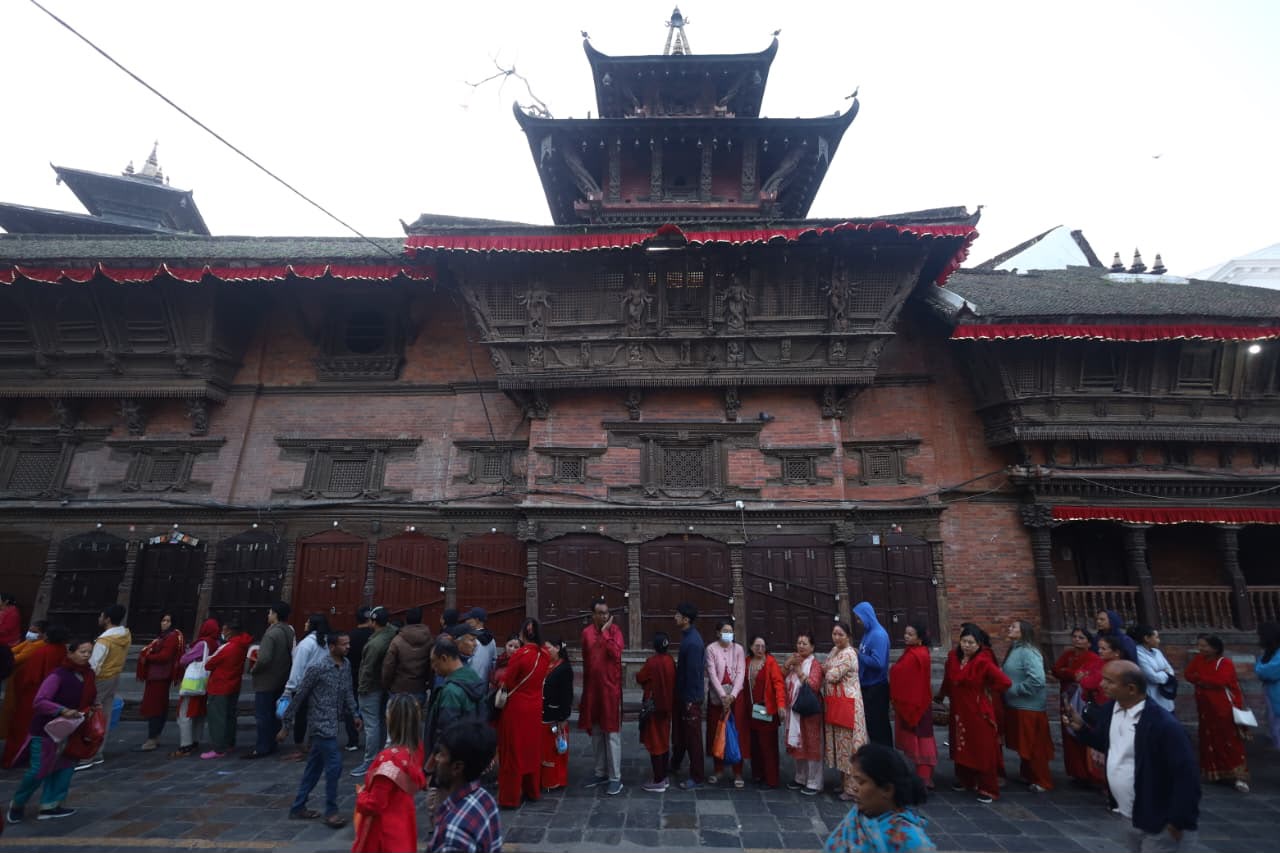
The ancient temple, which dates back to the Malla era, opens only on the ninth day of the waxing moon in the month of Asoj as per the lunar calendar. Special worship is performed to Durga Bhawani today on the occasion of the Mahanavami, and the ‘jamara’ which have been germinated are offered to the goddesses at various shrines.
He-goats, ducks, roosters and he-buffalos are sacrificed at various temples dedicated to the goddesses. Those who do not have the tradition of offering animal or bird sacrifices offer the sacrifice of fruits and vegetables to the goddess.
The Durga Saptasati and Devi Stotra scriptures are also recited at home and in temples on this day. As mentioned in the Markandeya Purana, Goddess Chamunda had slain the demon Raktabij on the day of Mahanavami. So, there is special worship of the goddess on this day with the offering of animal sacrifices. On this day, the security forces also perform what is called the ‘kot puja’ or worship of the armouries.
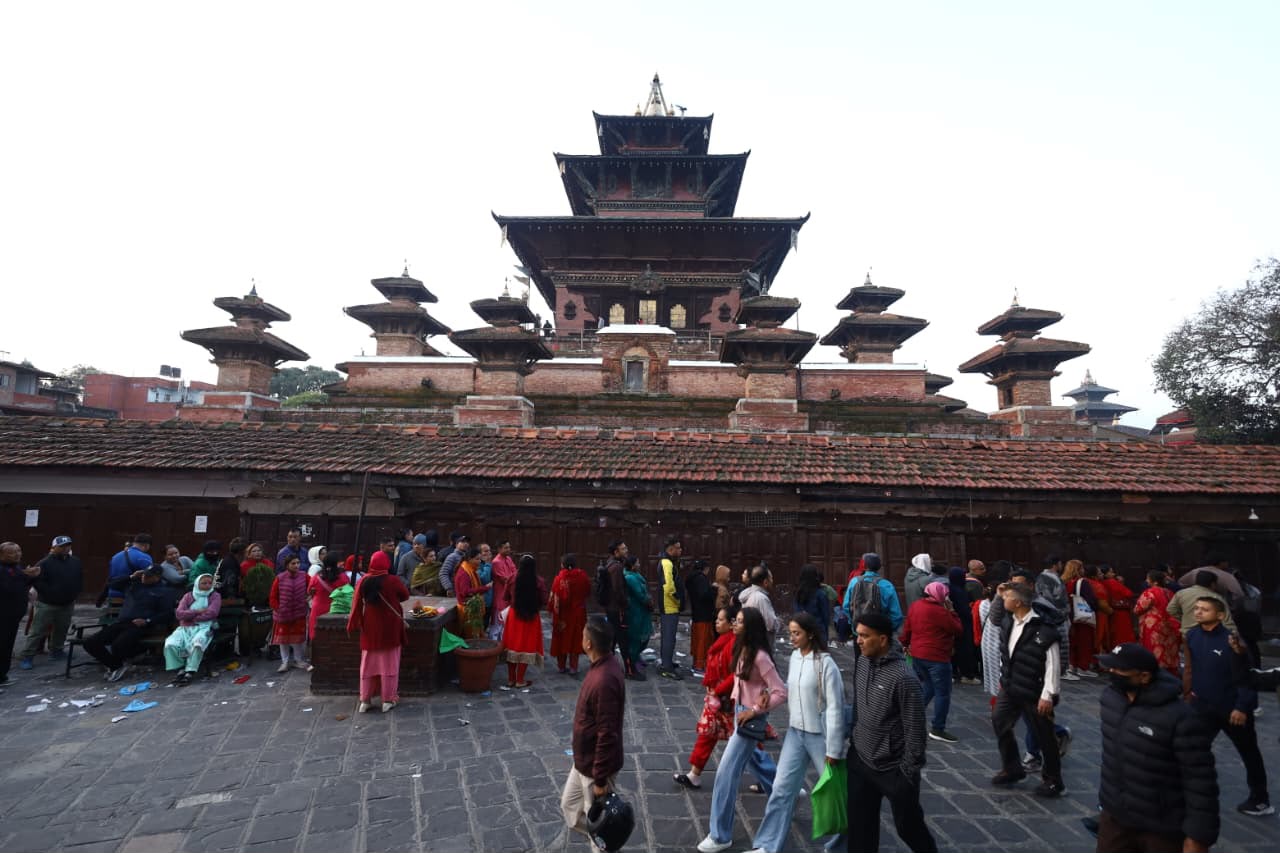
The day of Maha Navami is also considered the final day to make sacrifices to Goddess Durga and her various incarnations during Dashain. The tenth day of the fortnightly festival of Dashain witnesses people touring around the house of their elders seeking blessings and Tika on the forehead.
It is believed that the sacrifices should be completed beforehand, and the tika on the forehead is applied on the day of Bijaya Dashami, or the tenth day of the festival. Starting from the tenth day, there is an existing culture where the tika on the forehead is worn until the day of Kojagrat Purnima, or the 15th day of the festival of Dashain. (ANI)
Related reading