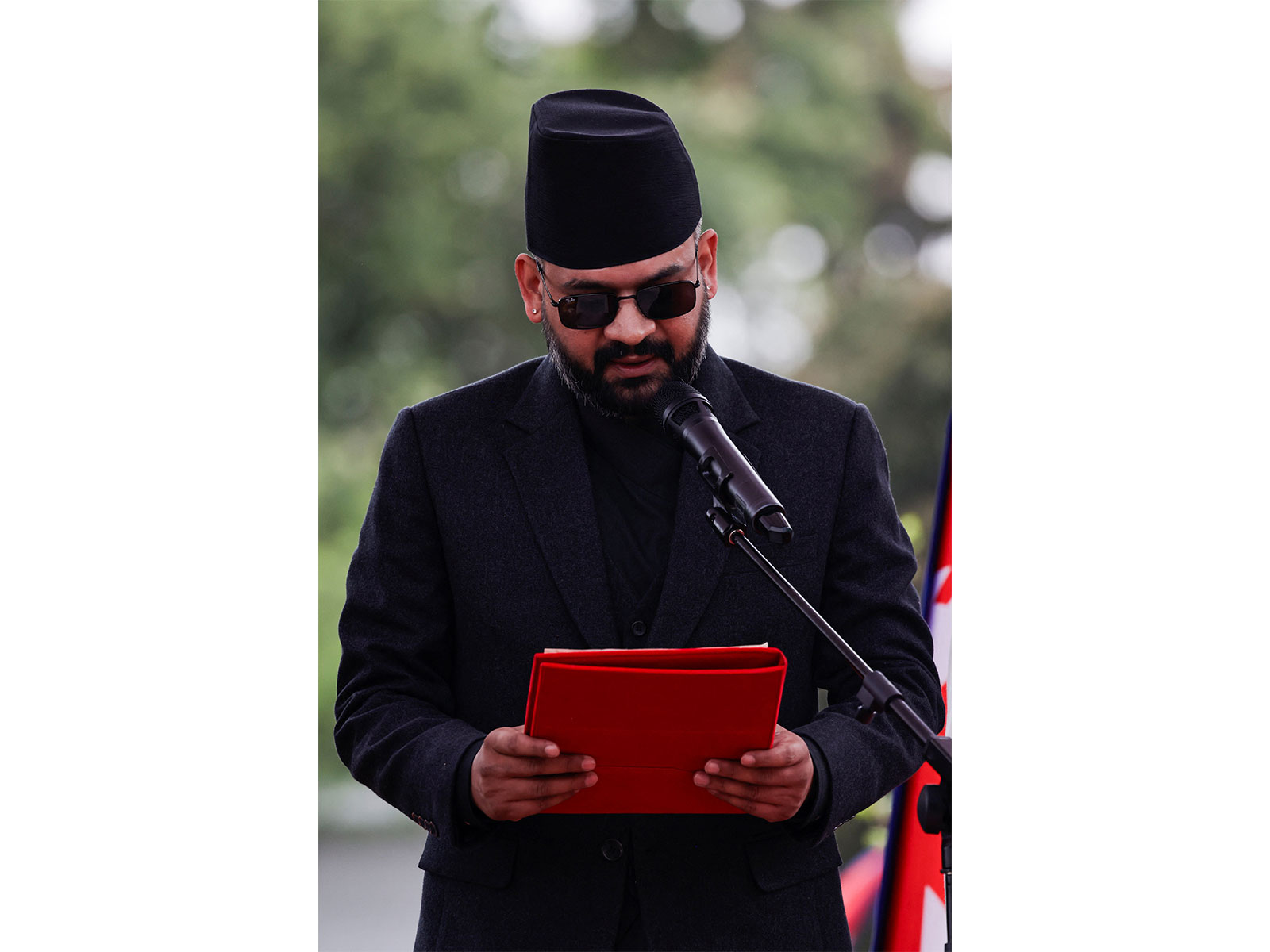
Kathmandu [Nepal], September 19 (ANI): Nepal Prime Minister Balendra Shah on Saturday announced that disaster early warning systems will be implemented with the highest priority, following the devastating floods in the country’s Bhotekoshi and Trishuli River basins that caused extensive loss of life and infrastructure damage.
Addressing the nation on the occasion of Constitution Day, Shah said Nepal must adopt a proactive approach to disaster management, with greater emphasis on risk reduction, preparedness and response.
“The damage caused by the recent Rasuwa- Bhotekoshi floods has been unimaginable and irreparable for us. At this critical juncture, I extend my special thanks and gratitude to all friendly nations, the international community and organisations, the private sector, civil servants, and the general public for their assistance in rescue operations and contributions to relief efforts,” Shah said.
He further said Nepal’s vulnerability to disasters requires the country to strengthen its preparedness before disasters strike.
“Nepal is among the countries at high risk of disasters globally. We address this reality proactively—before a disaster strikes, rather than after the fact. Special emphasis will be placed on risk reduction, preparedness, and response. Disaster early warning systems will be implemented with the highest priority,” the Nepal Prime Minister added.
Shah delivered the address for the first time on Constitution Day since assuming office in March this year.
A special ceremony was held at the Army Pavilion to mark the promulgation of Nepal’s Constitution through the Constituent Assembly on September 20, 2015.
The Constitution was promulgated following a prolonged political transition and the country’s peace process. It formally established Nepal as a federal democratic republic, replacing the previous unitary system and ending the monarchy.
The Constitution provides for a three-tier system of government comprising the federal government, seven provinces and 753 local levels. It also guarantees political, economic, social and cultural rights and provides for the distribution of powers among the three levels of government.
This year’s Constitution Day celebrations come as Nepal continues to deal with the aftermath of a major disaster that affected several districts of the Himalayan nation.
A flash flood struck riverside settlements in Rasuwa district on August 26, rapidly affecting neighbouring areas including Nuwakot and Dhading.
According to the latest figures from Nepal’s National Disaster Risk Reduction and Management Authority, 13,756 people have been rescued, while 6,055 remain out of contact.
A total of 1,410 bodies have been recovered, of which several have been identified and handed over to their families.
Of the 344 injured people admitted to hospitals, 290 have since been discharged, according to the figures.
The Nepal Army, Nepal Police and Armed Police Force launched a large-scale response following the disaster, with the number of security personnel deployed at one point exceeding 20,000.
Helicopter operations focused on evacuating critically injured people, pregnant women, children, elderly persons and people with disabilities. Temporary shelters have been established at 13 locations in Nuwakot, housing 611 people.
The disaster also caused extensive damage to infrastructure and the energy sector. Eight operating hydropower projects with a combined capacity of 281 MW and four projects under construction with a combined capacity of 388 MW were damaged, affecting 431.1 MW of generation capacity.
Major sections of the Galchhi-Betrawati-Rasuwagadhi road and the Prithvi Highway were also destroyed or severely damaged, along with 48 suspension bridges and 31 motorable bridges.
Telecommunications services have been restored across 95 per cent of the affected areas, while electricity restoration has progressed at different rates across the affected districts.
Shah also acknowledged international support following the disaster, noting that Nepal had received messages of goodwill and material assistance from countries and multilateral partners, including India, China, the United States, Japan, the Asian Development Bank, the World Bank, the European Union and the United Nations.
The government has declared 15 local levels as disaster crisis-hit areas for three months and released funds from the Prime Minister’s Relief Fund, which has collected more than NPR 7 billion in addition to foreign contributions.
Authorities have begun immediate relief operations alongside longer-term recovery efforts, including road restoration and bridge reconstruction.
Search operations for missing people are continuing, while unidentified bodies are being handled through scientific procedures, with DNA samples preserved for identification.
Against the backdrop of the disaster’s heavy human and economic toll, Shah’s Constitution Day address placed renewed emphasis on strengthening Nepal’s disaster preparedness and establishing early warning systems as a priority. (ANI)
Related reading