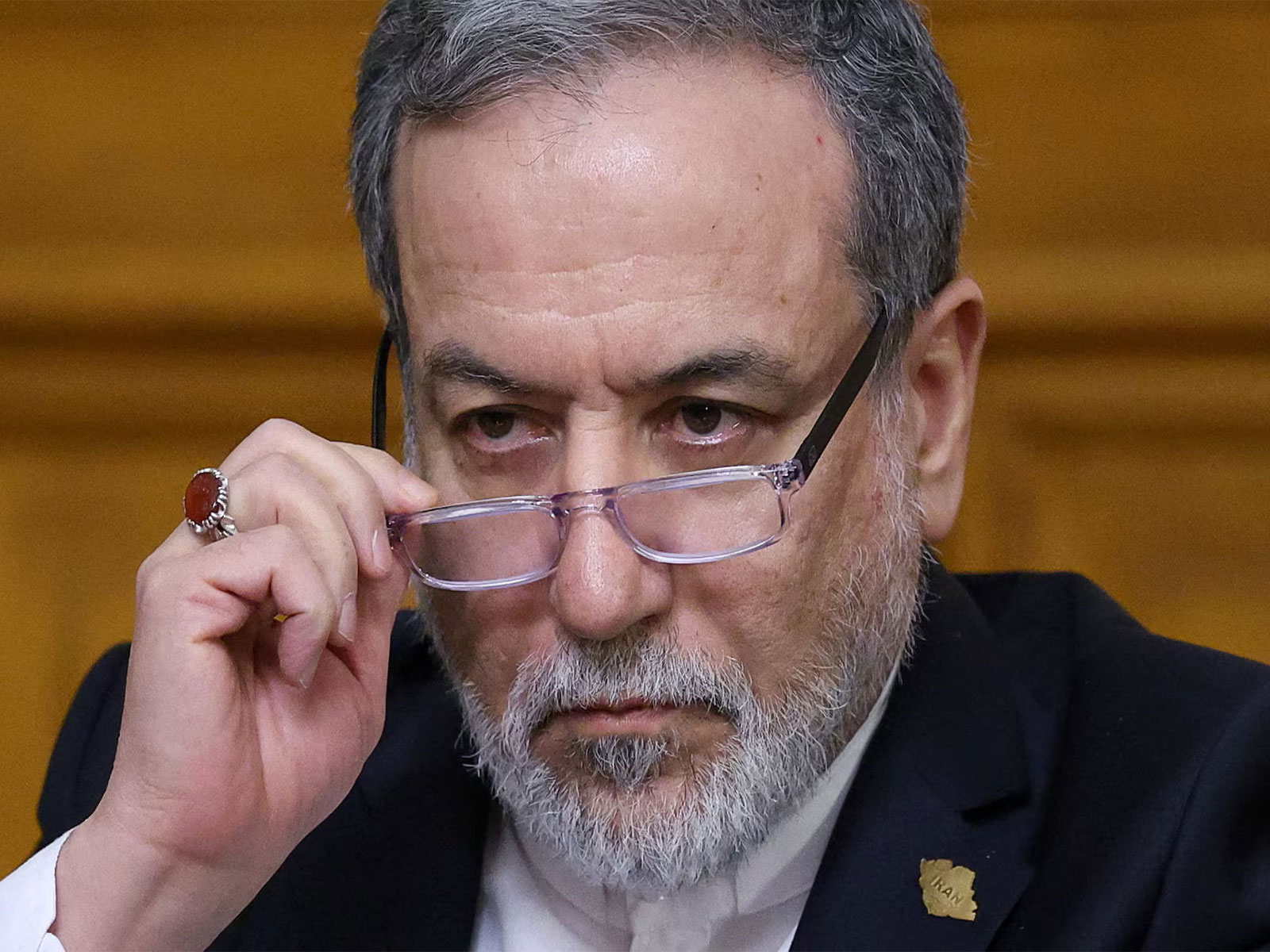
Tehran [Iran], July 20 (ANI): Iranian Foreign Minister Abbas Araghchi has detailed the persistent peril surrounding Tehran’s diplomatic delegation during peace negotiations with the United States, revealing that American and Israeli warnings have fostered a deeply adversarial climate for the negotiators.
In an interview with Mehr News Agency, the Iranian foreign minister, who is also one of the top negotiators in the Islamic regime, recalled a direct exchange with US President Donald Trump’s Middle East envoy, Steve Witkoff.
Araghchi stated that he explicitly questioned the envoy regarding the psychological pressure faced by the Iranian delegation under constant military threats.
“I asked Witkoff, have you ever been in a meeting where at any moment you think the whole meeting might be bombed? Have you ever been on the phone while you’re talking? You might, as they say, explode or be destroyed. Have you ever, for example, while checking in on your family over the phone, thought to yourself this might be the last time?” Araghchi said during the interview.
The top diplomat asserted that despite enduring continuous intimidation, Tehran maintained its positions firmly and refused to capitulate.
“In response to the illegal and unreasonable demand for zero enrichment, we resisted and stood firm. When they saw that they couldn’t achieve what they wanted through negotiations, they started the war,” Araghchi noted in comments that were also broadcast by RT News.
He further emphasised Tehran’s diplomatic stance, stating, “You have to talk. You can’t threaten us, and you can’t bribe us.”
According to the Iranian minister, Washington initiated contact with Tehran last year to jump-start nuclear talks, maintaining intermittent communication channels since then.
He argued that Iran’s uncompromising posture during these discussions ultimately pushed the United States and Israel towards military options.
“They were defeated in the 12-day war,” Araghchi claimed, reiterating that US warnings failed to intimidate the Iranian leadership.
Araghchi dismissed assertions from Washington that intensified military operations could compel Iran to surrender.
Drawing a direct parallel to the events in Venezuela, where a US military operation in January resulted in the capture of President Nicolas Maduro and forced a regime change, the foreign minister argued that Tehran’s political architecture is uniquely resilient against such strategies.
He pointed out that the Islamic Republic operates via a decentralised structure rather than a single power system, meaning the removal of an individual leader cannot trigger an absolute collapse of the state.
“This isn’t Venezuela where you take one person and everyone else gets scared and backs down,” he remarked, pointing towards Tehran’s mosaic power model, which distributes administrative decision-making under a unified command structure.
These high-level disclosures come as the fragile ceasefire previously brokered between Washington and Tehran stands completely shattered.
American forces executed aerial strikes against Iranian targets for a ninth straight day on Monday, occurring alongside official confirmation that the American military death toll in this latest round of hostilities has climbed to three.
The escalating warfare has simultaneously heightened anxieties regarding international commercial shipping safety through the crucial chokepoint of the Strait of Hormuz.
In an official dispatch, US Central Command confirmed it had initiated “a new wave of strikes” specifically designed to achieve the goal of “degrading” Iran’s operational capacity to launch offensives against merchant vessels navigating the critical shipping corridors of the strait.
The Central Command statement did not provide specific geographical details regarding the targets.
However, Iran’s semi-official Tasnim news agency, citing eyewitness accounts from its own reporters on the ground, stated that American missiles struck multiple cities across Iran during the early hours of Monday morning.
Tasnim reported that loud explosions reverberated through the cities of Tabriz, Chabahar, Konarak, Bandar Mahshahr, and Bandar Imam Khomeini.
In a concurrent development, Iran’s Islamic Revolutionary Guard Corps (IRGC) publicised a surprise counter-offensive targeting “the enemy’s special operations headquarters in Syria’s Al-Tanf area.”
Furthermore, Iranian state television reported early on Sunday that Tehran had deployed a wave of attack drones against US military installations and heavy hardware positioned at Kuwait’s Al-Adiri camp and the Ali Al Salem Air Base.
Both positions had been targeted by Iranian forces earlier in the week as part of a broader campaign against American assets and regional allies across the Gulf. (ANI)
Related reading