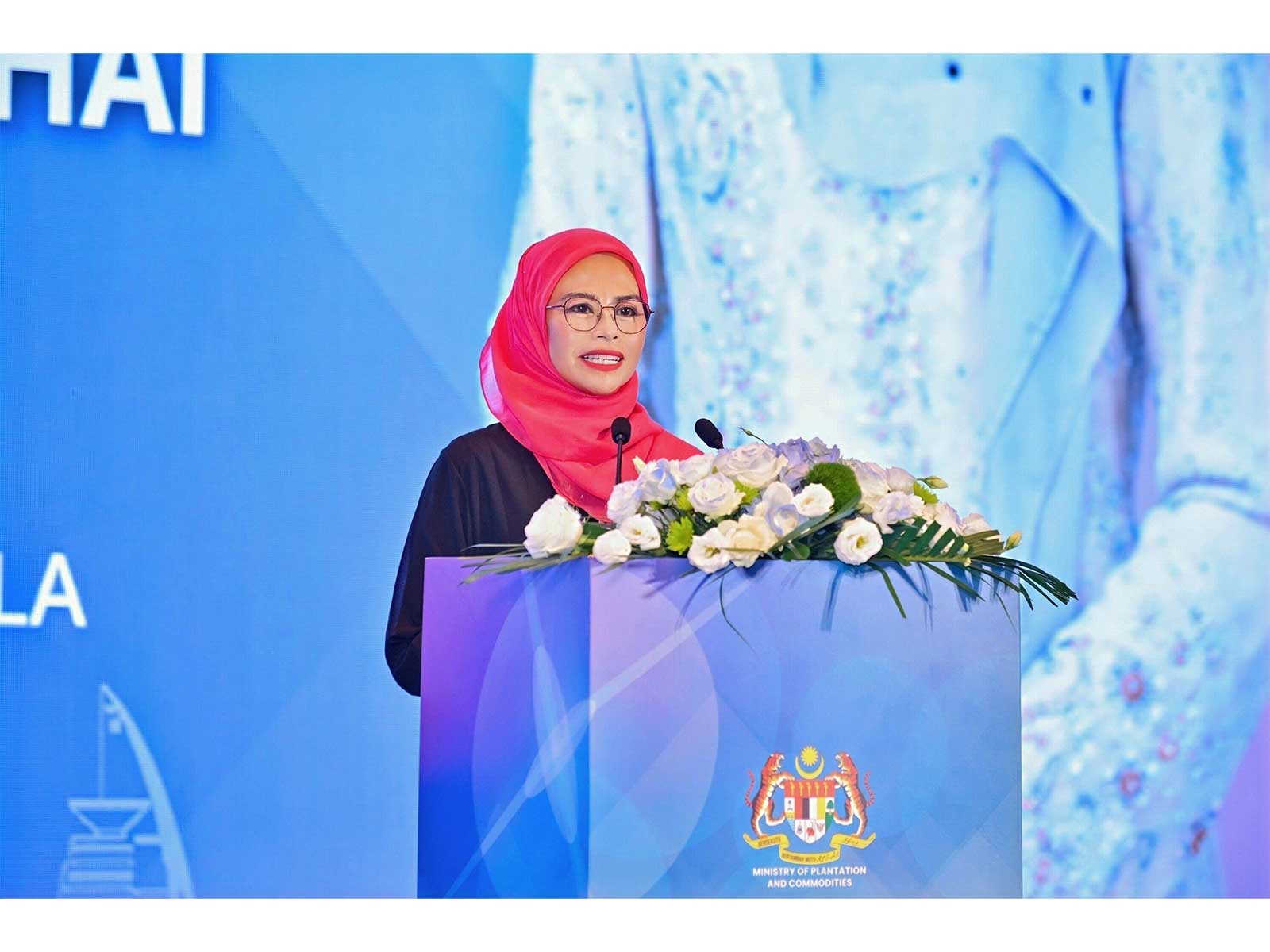

Kuala Lumpur [Malaysia], October 9 (ANI): Malaysia can serve as a strategic gateway for Indian companies seeking to expand into the wider ASEAN market, Minister of Plantation and Commodities Noraini Ahmad said, highlighting opportunities to strengthen economic cooperation under the ASEAN-India framework.
In a written interview to ANI, Noraini said the framework offers opportunities to strengthen trade, industry cooperation and business links between the two countries, particularly in sustainable production, research, technology and downstream manufacturing.
“From the perspective of the Ministry of Plantation and Commodities, the ASEAN-India framework provides further opportunities to strengthen trade, industry cooperation and business links between Malaysia and India. In the plantation and commodities sector, we see considerable potential for closer cooperation in sustainable production, research, technology, downstream manufacturing and the development of higher-value products,” she said.
“Malaysia can also serve as a strategic gateway for Indian companies seeking to expand into the wider ASEAN market, while India remains an important market and partner for Malaysian businesses. Our focus is to translate these opportunities into practical cooperation and commercially meaningful partnerships that benefit both countries,” the Minister added.
Beyond the broader regional framework, Malaysia is also looking to expand commercial partnerships with India in commodities such as rubber and timber, as well as through investments in processing and manufacturing, moving beyond its established palm oil trade with the country.
“While palm oil is an important part of Malaysia’s trade relationship with India, we also see opportunities to expand cooperation across the wider agricommodity sector. In the rubber sector, Malaysia has strong capabilities in medical gloves, industrial rubber products and other high-value applications. India’s growing healthcare, automotive and manufacturing sectors offer opportunities for closer commercial and technical collaboration. For timber, Malaysia is moving towards higher-value and sustainably produced products, including furniture, engineered wood and components for construction and interior applications,” she said.
“These are areas where Malaysian suppliers can respond to the changing needs of the Indian market. We are also interested in partnerships in downstream processing and manufacturing. Such cooperation can bring Malaysian expertise and Indian market capabilities together to develop new products and serve wider regional markets,” the Minister added.
Noraini also emphasised the importance of commercially viable investments and government support in facilitating closer industry cooperation between the two countries.
“We welcome commercially viable investments that offer mutual benefits. The government’s role is to facilitate business connections, support dialogue on market access and encourage closer industry cooperation. Our objective is to broaden the relationship beyond the trade of raw materials and create more value through processing, manufacturing, innovation and technology,” she added.
Her interview with ANI comes after the minister visited India from September 27 to October 1. Her remarks further add to the strengthening of the wide-ranging partnership with India and come shortly after Malaysian Prime Minister Anwar Ibrahim had earlier paid a visit to India to attend the BRICS Summit, held from September 12-13.
During the bilateral meeting with Prime Minister Narendra Modi, the leaders had hailed the expanding two-way investments between the two nations. (ANI)
Related reading