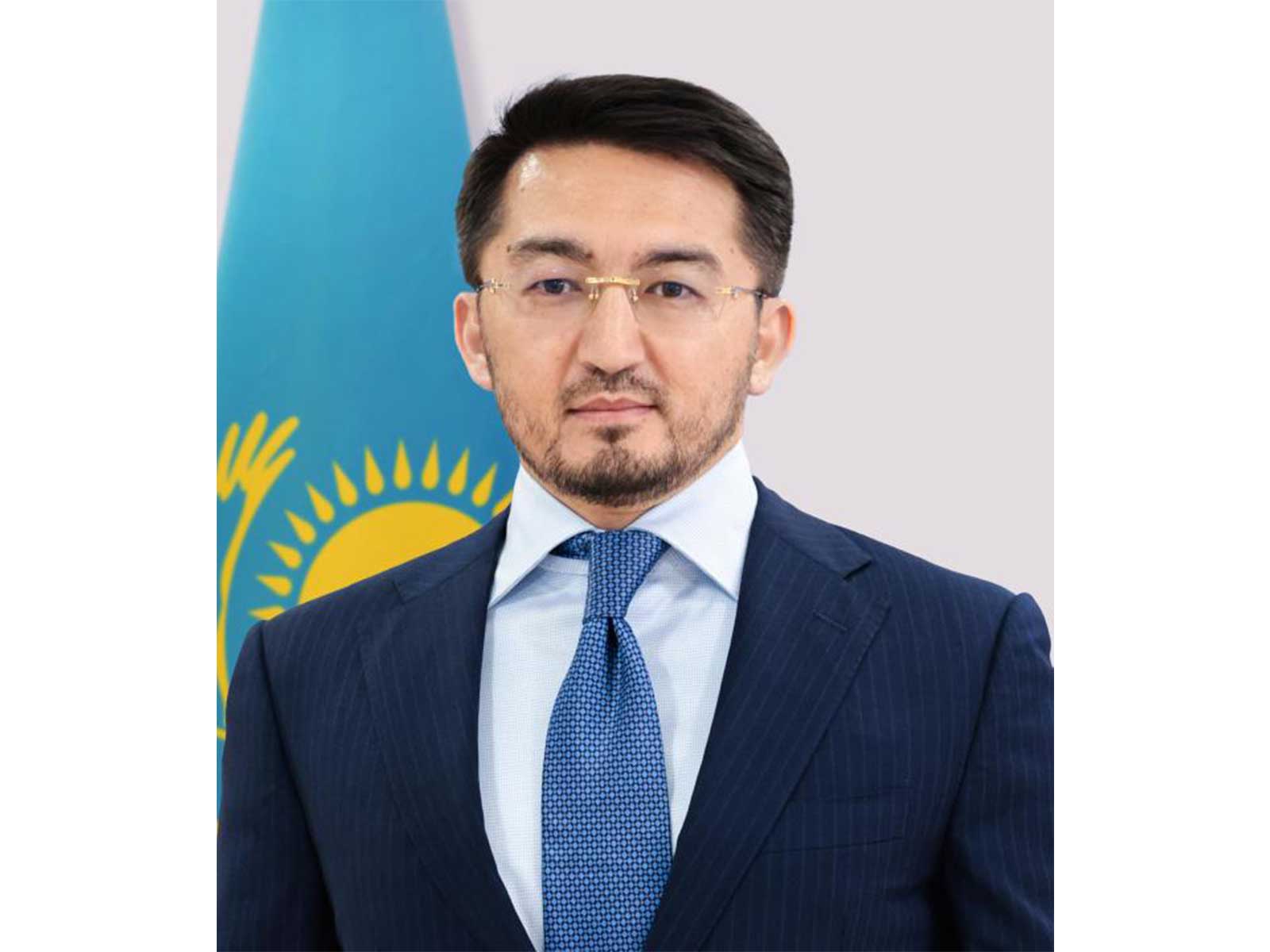
Astana [Kazakhstan], October 3 (ANI): Kazakhstan is seeking to build a comprehensive artificial intelligence ecosystem spanning computing infrastructure, data centres, connectivity, satellite technology, startups and digital public services, Deputy Prime Minister and Minister of Artificial Intelligence and Digital Development Zhaslan Madiyev said on Friday, outlining an ambitious roadmap for the country’s digital transformation.
Speaking to reporters on the sidelines of AI & Digital Bridge 2026 here, Madiyev said Kazakhstan’s approach was to encourage innovation while ensuring that emerging technologies operate within basic ethical safeguards.
“The idea is not to over-regulate but to uphold some ethical standards,” Madiyev said, stressing the need to strike a balance between regulation and innovation.
Madiyev highlighted the rapid rise of Higgsfield AI, a generative AI company with Kazakh roots, as an example of the kind of technology ecosystem Kazakhstan wants to develop.
He said the company has hundreds of engineers and has become one of the fastest-growing startups, adding that Kazakhstan was seeking to build an ecosystem capable of producing and retaining such companies.
Higgsfield said on September 29 that it had crossed a USD 1 billion annualised revenue run rate, 18 months after launching its AI-native creative suite. The company has also previously raised funding at a USD 1.3 billion valuation.
The government has increasingly framed AI as a cross-sector transformation, with its Digital Qazaqstan strategy covering infrastructure, cybersecurity, GovTech, the digital economy and AI adoption.
On Kazakhstan’s plans to develop large-scale AI computing infrastructure, Madiyev highlighted the Data Center Valley project in Ekibastuz, saying the country was targeting at least 1 GW of capacity.
The Data Center Valley is being developed around the energy infrastructure of Ekibastuz in the Pavlodar region and is designed to become a major regional computing and data-centre hub.
Kazakhstan’s government has said the project has a potential capacity of up to 1 GW, with land allocated and infrastructure development under way.
Government discussions have also involved more than 20 international hyperscale companies from the US, China and India, with preliminary demand exceeding 100 MW.
Madiyev said Kazakhstan was also accelerating its nationwide digital connectivity push.
He said the government plans to connect more than 50 per cent of villages with fibre-optic infrastructure within the next 18 months to two years while developing the Caspian Fibre project to strengthen Kazakhstan’s international connectivity.
Madiyev also pointed to satellite connectivity, including the expansion of satellite internet services in Kazakhstan. Starlink services have already been officially launched in Kazakhstan, according to the government’s digitalisation roadmap.
The Minister also highlighted Kazakhstan’s ambitions in the space sector, saying that the country had begun exporting satellites for the first time in its history and was working towards developing its own launch infrastructure and launch vehicles.
Kazakhstan has been expanding domestic satellite manufacturing and remote-sensing capabilities as part of its broader technology strategy.
The push reflects an effort to develop domestic capabilities across multiple layers of the digital economy, from telecommunications and computing to AI and space technology.
On digital assets, Madiyev said Kazakhstan was developing a regulated ecosystem for the cryptocurrency industry, including licensing of crypto miners and crypto exchanges.
The country has been seeking to position itself as a regulated digital-asset hub while developing its wider digital economy.
Kazakhstan has also been seeking to attract international hyperscalers, AI companies and investors to its data-centre and technology ecosystem. Government officials have held discussions with major companies from the United States, China, India and other markets regarding computing infrastructure and AI projects.
The Minister also spoke about the country’s efforts to attract highly skilled international professionals through what he described as the “Trusted Kazakhstan” approach.
He referred to the opportunity to attract “high IQ, weak passport talents”: highly skilled individuals who may face limitations in accessing international opportunities because of the passport or nationality they hold.
He suggested that the broader objective is to make Kazakhstan an attractive base for global technology talent, entrepreneurs and researchers.
Kazakhstan’s Digital Qazaqstan strategy envisages AI and digital technologies being integrated across industry, transport, energy, agriculture, public services and other sectors.
For Astana, the ambition is increasingly to move beyond being a regional consumer of emerging technologies and become a regional hub for AI development, computing, digital infrastructure and technology investment. (ANI)
Related reading