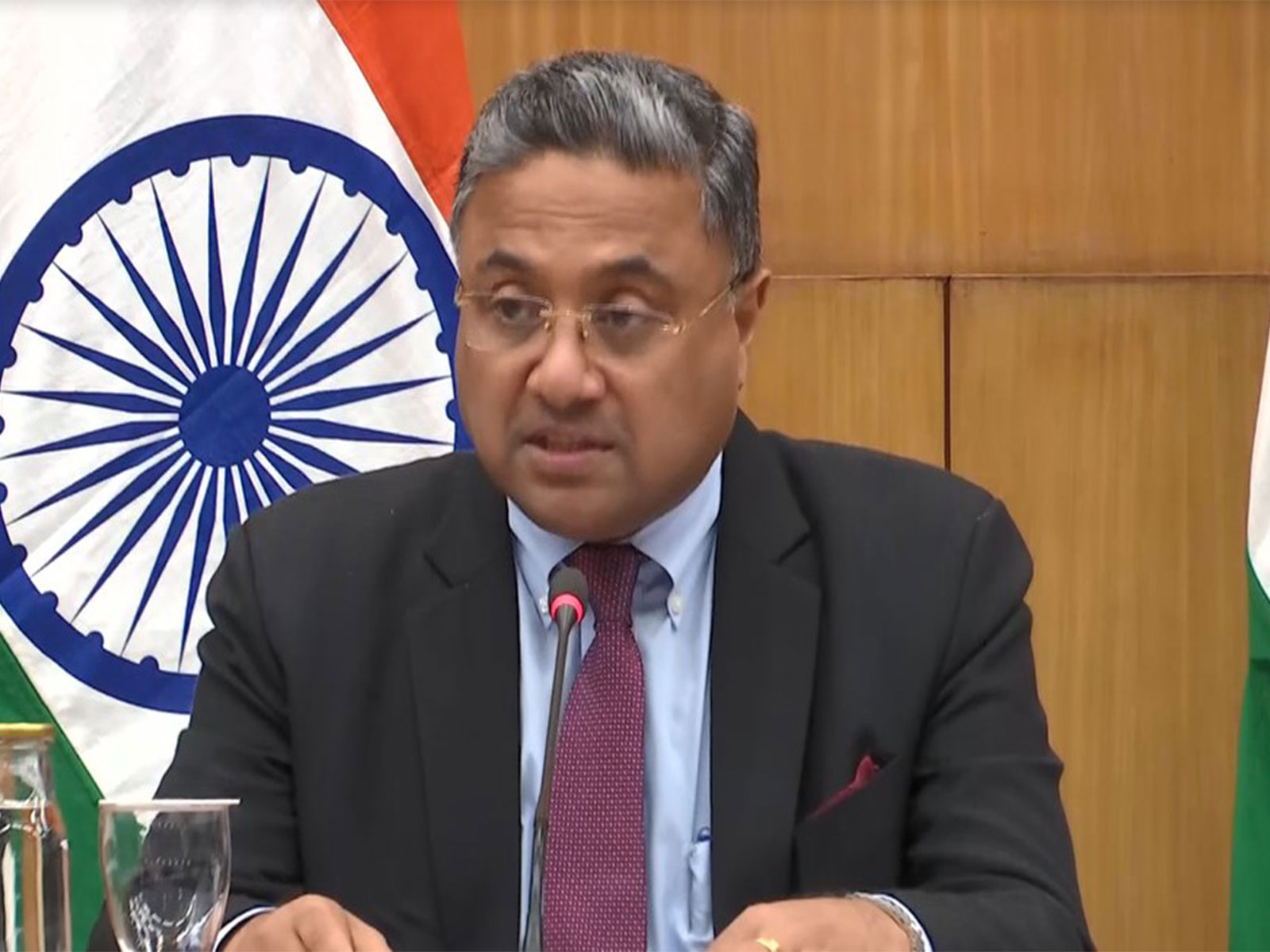

New Delhi [India], October 5 (ANI): Marking the third anniversary of the October 7 terror attacks, he stated that his country has successfully restored national security, brought displaced citizens back to their homes, and revived its economy, while establishing strategic buffer zones in Gaza, South Lebanon, and Syria.
Speaking with ANI ahead of the anniversary as Israel commemorates the victims, Ambassador Azar highlighted both the national reflection and the broader geopolitical shifts across the region.
“Three years after the events, we can surely say that Israel has restored security in our country. Our communities in the south and also in the north are back home. Our economy has recovered. We’re doing pretty well, but there are traumas. Today, in Israel, we commemorate the Hebrew date in our calendar for October 7, and we are lowering our flag. We are sitting with the bereaved families, listening to the stories of those who lost their loved ones, and discussing again what happened and what we can do in the future to prevent that from happening. This is a moment of reflection for us,” Ambassador Azar said.
Outlining the current security architecture and political roadmaps for the region, the envoy emphasised that Israel is actively working on long-term political plans for both Gaza and Lebanon.
“At the geostrategic level, what we can say is that Israel is now secure. We have a buffer zone in the Gaza Strip, we have a buffer zone in South Lebanon, and a buffer zone in Syria. We are working on a political programme both to get rid of Hamas in the Gaza Strip through the Board of Peace and to have Hamas renounce its weapons and appoint a government that will seek a future for Palestinians in Gaza free from the hijacking of Hamas,” he noted.
Detailing the diplomatic progress with Beirut, he added: “We have peace negotiations with Lebanon that have advanced pretty well. We have had about five or six rounds, and now we have a path in which we are going to keep sitting in the buffer zone until the Lebanese army is ready and capable enough to restore sovereignty without Hezbollah being present adjacent to our border…”
Addressing delays in finalising a permanent peace agreement for Gaza, Ambassador Azar pointed directly to Hamas’s refusal to surrender its weapons, warning that Israel will push forward militarily if diplomatic efforts fail.
“The main reason we are stuck is that Hamas is refusing to disarm. We will continue putting pressure on Hamas militarily, not just diplomatically, because we know that Hamas not only conducted the most terrible and atrocious terrorist attack in Israel’s history, but they also do not look after the interests of the population of the Gaza Strip,” Ambassador Azar stated. “They are ready to continue the suffering of the population just for them to stay in power. And this is something that is very difficult to overcome. But I think we have the resilience, endurance and consistency that we need to continue putting pressure together with the international community until they change course. And if they don’t, we will have no choice but to finish the job militarily, which we prefer not to do.”
Highlighting Israel’s economic rebound and its desire for regional stability, the envoy pointed to strong economic growth figures while calling on Iran-backed groups to accept the new reality.
“We have very clear political paths both when it comes to Gaza and Lebanon, and Israel is interested in stabilisation. Our economy is booming now. We have grown 15% in the first quarter and 7% in the second quarter,” Ambassador Azar said. “Israelis want to go back to their lives. We have zero interest in resuming the conflict. But at the end of the day, in order for diplomacy to win the day, we’ll have to have the members of the Iran axis come to terms with reality.”
Concluding on regional diplomatic relations, the Ambassador noted growing alignment with Arab partners in the Gulf regarding regional security.
“When it comes to relations with other countries, I think that we have much more understanding at this point with many countries in the Gulf regarding the necessity to safeguard the security of the region,” he said.
Hamas militants killed 1,200 people in Israel on October 7, 2023, and took more than 250 hostages in a savage attack. It triggered a brutal retaliation from Israel which Gaza’s health ministry says has killed more than 65,000 people, most of them women and children. (ANI)
Related reading