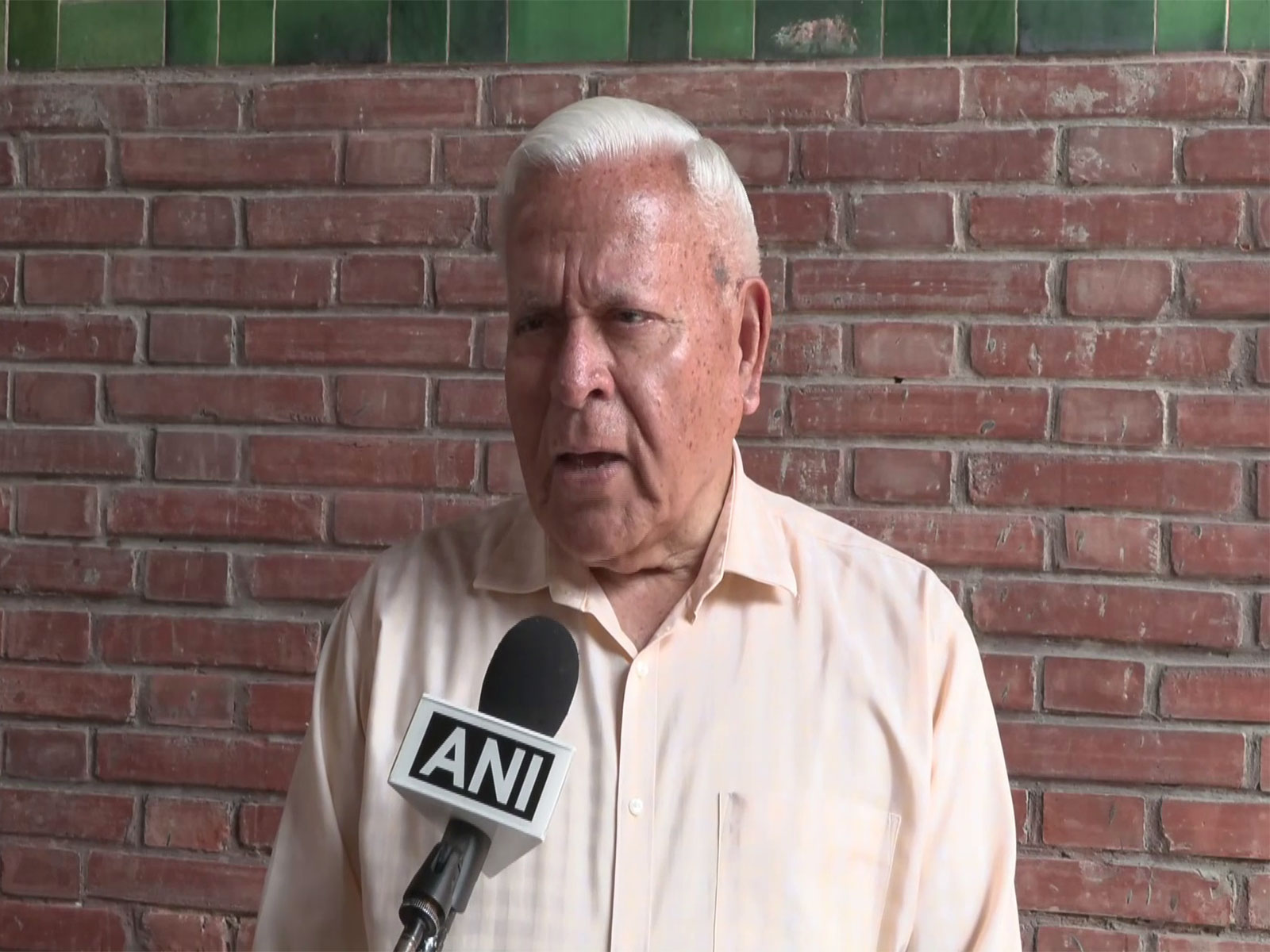
New Delhi [India], September 18 (ANI): Former senior diplomat Ashok Sajjanhar on Thursday said India would continue to prioritise energy security and diversify its sources of supply amid the US Congress’ passage of the Lindsey O Graham Sanctioning Russia and Iran Act of 2026, which gives US President Donald Trump the authority to impose tariffs of up to 100 per cent on countries purchasing Russian energy.
Sajjanhar’s remarks came after the Indian government said it was closely monitoring the development and reiterated that ensuring energy security for 1.4 billion people remained its priority. The Ministry of External Affairs said India would continue to pursue diversified sourcing based on evolving market dynamics and take necessary measures to protect its trade and economic interests.
“Basically, number one, I would totally support what the Indian establishment has articulated, has mentioned on this: that this is absolutely of paramount importance, that we will ensure that energy is available at reasonable prices, affordable prices, and regularly, that there are no stoppages as far as energy supplies are concerned,” Sajjanhar told ANI.
He pointed to India’s diversification of energy supplies amid disruptions in the Middle East, saying the country had been able to source energy from multiple suppliers, including the United States.
Sajjanhar also said India would continue purchasing Russian crude, as it remained an important component of the country’s energy requirements.
“You would recall that before February ’22, there were hardly any imports of oil from Russia. But after that, I think it’s gone up to more than 35 to 40%, and last month, July and August, it was as high as 45%. So, we will continue to do that,” he said.
The US Senate passed the legislation by 86-11 on August 7, while the House of Representatives subsequently approved it by 262-159, sending it to the President. The legislation expands sanctions against Russia and Iran and provides the US President with authority to impose tariffs of up to 100 per cent on major purchasers of Russian petroleum or natural gas.
Sajjanhar stressed that passage of the legislation did not automatically mean that such tariffs would be imposed on India, as the authority would remain discretionary with the US President.
“This is only an enabling provision. It doesn’t mean that, you know, once the president signs on to the dotted line, that these tariffs are going to automatically—there’s nothing mandatory about that. It is president’s discretion,” he said.
He further said the legislation was primarily aimed at Russia’s major trading partners, particularly China, but India could also be affected because of its Russian energy purchases.
Sajjanhar also suggested that the tariff provision could become part of wider India-US trade negotiations, which remain under discussion. He said India had previously maintained its position on sensitive sectors, including agriculture, dairy, textiles and MSMEs, despite pressure from Washington.
He also flagged potential consequences for global energy prices if Russian oil supplies were significantly reduced, arguing that lower availability could push up prices of refined petroleum products, including diesel, in international markets.
“There are a number of constraints on the United States, which might not take all these. There are many pros and cons of this,” Sajjanhar said.
The former diplomat said New Delhi would need to continue negotiations with Washington while clearly explaining the potential impact of the measures on bilateral relations and global energy markets.
The MEA has said the potential implications of the US legislation for India-US ties and international energy markets have already been conveyed to Washington through high-level discussions. (ANI)
Related reading