New Delhi [India], July 17 (ANI): The Ministry of External Affairs (MEA) exuded confidence in securing a non-permanent seat on the United Nations Security Council (UNSC), following the launch of India’s campaign for the candidature.
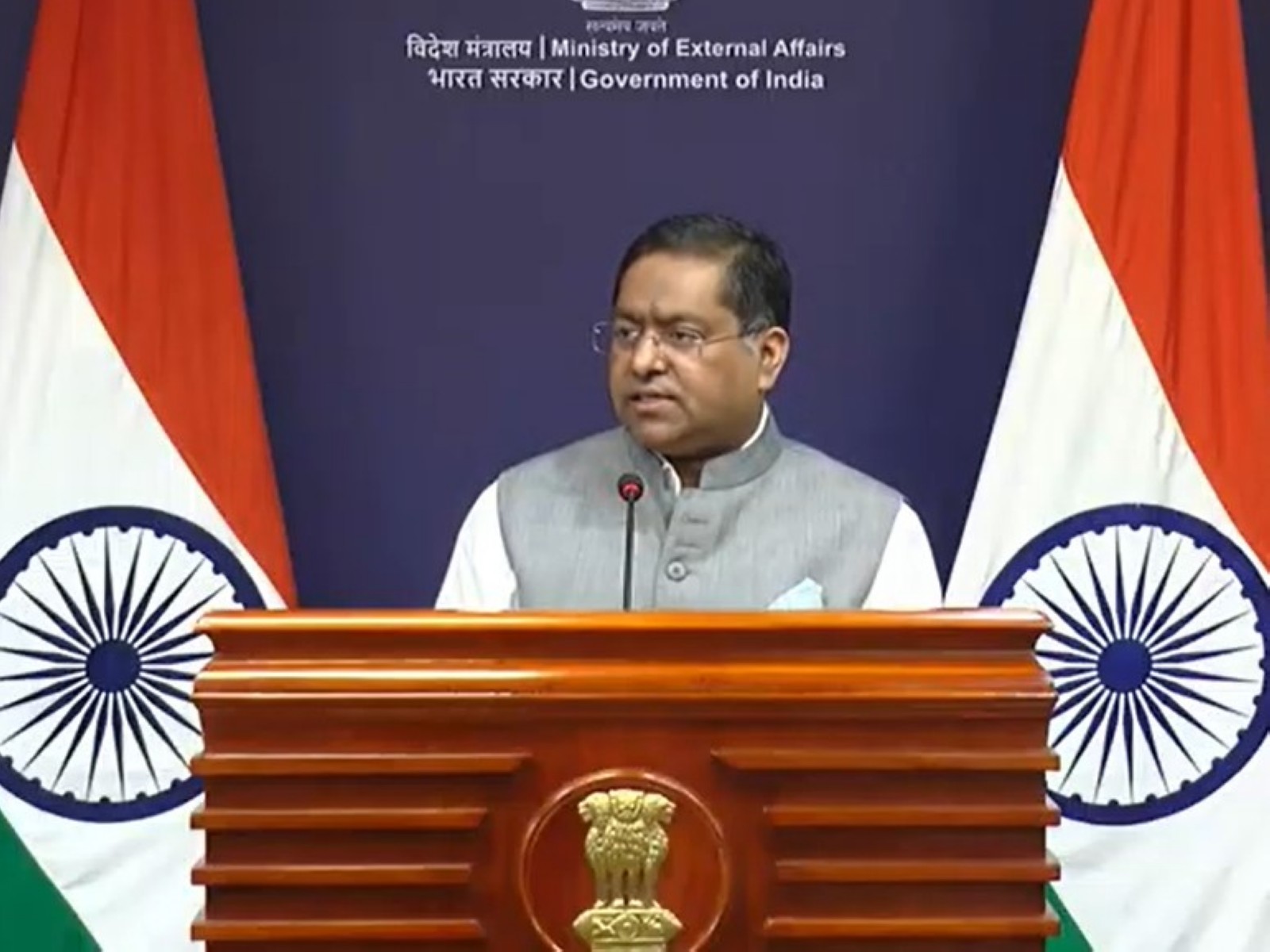
Following the recent announcement of India’s bid, MEA spokesperson Randhir Jaiswal detailed the diplomatic efforts currently underway in New York.
“We announced our candidature on the 13th. The External Affairs Minister was in New York, where he addressed the members and launched our campaign. We also outlined the reasons why countries should vote for India to sit in the Council again, and we are confident that our candidature will be given due consideration by all member countries.”
Addressing recent commentary from Pakistan regarding the Union Territories of Jammu & Kashmir and Ladakh, the MEA reiterated India’s unambiguous position on its territorial integrity.
“We have always said that the entire Union Territories of Jammu & Kashmir and Ladakh are an integral part of India. They were, are, and will always remain an integral part of India,” Jaiswal stated.
Recalling the Pahalgam terror attack in 2025, MEA emphasised that Pakistan lacks the credibility to comment on Indian internal matters given its long-standing record of fostering extremism.
“The Pahalgam terror attack claimed the lives of several innocent people. You all saw its barbarity. Our authorities have begun an investigation in the matter. As far as cross-border terrorism is concerned, you are well aware of Pakistan’s decades-long sponsorship and support for terrorism, as well as its continued use as an instrument of state policy. Pakistan has no locus standi to comment on matters that are internal to India,” he added.
His remarks come after India on Monday officially launched its campaign for election as a non-permanent member of the United Nations Security Council (UNSC) for the 2028-29 term, with External Affairs Minister S Jaishankar outlining the country’s priorities, peacekeeping record and commitment to multilateralism.
Launching India’s candidature at the UN headquarters, Jaishankar said the move comes at a time when the world is facing growing conflict and instability, making the role of the United Nations and the Security Council more critical than ever.
“It’s a pleasure to join you today afternoon to launch India’s candidature to serve as a non-permanent member of the United Nations Security Council for the term 2028-29. We do so at a time when the world is facing a profound paradox… At the same time, we are witnessing levels of conflict, violence and instability that threaten even those who may be very far away,” Jaishankar said.
He said member states would naturally assess both India’s vision for addressing global challenges and its track record of contributing to international peace and security.
“As a candidate, it is natural that member states would like to understand what India brings to the table. One part of that is our vision of the priorities that the world and the United Nations must address. The other is a track record which enables the international community to make its own judgment,” he said.
Presenting India’s approach to global governance, Jaishankar unveiled the SHANTI vision — Securing Holistic Advancement through Norms, Trust and Integrity — describing it as the guiding principle of India’s efforts for a secure, peaceful and equitable world.
“Recent developments have only demonstrated that peace, progress and prosperity cannot be sustained in a fragmented manner… The world must therefore focus on holistic advancement… That journey can only be undertaken effectively when global order is valued and rules are respected. This puts a premium on norms, on trust and integrity. That is the approach that India offers: ‘Securing Holistic Advancement through Norms, Trust and Integrity’. That is SHANTI as an acronym,” he said.
Highlighting India’s contribution to UN peacekeeping, Jaishankar said India has deployed nearly 300,000 personnel across about 50 UN peacekeeping missions since the organisation’s inception. (ANI)
Related reading