
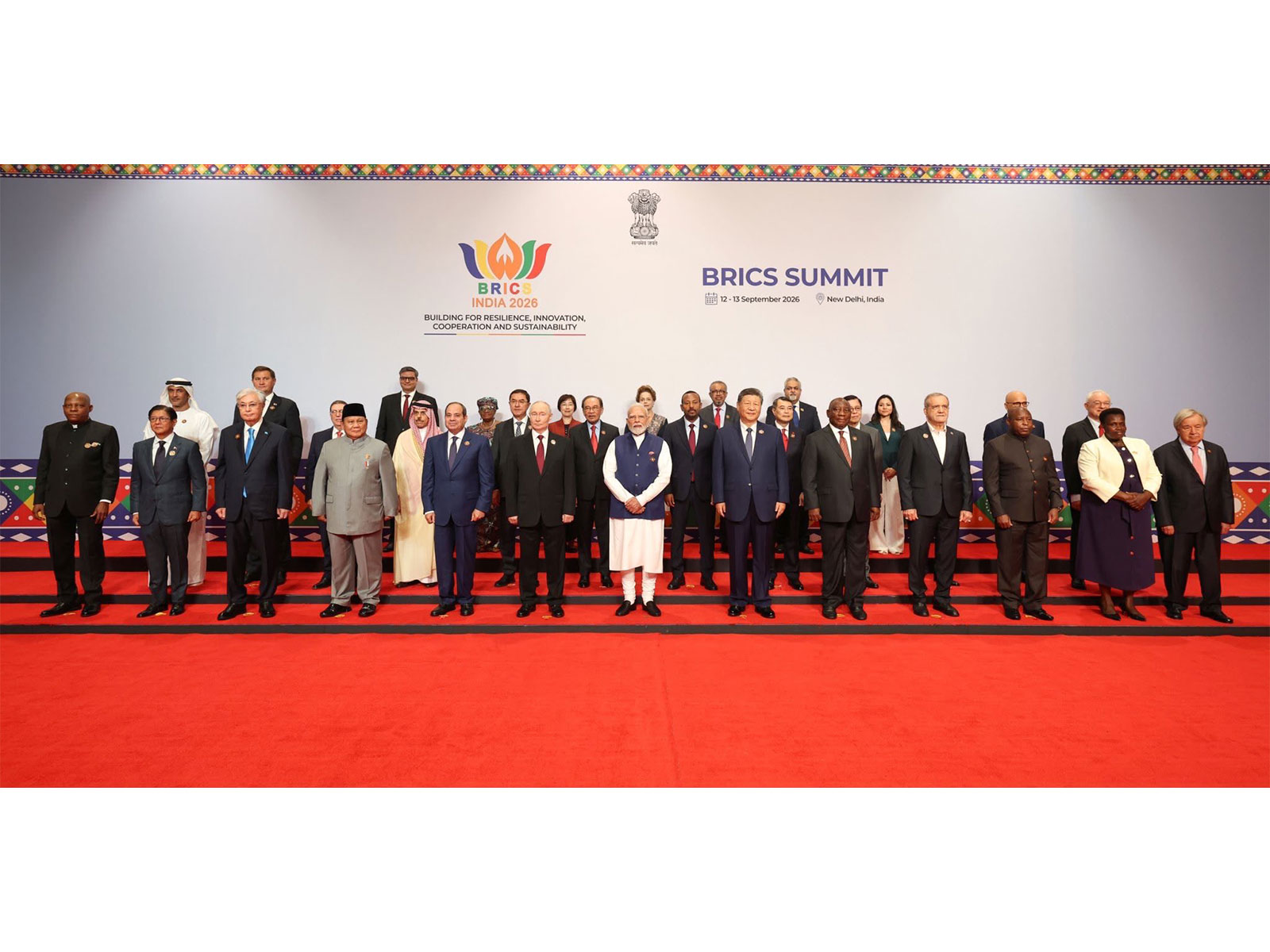
New Delhi [India], September 14 (ANI): World Health Organization (WHO) Director-General Tedros Adhanom Ghebreyesus on Monday urged health cooperation, innovation, resilience and sustainable health financing, saying the four themes of the BRICS Leaders’ Summit were directly relevant to health.
In a post on X, Tedros said that progress on health could advance all four themes of the summit — resilience, innovation, cooperation and sustainability.
https://x.com/DrTedros/status/2099226892222247386
He said, “Resilience: By strengthening primary health care, surveillance, early warning and local production.”
On innovation, he said that BRICS countries should harness science, digital health and artificial intelligence for public health while ensuring that their benefits remain accessible to all.
“Innovation: By harnessing science, digital health and AI for public health, while making their benefits accessible to all,” the WHO chief said.
Highlighting the importance of cooperation, Tedros called for action across borders and sectors, including efforts to finalise the Pathogen Access and Benefit Sharing annex to the WHO Pandemic Agreement.
“Cooperation: By acting across borders and sectors, including to finalise the Pathogen Access and Benefit Sharing annex to the
@WHO Pandemic Agreement,” he said.
On sustainability, Tedros called for sustainable health financing and a stronger and more coherent global health architecture.
He said, “Sustainability: By building sustainable health financing and a stronger, more coherent global health architecture.”
Tedros then outlined four asks for BRICS leaders, calling on them to strengthen preparedness, direct innovation towards underserved areas, make cross-border cooperation operational and ensure long-term political commitment and accountability.
He said, “Therefore, here are my four asks to BRICS leaders:1. Build resilience before the next emergency arrives; 2. Direct innovation towards the problems and places markets miss; 3. Make cooperation operational across borders and sectors;4. Sustain what you have built through political commitment, implementation and accountability.”
In the New Delhi Declaration adopted on Saturday, the BRICS nations welcomed the deepening of cooperation in global health initiatives and reaffirmed their commitment to advancing universal health coverage through resilient, inclusive, and people-centred approaches.
The nations reiterated that multilateral cooperation in health must be preserved and reinforced, emphasising the vital coordinating role of the World Health Organisation. While reaffirming sovereign rights of States over their biological resources as well as the sovereign right to legislate and implement laws, including national access and benefit-sharing legislation, the BRICS nations encouraged continued constructive engagement on the negotiations of the Pathogen Access and Benefit-Sharing (PABS) Annex to the WHO Pandemic Agreement in support of a safe, equitable, transparent and effective multilateral framework.
Following the 16th BRICS Health Ministers’ Meeting held in Chandigarh, BRICS nations recognise tuberculosis as a critical global public health challenge requiring coordinated action, sustained investment in research and effective mechanisms for cross – learning and innovation. The nations also welcomed the establishment of a dedicated Sub-Working Group to advance the BRICS Integrated Early Warning System for the prevention and response to mass infectious diseases, and its terms of reference.
Meanwhile, the New Delhi Declaration also has given a significant push to international cooperation in Traditional, Complementary and Integrative Medicine (TCIM), recognising its growing relevance to strengthening health systems and contributing towards Universal Health Coverage (UHC).
According to an official release from AYUSH, a key outcome of the Declaration is the welcome accorded to the proposed establishment of a BRICS Expert Working Group on TCIM under the BRICS Health Track. The proposed Working Group is envisaged as a platform for dialogue, collaboration and exchange among BRICS Member States, providing a structured mechanism for advancing cooperation in traditional medicine.
Union Minister of State (Independent Charge), Ministry of Ayush and Minister of State for Health & Family Welfare, Prataprao Jadhav, highlighted, “The recognition of Traditional, Complementary and Integrative Medicine in the New Delhi Declaration is an important step towards strengthening global cooperation in traditional medicine. The proposed BRICS Expert Working Group will provide a meaningful platform for Member States to share knowledge, strengthen research and advance evidence-based approaches.”
“India remains committed to taking forward Ayurveda and other traditional systems of medicine through scientific research, quality assurance and international collaboration, so that their potential can contribute to safe, effective and affordable healthcare,” he added. (ANI)
Related reading