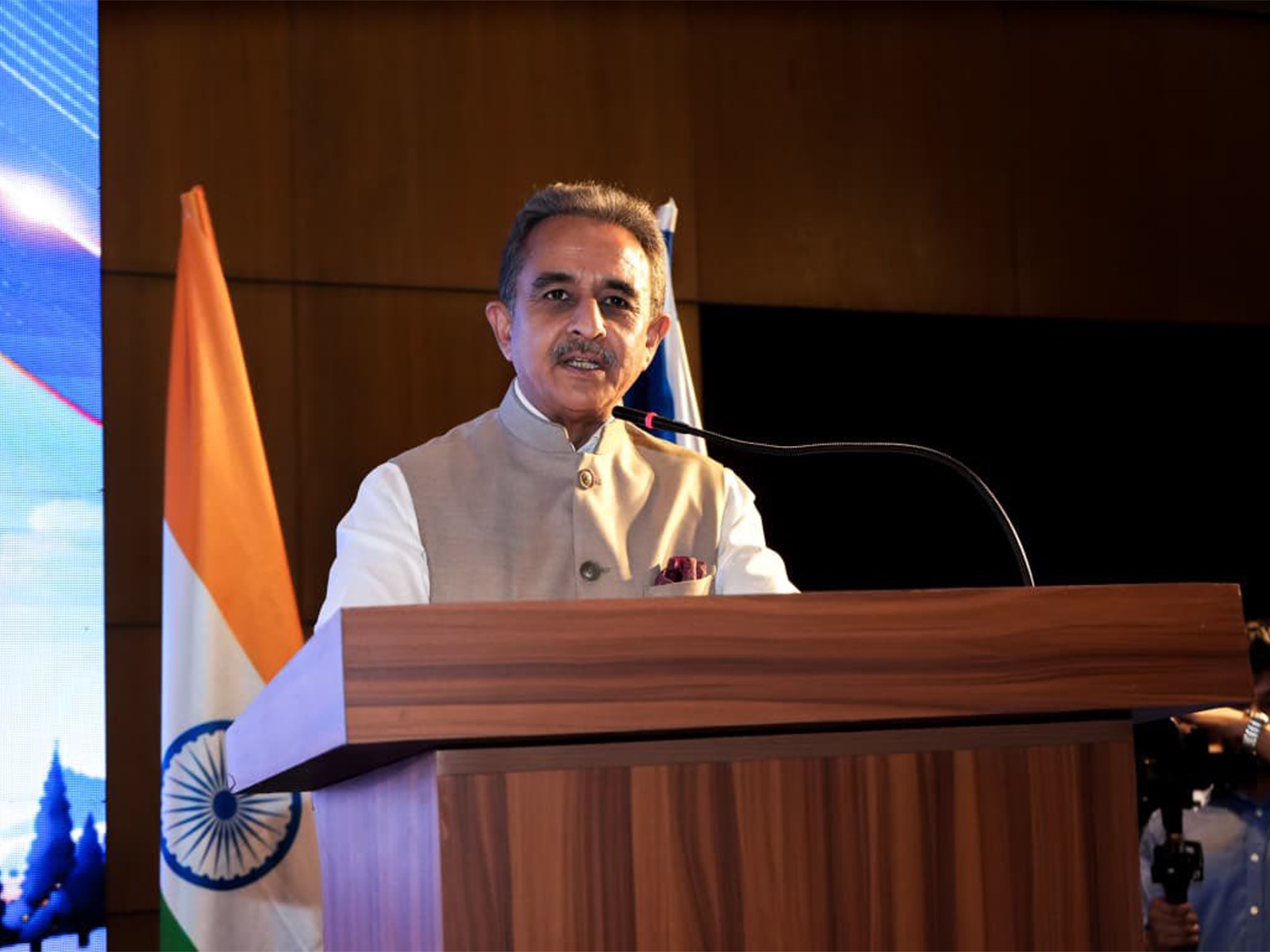
London [UK], October 13 (ANI): UK Minister for Artificial Intelligence Kanishka Narayan said on Monday (local time) that the United Kingdom had secured access to the latest generation of artificial intelligence (AI) models for safety testing, with the country’s AI Security Institute (AISI) conducting evaluations to identify risks and assess safeguards.
As per the speech shared on the official website of the UK government, addressing an event at Imperial College London, Narayan said AI scientists at the AISI were evaluating the latest models, including Gemini 4 Argon, to identify potential risks and test safeguards before the technology was released more widely.
“AI scientists at the AI Security Institute are now conducting rigorous evaluations of the latest generation of models, including Gemini 4 Argon, to identify risks early, to test robust safeguards, to help keep people safe,” Narayan said.
The announcement comes amid heightened scrutiny of AI safety following disclosures by developers, including Anthropic and OpenAI, about instances of rogue or unintended behaviour by AI agents. Some industry figures have also warned that increasingly capable AI systems could pose an existential threat to humanity.
Narayan said the government had been working closely with the US government and AI developers in recent weeks to retain access to powerful models before their release.
“That is why, over the last few weeks, we’ve been working closely with the US government, the labs — from His Majesty’s gathering of leading AI developers at Dumfries House in Scotland to discussions at the United Nations General Assembly in New York — to retain access for Britain’s AI Security Institute to the most powerful AI models before they are released,” he said.
The announcement follows reports last month that the White House had asked OpenAI and Anthropic to withhold their new AI models from the UK’s testing agency until they had undergone testing by the US government.
According to Politico, the request was communicated by a person familiar with the matter and a senior US administration official, both of whom were granted anonymity to discuss it.
In a letter published in September, the AISI said Anthropic had made clear that no organisation outside the United States had access to its Mythos 5.1 model.
“Anthropic made clear at the time of the release of Mythos 5.1 that no organisations outside of the US had access to the model. AISI is in daily conversation with industry partners, including Anthropic, and maintains long-standing arrangements to test models from major AI developers,” the letter read.
Meanwhile, Narayan stressed that the government would prioritise public safety as AI systems become increasingly capable, warning that the risks extended beyond national borders and required international cooperation.
“The British public is right to expect that this government ought to take the risks of AI seriously. Our first responsibility is to keep our country safe,” he said.
He also announced plans to strengthen the country’s cyber defences by using advanced AI tools to identify vulnerabilities in government systems before attackers could exploit them.
“Across two government pilots, frontier AI has helped identify and address more than a thousand vulnerabilities, alongside other threats to our public services,” Narayan said, adding that the government’s central vulnerability-monitoring service had reduced the time taken to fix identified weaknesses from 50 days to eight.
The government would also develop procedures to respond to incidents involving AI agents, including examining how such incidents could be contained and how affected people could be supported.
Referring to an incident in Australia earlier this year, Narayan said an OpenAI agent had accessed information on a government website that it was not authorised to access while searching for information about public spending on medicines. The Australian government had said no personal medical records were known to have been accessed and there was no evidence of a wider compromise.
Narayan urged AI developers to take warnings about potential risks seriously and investigate unexpected behaviour in their systems.
“Listen when your scientists warn of severe dangers. Investigate unexpected behaviours. And if you can’t adequately control the risks, do not release the system,” he said.
Emphasising the need for domestic technological capabilities, Narayan said Britain would seek to develop its own AI infrastructure and reduce dependence on technologies developed elsewhere.
“I will not accept a future in which Britain depends on technologies it cannot understand or control, while working people bear the costs of progress they had no power to shape,” he said.
He added that the government would support British capabilities through its Sovereign AI programme and AI Hardware Plan, while continuing to work with international partners on AI safety and security.
“We must build machines that serve us,” Narayan said. (ANI)
Related reading