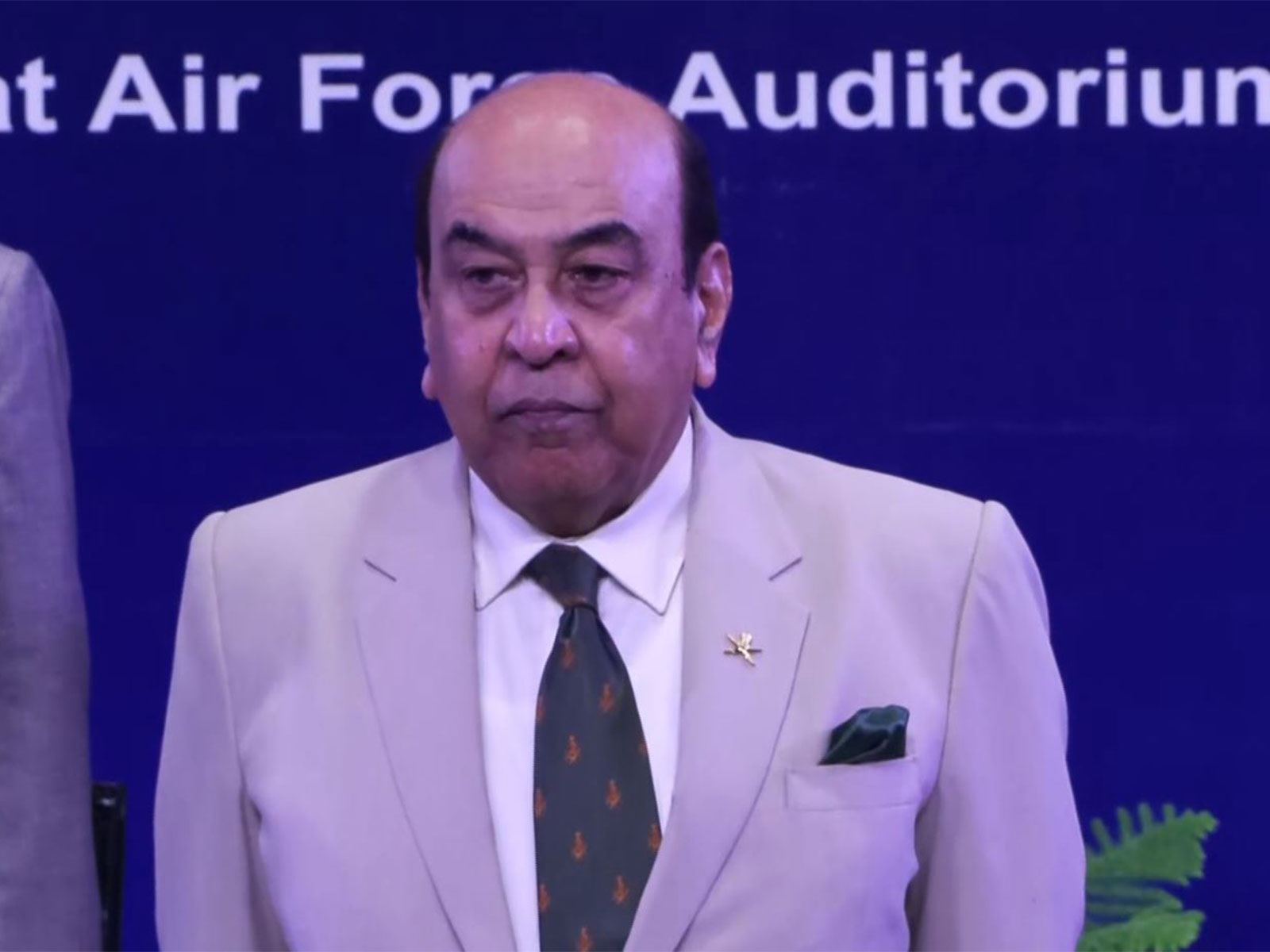
New Delhi [India], July 28 (ANI): Bihar Governor Lt Gen Syed Ata Hasnain (Retd) on Tuesday said India’s strategic neighbourhood now extends far beyond its immediate land borders, asserting that the country’s security interests stretch from the Mediterranean approaches to the Western Pacific as it seeks to emerge as an effective middle power.
Delivering the 9th Jasjit Singh Memorial Lecture on ‘India’s Neighbourhood and Security Challenges’, organised by the Centre for Air Power Studies (CAPS), Hasnain said India could no longer view its neighbourhood through a narrow South Asian lens.
“India is no longer merely a South Asian power managing neighbours. It is an ever-emerging civilizational and maritime power managing a strategic ecosystem, stretching from the Mediterranean approaches to the Western Pacific,” he said.
He added, “India’s neighbourhood is no longer defined by contiguous land borders, which is what the common mindset of people in India has always been.”
Lt Gen Hasnain (Retd) also paid tribute to Air Commodore Jasjit Singh, saying he was “much more than just an outstanding officer of the Indian Air Force” and was among the pioneers who brought strategic studies into the mainstream national discourse.
Speaking on India’s evolving strategic outlook, the Bihar Governor said the country’s interests now span the continental borders, the Indian Ocean, the Persian Gulf, the Red Sea, Central Asia, the Bay of Bengal, ASEAN and the Western Pacific.
“As we are looking to become an effective middle power, expanding beyond our influence, our minds were restricted to South Asia only being the neighbourhood. Now, from the continental borders to the Indian Ocean, the Persian Gulf, the Red Sea, Central Asia… the Bay of Bengal, ASEAN, Western Pacific, this is all that forms the strategic level,” he said.
Highlighting maritime security, Hasnain said a significant portion of India’s trade with Europe and the Middle East passes through critical sea lanes vulnerable to disruption.
“Much of our trade to Europe, the Middle East, goes through choke points… you’ve seen already how we have been affected by the choke points in West Asia. We’re looking at maritime security for all our trade and our island territories, our coastal areas,” he said.
Referring to China’s growing influence, Hasnain said India must adopt a more proactive approach in the Indo-Pacific.
“We cannot just sit restricted to this so-called string of pearls around us unless we push outwards, and go beyond to contest China, counter China in the various domains in which China attempts to push,” he said.
Meanwhile, Air Marshal Nagesh Kapoor (Retd), Director General of CAPS, said India’s foreign policy had undergone a significant transformation over the past decade, with the ‘Neighbourhood First’ policy placing national interest and the concept of “Vishwa Bandhu” at the centre of its regional engagement.
He said India’s rise as one of the world’s fastest-growing major economies had increased the strategic importance of its neighbourhood, but inconsistent engagement had at times created space for external powers to expand their influence.
“With the exception of Bhutan, much of our neighbourhood is in flux. Afghanistan presents a unique challenge under Taliban rule. Pakistan continues to face internal instability and the consequences of policies that have fostered extremism. At the same time, China’s expanding presence in South Asia, particularly through its strategic engagement with Pakistan, has added a new layer of complexity to India’s regional environment,” Kapoor said.
Kapoor added that India has sought to address these challenges by acting as the “first helping hand” during regional crises, promoting regional trade, enhancing connectivity, sharing digital public infrastructure and increasing overseas development assistance to strengthen ties with neighbouring countries. (ANI)
Related reading