Kathmandu [Nepal], September 14 (ANI): The footfalls have receded in the premises of the Pashupatinath Temple compared to previous years as Nepal is reeling from the effects of the Bhotekoshi floods, which hit the Himalayan Nation last month.
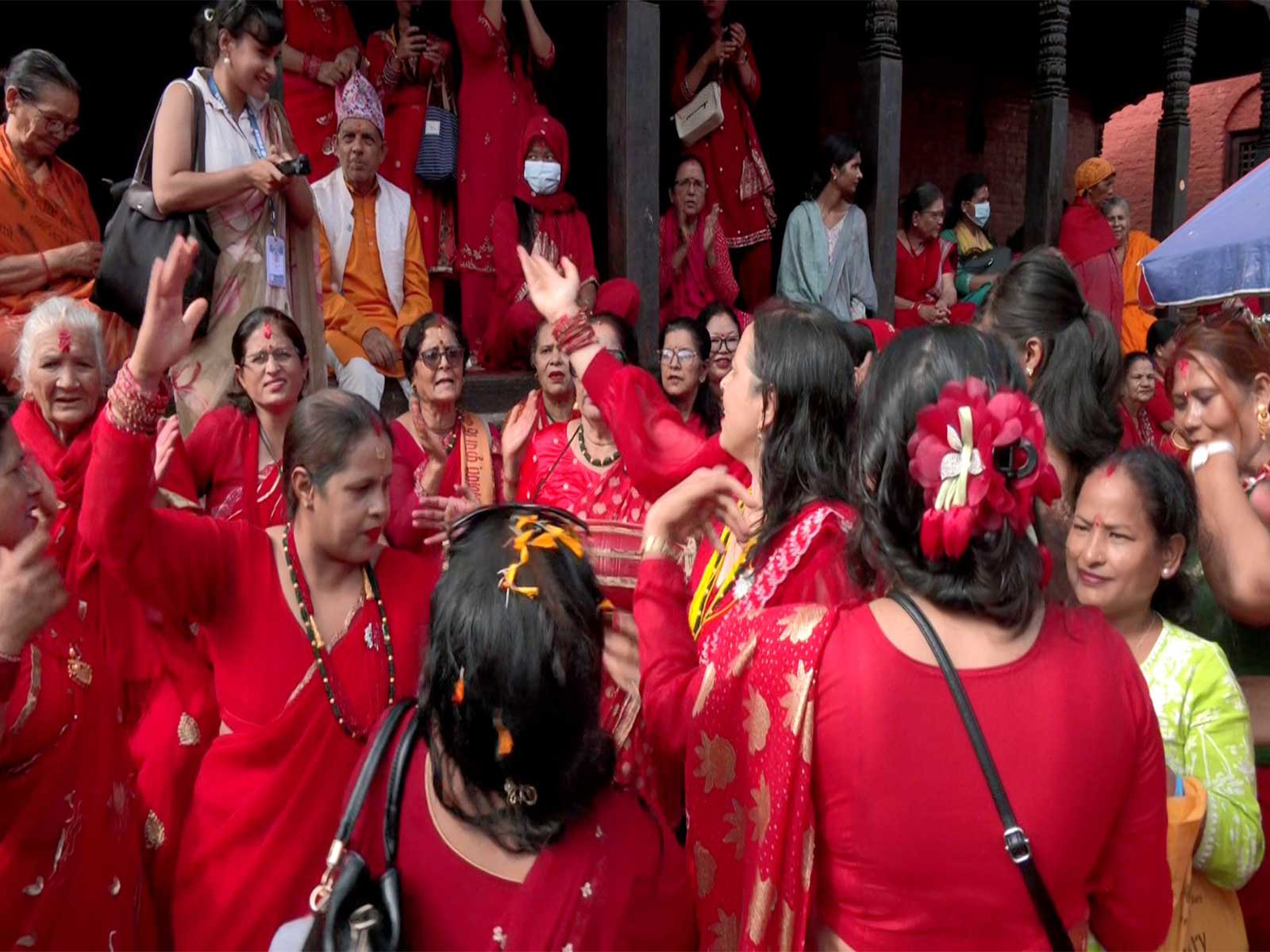
Usually, the temple used to be filled with devotees dancing in groups and serpentine lines stretching far and wide, celebrating the festival of Teej where women would share the pain and anxiety through songs.
“The nation is reeling under this anomalous situation; no one is celebrating wholeheartedly. It is our ritual, and it has been carried forward to keep moving. The environment is not as joyous like of before years. Here in Pashupati itself, it used to be enthralling, but the situation has turned opposite; the temple premises are vacant, there aren’t many people standing in queue, and there is no celebratory environment. Many of the Teej celebration programs have also been cancelled. To preserve the rites, we came to perform the rituals to preserve the culture,” Sita Khanal Bhattarai, a devotee, told ANI.
In previous years, women on this third day of the dark half of the lunar month that falls in the Nepali month of Bhadra used to observe fasting and wish for a prosperous life, gathering in the outer square, singing and dancing. But the crowd has sadly been absent this year. The songs women used to share their pain and sorrow about the hardships they have been facing, and the blend of melody has faded.
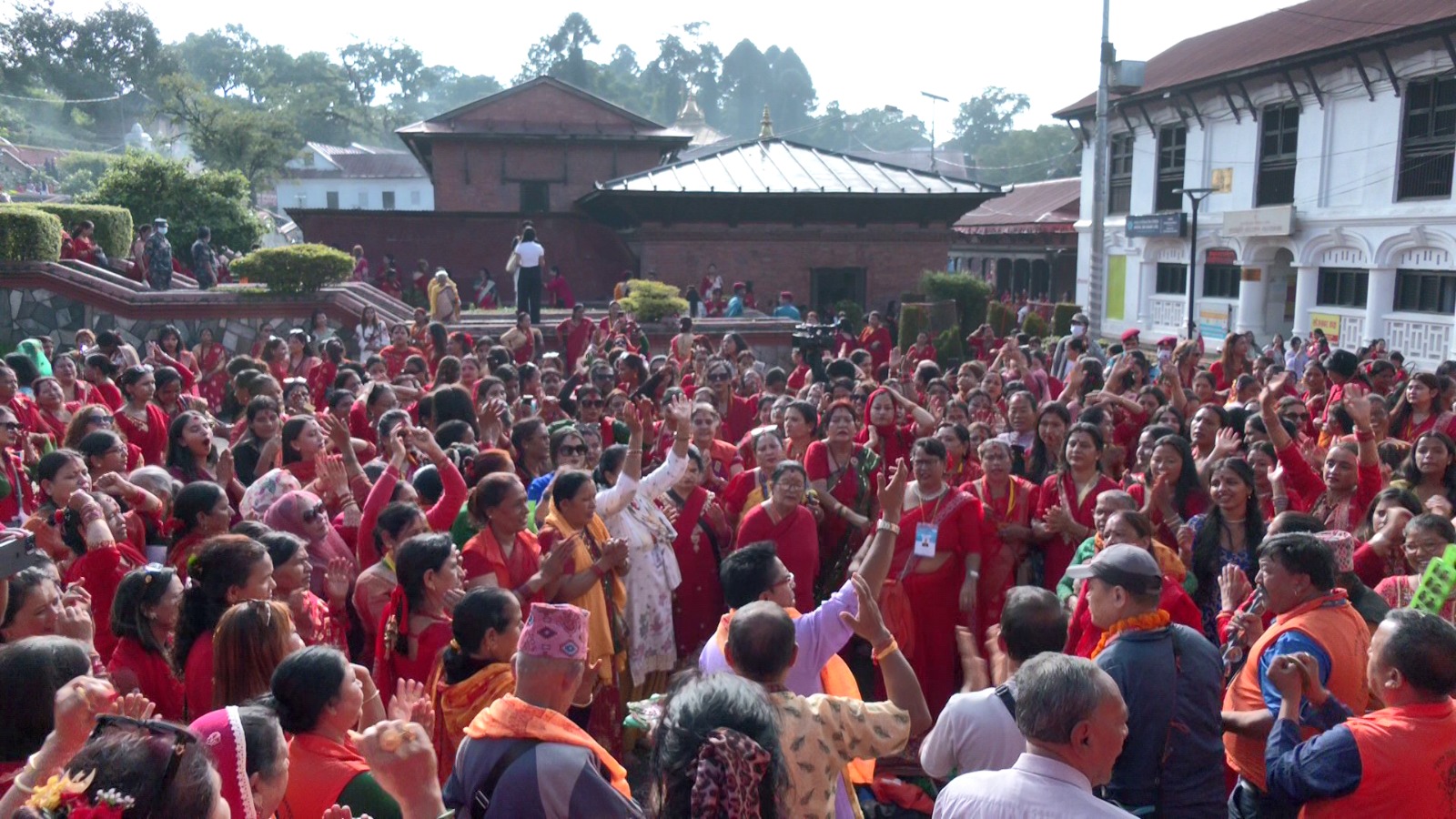
Though the women have continued to keep their fast, the large-scale celebration has now shrunk, with dancing and singing continuing in small groups just for the sake of preserving culture.
“We are not happy from our heart. We are here just to perform rituals and worship the god, otherwise we would have danced singed in the premises- the crowd is absent. The country is reeling under catastrophe; many of the women are reeling under harsh conditions. Just to pay obeisance to God, we are here and have prayed to God to avert these kinds of tragedies in the nation,” Neelam Shah, another devotee told ANI.
At least 1392 people have been confirmed dead in the disaster of August 26, which had hit five districts of the Himalayan nation, while the number of those missing still stands above five thousand and search-rescue operation still underway.
The festival of Teej has high significance amongst Hindu women, who also celebrate it as ‘Haritalika’, by offering prayers and worship at Pashupatinath Temple and other temples of Lord Shiva in other parts of the country.
According to the ‘Skanda Puran’ (a religious scripture of the Hindus), this festival got the name ‘Haritalika Teej’ as it was on this very day in the ‘Satya Yug’ (golden epoch of truth) that the daughter of the Himalayas, Parvati, was hidden by her maids because she refused to marry Lord Vishnu.
A day before ‘Teej ’, on the night of the second day of the fortnight in the month of Bhadau, women enjoy a variety of delicious dishes known as ‘Dar’ at their parental home, where they are especially invited for this purpose. The women on the day of ‘Teej’ are seen engrossed in jubilant dancing and singing in a carefree mood.
Women put on bangles, ‘Pote’ (a necklace made of glass beads), ‘Tilahari’ and ‘Sindur’ (crimson powder), considered symbols of good luck and dress themselves up in red saris or other red outfits and adorn themselves with different kinds of ornaments.
Women in the morning take ritual baths and offer worship, while in the evening they pay homage to Lord Shiva, light lamps and spend the night awake.
The next day, the last day of the festival is marked by the women performing religious and traditional rituals such as the use of 108 stems of ‘Datiwan’ (a kind of holy plant) while bathing in mud.
They also worship the legendary ‘Saptarishis’ (seven sages) and offer alms, thus completing the fast. Both married and unmarried women perform various ‘pujas’ (worships) and observe fasting, praying for fulfilment of their wish for a happy and prosperous conjugal life.
As per tradition, married women celebrate this festival wishing long life for their husbands, while the unmarried women who worship Lord Shiva and Parbati are believed to find an eligible groom. (ANI)
Related reading