
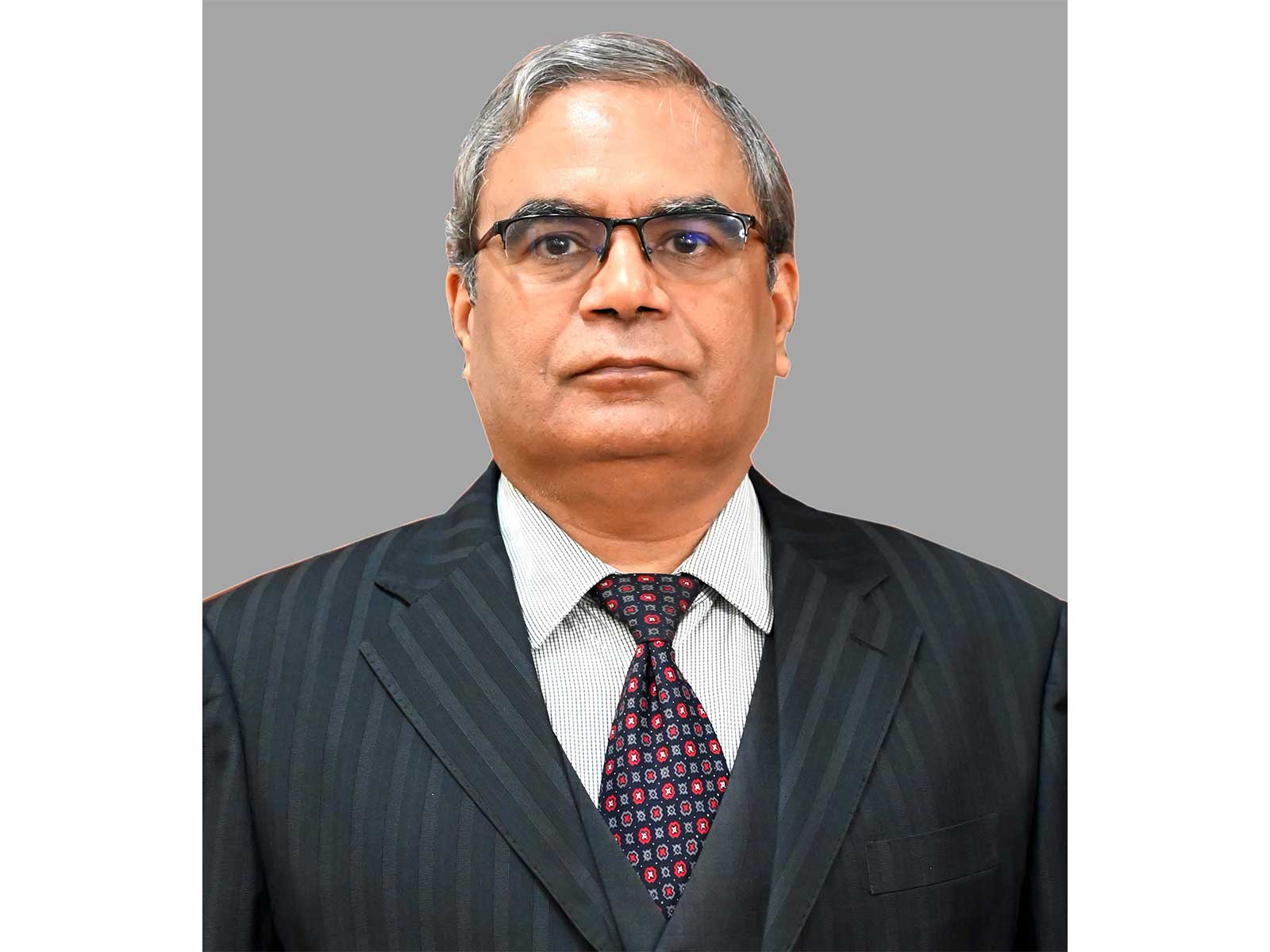
Dhaka [Bangladesh], July 21 (ANI): BIMSTEC Secretary General Indra Mani Pandey said that Bangladesh, as the current chair, may host the next summit in 2027 to mark the 30th anniversary of the regional organisation.
Speaking with the media, Pandey noted that the 30th anniversary aligns with the final year of Bangladesh’s chairmanship.
“Celebration and then related matter of whether we can hold a summit. It’s a very good coincidence that the 30th anniversary year, 2027, will also be the second and final year for the chairmanship of Bangladesh. So, the summit that Bangladesh might decide to host next year, so that’s coincide, that summit would certainly be a very special summit because it would then coincide with the 30th anniversary celebration,” Pandey said.
Speaking on the continuous review of regional cooperation, the Secretary General emphasised that expanding priority sectors remains an ongoing process.
“So, we do regular stocktaking on cooperation in different sectors when our experts meet, when our ministers meet, our senior officers meet. They take stock of progress in different sectors. It’s a continuous process. So, we have, after every meeting, new areas of cooperation are added. Member states sometimes decide to focus on very specific areas in different sectors. So, it’s a continuous process,” he said.
Pandey stressed that all initiatives under BIMSTEC are built strictly on mutual agreement among constituent nations.
“And that’s why I would like to underline that whatever cooperation we engage in under BIMSTEC is with the consensus of all the member states. That means all the member states believe that they will benefit from cooperation in those areas,” he added.
Addressing the execution of decisions, the Secretary General identified ground-level implementation as a common hurdle for international bodies.
“The last point was about the challenge of implementation. I think it’s a challenge that a number of organisations face; governments face that challenge on how to actually translate different decisions or different initiatives into tangible cooperation on the ground,” he said.
Highlighting the organisation’s action-oriented strategy, Pandey stated that the grouping prioritises concrete results over publicity.
“But if you look at our overall approach, the approach of BIMSTEC, we have actually focused on forging cooperation on the ground through different action plans, through setting up those centers of excellence. We have actually not engaged in any publicity about what we are doing, because our focus has been on doing–engaging in cooperation on the ground so that all our member states can benefit together,” the Secretary General said.
Reiterating the Secretariat’s focus on executing action plans, Pandey outlined the continuous communication maintained with member states.
“And this will remain our focus. And from the Secretariat’s perspective, we have prioritized implementation of different plans of action, and we are in close consultation with our member states. We have very regular communication about what more our member states need to do,” he said.
“It’s a very dynamic process. Almost on a daily basis, we get information from the member states about what they have done, and we communicate with them what more they need to do,” he added.
The Bay of Bengal Initiative for Multi-Sectoral Technical and Economic Cooperation (BIMSTEC) is an inter-Governmental Organisation. It was established on 06 June 1997 with the signing of the Bangkok Declaration. After Myanmar joined on 22 December 1997, the Organisation was named BIMST-EC (Bangladesh-India-Myanmar-Sri Lanka-Thailand Economic Cooperation).
With the admission of Bhutan and Nepal as members in February 2004, the Organisation was renamed as the Bay of Bengal Initiative for Multi-Sectoral Technical and Economic Cooperation (BIMSTEC). BIMSTEC comprises seven member States: Bangladesh, Bhutan, India, Myanmar, Nepal, Sri Lanka and Thailand. It acts as a bridge between South Asia and Southeast Asia. (ANI)
Related reading