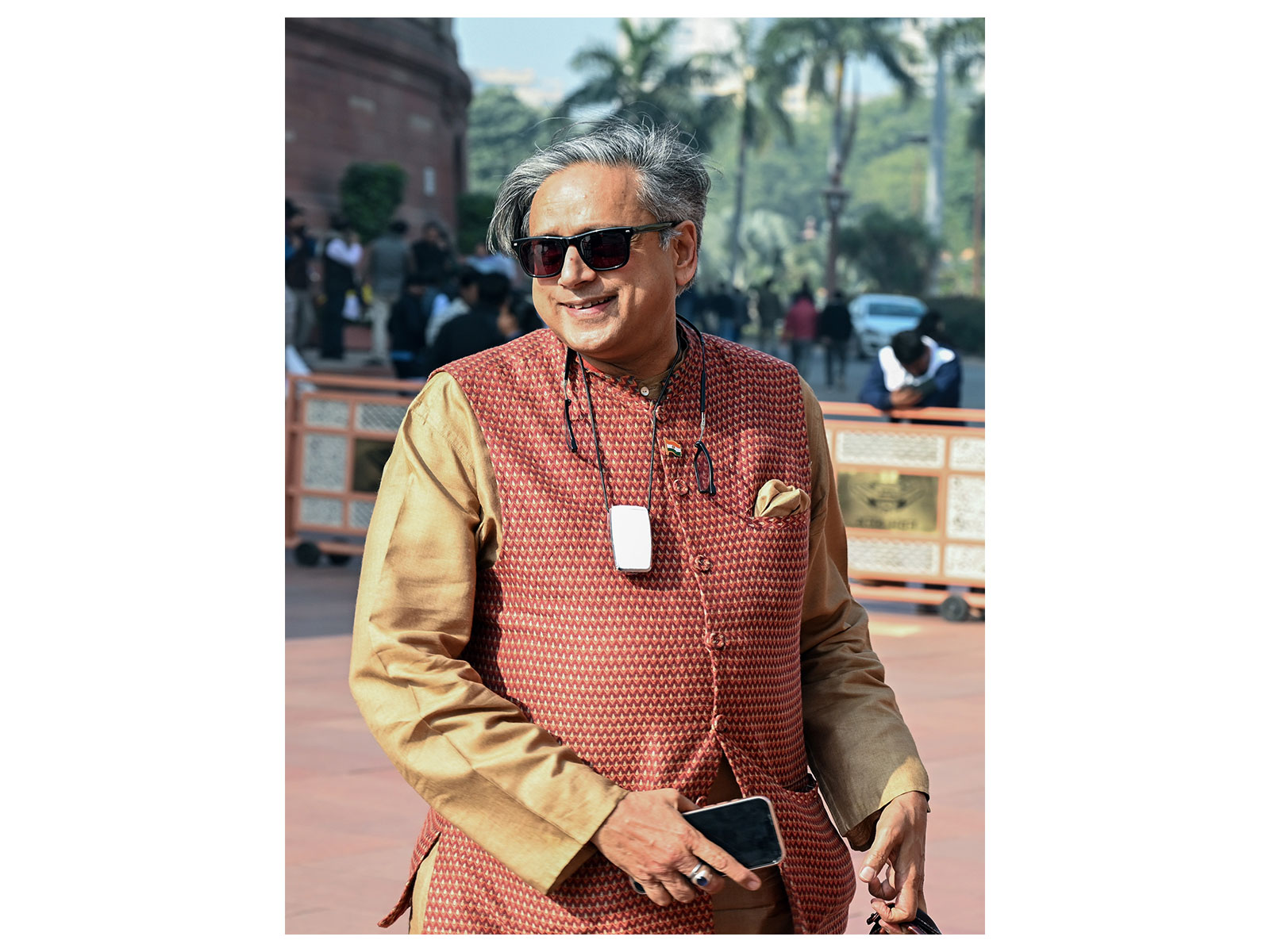
New Delhi [India], June 26 (ANI): A day after the Central Government clarified that a passport has never been considered proof of citizenship, noting the Passports Act 1967 gives legal grounds to provide the document to non-citizens, Congress MP Shashi Tharoor on Friday questioned the Centre over the controversy, calling it an “absurd legal paradox” while describing the debate as “fatuous” and urging a “common-sense legislative overhaul” to remove ambiguity.
In a detailed post on X, Tharoor referred to the Ministry of External Affairs’ (MEA) recent clarification on Passport Seva Divas that an Indian passport is primarily a travel document and not conclusive proof of citizenship.
While acknowledging that the government’s position is based on Section 20 of the Passports Act, 1967, he argued that the distinction has little practical meaning for ordinary citizens.
“The recent statement by the Ministry of External Affairs (MEA) – on #PassportSevaDivas, no less!-clarifying that an Indian passport is primarily a ‘travel document and not conclusive proof of citizenship’ has triggered a predictable wave of public bewilderment and political sparring,” Tharoor wrote.
He said that for decades, Indian passports have been regarded as the highest standard of official identity, obtained only after extensive police verification and document scrutiny.
“To turn around and declare that the very document born from this rigorous vetting does not actually prove citizenship creates an absurd legal paradox. If a passport does not establish domestic citizenship, then what does?” he asked.
Tharoor also referred to the Supreme Court’s observation that Aadhaar serves as proof of identity and residence but not citizenship, arguing that the combined effect of the existing legal framework leaves citizens in an “administrative limbo”.
“The Supreme Court has already ruled that the Aadhaar card is merely a proof of identity and residence, not citizenship. This leaves millions of Indians in a bizarre administrative limbo where they possess world-class biometric and state-issued documents, yet none are legally deemed ‘conclusive’ proof of their nationality within their own borders,” the post added.
To resolve what he termed a “fatuous controversy”, Tharoor proposed amending the legal framework to recognise both passports and Aadhaar cards as conclusive proof of Indian citizenship unless explicitly cancelled or withdrawn by the government.
He suggested that the Unique Identification Authority of India (UIDAI) issue a visually distinct Aadhaar card for non-citizen residents, arguing that such a distinction would enable the government to designate a standard Aadhaar card or a valid Indian passport as sufficient proof of citizenship.
According to Tharoor, such reforms would streamline domestic verification processes, reduce bureaucratic disputes during exercises such as electoral roll revisions, and provide citizens with greater legal certainty regarding their identity.
“By clearly demarcating the two categories, the state can safely mandate that carrying either a standard citizen’s Aadhaar or a valid passport is compulsory and sufficient proof of citizenship for all Indian nationals at all times. This dual-document policy would immediately streamline domestic verification, eliminate arbitrary bureaucratic challenges during electoral revisions, and provide every Indian with absolute, unquestionable legal certainty regarding their identity. End of story!” the Congress MP added.
His remarks come after the MEA, during a detailed briefing on Wednesday, stated that an Indian passport is primarily a travel document and should not be considered definitive proof of citizenship.
On Thursday clarified that a passport has never been considered proof of citizenship, adding that no such decision was taken either recently or in the last 12 years.
The clarification referenced Section 20 of the Passports Act, 1967, which provides for the issuance of passports to non-citizens.
“Notwithstanding anything contained in the foregoing provisions relating to issue of a passport or travel document, the Central Government may issue, or cause to be issued, a passport or travel document to a person who is not a citizen of India if that Government is of the opinion that it is necessary so to do in the public interest,” Section 20 of the Act states.
The government also pointed to judgments of the Bombay High Court from 2013 that had made it clear that possession of a passport does not establish citizenship. (ANI)
Related reading