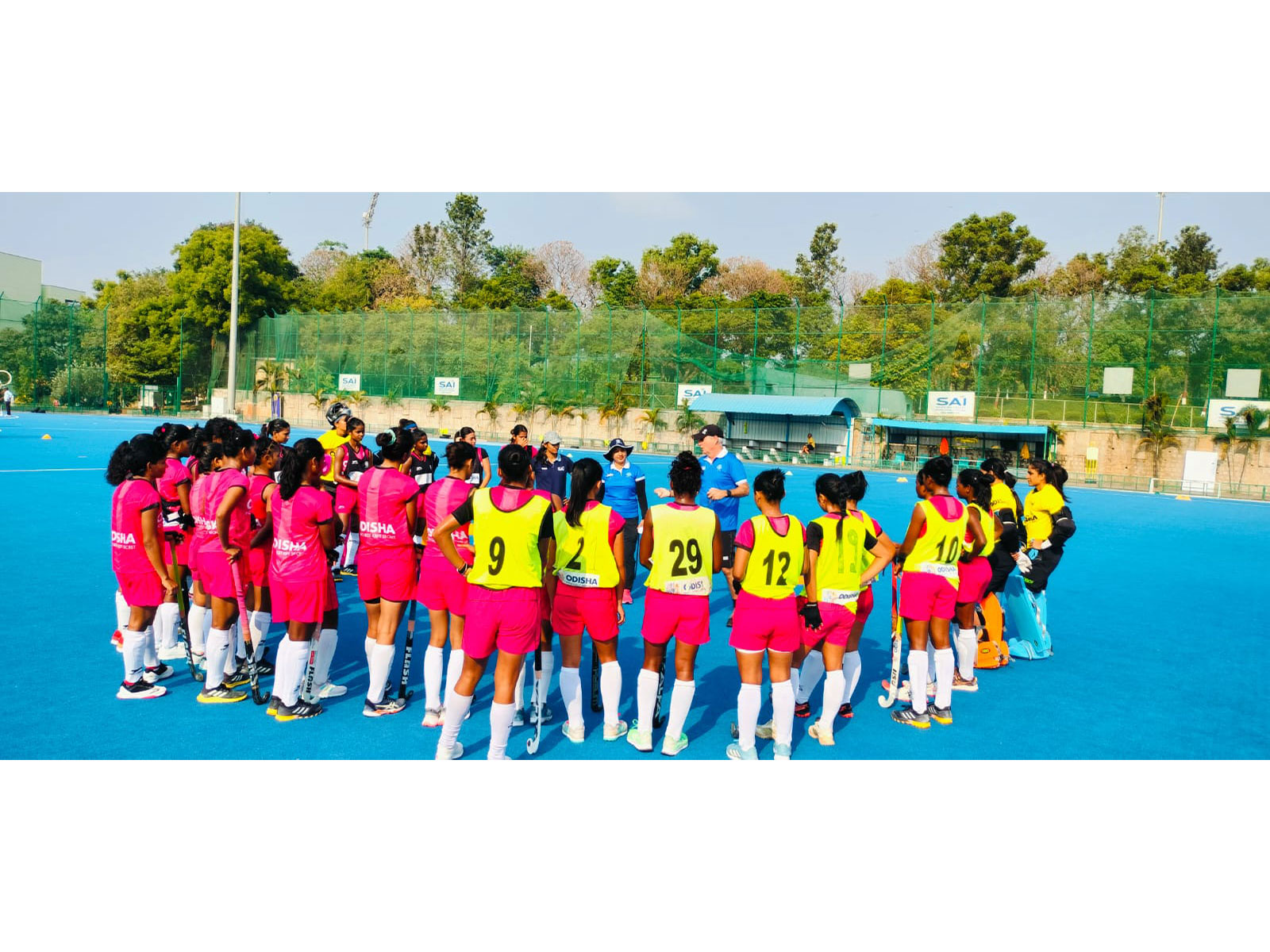
Bhopal (Madhya Pradesh) [India], May 19 (ANI): Indian Junior Women’s Hockey Team Head Coach Tim White has praised the growing talent pool in the country’s underage national pathway, lauding India’s U-18 coach Rani, during his scouting visit to the ongoing India-Australia U-18 exposure series in Bhopal.
White, who took charge of the U-21 national setup in Bengaluru nearly six weeks ago, emphasised the importance of building a strong connection between the youth tiers and the senior national team.
Tim White said he was keen to observe the U-18 group in Bhopal as it represents a key talent pipeline, adding that he has had positive interactions with coach Rani, who is doing an excellent job with the young team.
“I was incredibly curious to come to Bhopal and evaluate the U-18 group because this is our direct talent pipeline. I’ve had some excellent interactions and connections with Rani, who is doing a stellar job with this young unit,” he said.
“This is a youthful squad with several 15 and 16-year-olds who have immense room for physical and tactical maturation. The progression and adaptability they showed between the first and second matches against Australia are highly encouraging. For both nations, this series is entirely about elite development,” he added.
White’s transition into Indian hockey was catalysed by his assignment as the Head Coach of the Tamil Nadu Dragons men’s franchise in the Hero Hockey India League (HIL).
Tim White described his first six weeks with the junior core group in Bengaluru as highly productive, saying he has achieved his initial objectives. He noted that coaching fundamentals are universal despite having worked in Australia and Belgium, and said minor language barriers are managed through simple communication tools.
“It has been a whirlwind six weeks, but we have ticked off exactly what I wanted to achieve in this opening phase. Having coached across premier systems in Australia and Belgium, I firmly believe that coaching fundamentals remain universal. There are minor language barriers, but we overcome them easily using translation, whiteboards, and simple messaging. My immediate priority is to get the Indian junior girls playing a distinct, modern style of hockey that unlocks their maximum potential,” he added.
With the Junior Women’s Asia Cup scheduled for September in China, White outlined the ultimate target for the junior programme, saying, “The short-term target is to build a highly competitive unit by September that can stand toe-to-toe with Asia’s best, like China. However, the overarching purpose of any junior structure is not merely to chase junior medals. It is to cultivate the right habits, tactical maturity, and playing style that make these players senior-ready. We are focused on developing athletes who can step into the senior national team and immediately perform at a world-class level. We don’t set a ceiling; we just look to improve every day.”
Commenting on the structural differences between European and Indian player development models, White added, “In European powerhouses like Belgium and the Netherlands, player development is anchored around a thriving club system and localised national pathways where kids continue to stay at home while training. In contrast, India relies on a widespread hostel and academy system because of the country’s vast geography. Both systems have unique advantages. My familiarity with the domestic landscape through the Hockey India League has helped me adapt rapidly to the incredible passion that drives Indian hockey.” (ANI)
Related reading