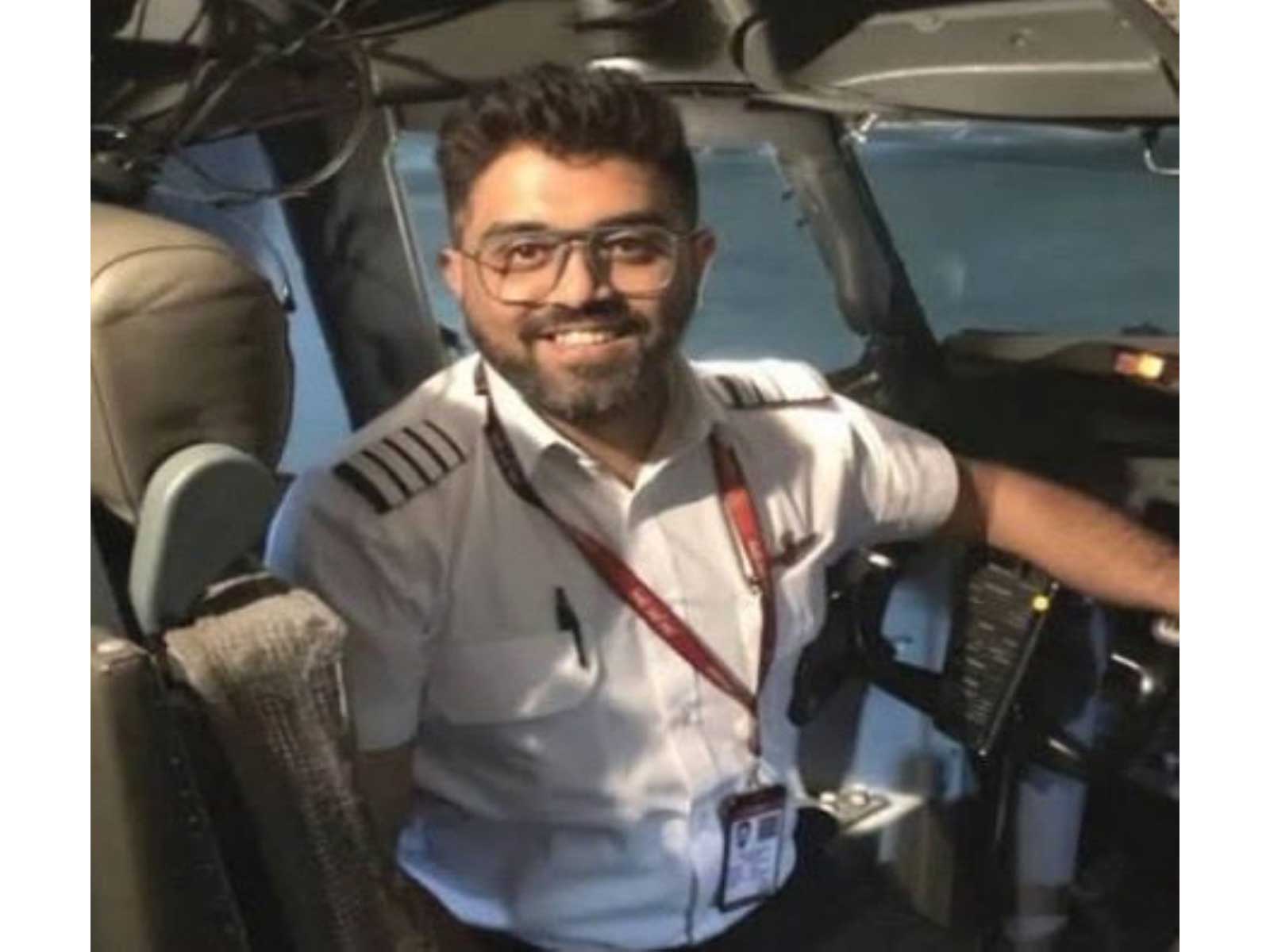
Mumbai (Maharashtra) [India], October 1 (ANI): The Flydubai cockpit incident involving Indian pilot Captain Smit Machchhar was a “complete failure” of Cockpit Resource Management (CRM), Federation of Indian Pilots (FIP) president Captain CS Randhawa said on Thursday, stressing that the circumstances leading to the physical altercation between the two pilots needed to be investigated.
His remarks came after Flydubai Flight FZ1073, travelling from Dubai to Tel Aviv, was diverted to Tabuk in Saudi Arabia following an altercation in the cockpit in which Captain Machchhar was seriously injured.
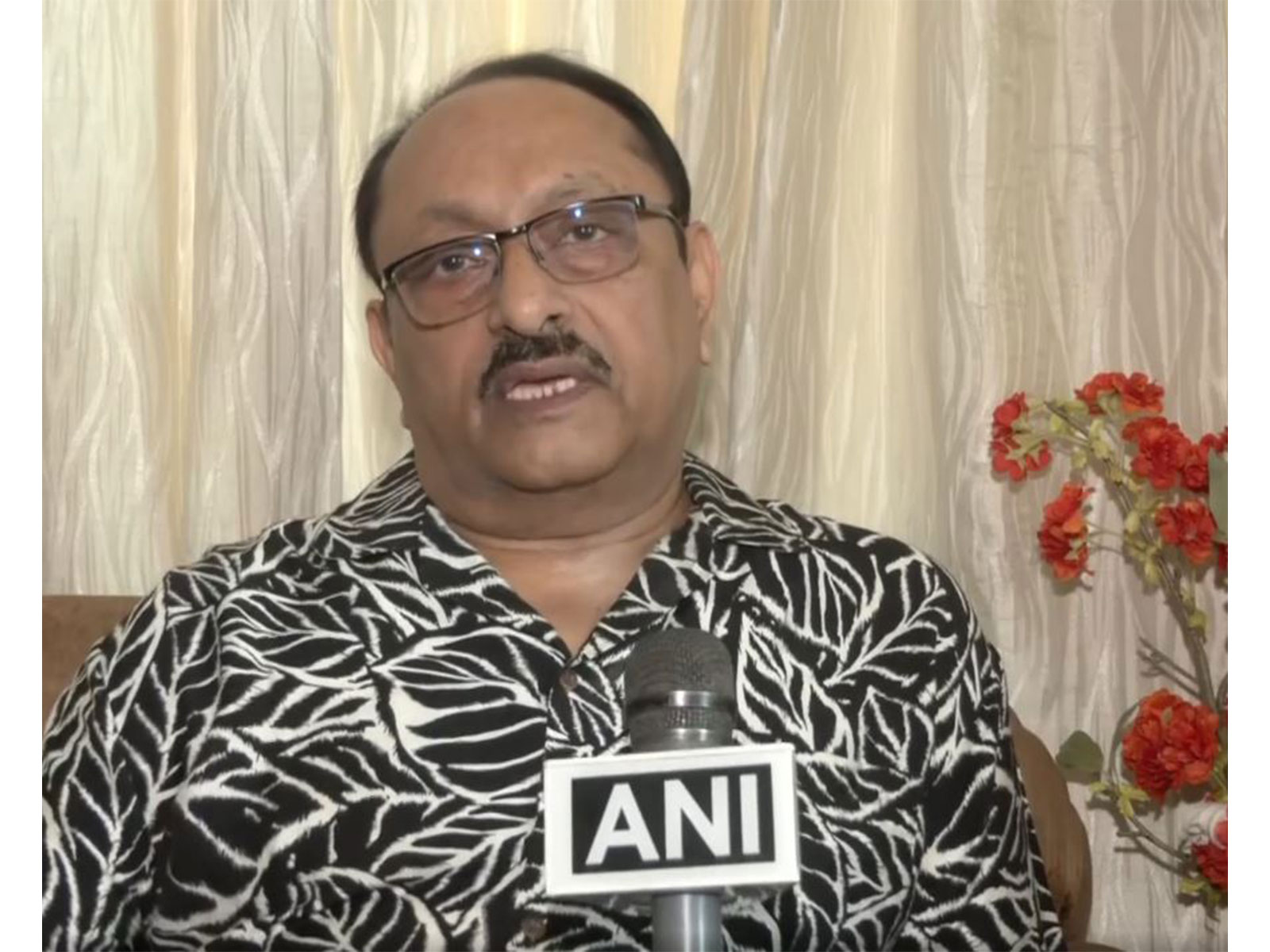
“This is a case of total failure of the CRM — Cockpit Resource Management. So, how did this situation of a physical altercation even arise? The matter needs investigation,” Randhawa told ANI.
“This is absolutely wrong because we never train pilots that such a situation should ever arise. But we don’t know yet what happened. One thing is very clear: cockpit resource management totally failed. In my 50 years of experience, I am seeing this for the first time,” he added.
Praising Captain Smit Machchhar, Randhawa said, “He did a very brave thing and did a very good job.” He said Machchhar was an FIP member until 2022 and a check pilot at SpiceJet. “Professionally, he was good,” he added.
“If it is true that the pilot tried to commit suicide and tried to bring the plane down, and Captain Smit overpowered him, then it is a very brave act and in our opinion a matter of great pride for Indian pilots,” he said.
Randhawa said that in the FIP’s opinion, Machchhar did not land the plane. “He was lying on the ground with an oxygen mask on when he was taken out of the plane. I can’t say for sure; it’s possible he did. But in our opinion, the third pilot landed the plane,” he said, adding that this will become clear after the investigation.
According to sources, Randhawa said one pilot was Indian, and the other was of Omani descent.
“Initially, some media outlets said it was a Russian-Ukrainian, and then someone else said both were Emirati. But now it’s been revealed that one pilot was Indian and the other was an Emirati pilot of Omani descent,” he said.
Randhawa said the aircraft was 250 to 300 km from Israel when the emergency began. “The squawk code 7700 was transmitted, which shows the ground controller that there is an emergency on board. After a while, this code was changed to 7500, which indicates that the plane is being hijacked,” he said.
He said the plane lost 17,000 feet in about a minute and a half, descending from 34,000 to 17,000 feet. “If you look at the audio and video recordings, you can hear screams coming from the entire cabin,” he said. The rate of descent would have been around 12,000 to 14,000 feet per minute, “so it’s very steep,” he added.
“When this plane descended at such a high rate, it crossed the maximum speed the plane is supposed to have (VMO). So the rudder, which is a very delicate part of the plane, broke off. If it stayed at this high speed a little longer, its wings would have come off, and it would have crashed,” he said.
Randhawa said the level of bloodshed suggested the fight had gone on for some time. “This level of bloodshed can’t happen in just a minute or a minute and a half. So, this problem must have been going on inside the cockpit five to ten minutes before,” he said.
Citing sources, Randhawa said a female passenger whose daughter was in the washroom near the cockpit reportedly heard loud noises and screams from inside the flight deck and alerted the cabin crew.
“When they went inside, they saw that there was a lot of blood on both pilots. They were almost unconscious,” Randhawa said.
On the terror angle, Randhawa said, “This is a widespread rumour. The Saudi Government, that is, the Civil Aviation Authority, is investigating it. Only they know what happened at this time. Flydubai doesn’t know either. Israel doesn’t know; there is also speculation in Israel that it was a terror attack. Once the investigation report is complete, it will be known what the real mystery was.”
“If it’s true that it was a terror attack, was that pilot linked to any terrorist organisation? Then a lot of questions arise. Then it will go in a different angle,” he said.
He said the Israeli government was looking at the angle because the 7500 hijack code was entered. “We should trust the country that is conducting the investigation.”
He said the cockpit voice recorder would contain conversations between the pilots and air traffic control, while the flight data recorder would provide technical information about the aircraft’s movements.
Randhawa said Tabuk airport is about 200 to 250 km from Israel in northwestern Saudi Arabia. “It’s a small airport, and the passengers were given shelter there. Both pilots have been hospitalised. I’m guessing the third pilot was the one who landed the plane,” he said.
He said the Saudi government “took really good care of all the passengers” and denied Israel access to send its own military aircraft. Israeli military jets could not enter Saudi airspace unless Riyadh allowed it, he added. Passengers were taken to Tel Aviv on a Flydubai plane.
Randhawa called for security changes. “We need to rethink our approach and step up security, which is why airlines should bring sky marshals on board. I think Israel will make it compulsory that any flight coming to Israel should have sky marshals,” he said.
He said El Al is among the most secure airlines in the world. “They have two to four sky marshals on every flight. Secondly, they have two cockpit doors. And there is no foreign national pilot there. They are all Israelis. In the Gulf, they are all multinational, so the cockpit and cabin crew might be from eight to ten nationalities. There is a cultural difference, and CRM is very important,” he said.
“We need to create an SOP for pilots on what the first step is. As of today, there is no written SOP. The first thing we teach pilots is to restrain them. Whoever was being aggressive should have been restrained by calling the cabin crew and the passengers. Because if both of them die, there’s no third person left, so the ship is gone,” he said.
He said Gulf countries were the first to start psychometric tests for pilots, while the DGCA has not seen any need for it. “After this incident, it has become very important that every pilot undergoes a psychometric test and their mental state is evaluated periodically, say every four or five years,” he said.
“In aviation, something new always comes up with every incident. It was a very painful incident. If you hear the screams of the passengers…” he said, adding that Saudi Arabia would prepare a preliminary report quickly.
Meanwhile, in Mumbai, a neighbour of Captain Machchhar said residents were praying for his speedy recovery and were waiting for updates on his health.
“He did something that saved 180 people. We pray for his speedy recovery and for him to come back soon. We are like a close family, knowing them for years. He has done such a great job. We are only worried about how he is and hope to get some information about him soon,” the neighbour told ANI.
Former neighbour of Flydubai Captain Machchhar, Dr Janit Shah, on Thursday also recalled him as a talented, soft-spoken and good person, expressing hope for his speedy recovery.
“Smit Machchhar is a talented, soft-spoken, and good man. He was my neighbor for the last 10-15 years before he shifted to Dubai 2-3 years ago,” Shah said.
Another neighbour of Captain Smit Machchhar also expressed concern over his condition and wished him a speedy recovery.
“We want him to be fine. We wish him a speedy recovery. He is the bravest person in the whole building,” she said.
Meanwhile, Prime Minister Narendra Modi has spoken to the wife and parents of Captain Machchhar and applauded his bravery that saved hundreds of lives, Government of India sources said on Thursday. He also stressed that Indian missions are providing all possible assistance to the captain and his family, the sources said.
Machchhar is receiving treatment at a hospital in Tabuk. The Indian Mission in Saudi Arabia said it is in touch with his family and will follow up on his health with Saudi authorities.
PM Modi had earlier hailed the captain as a “HERO”. “Captain Smit Machchhar is a HERO. In the face of the gravest danger and despite being seriously injured, he showed immense courage and an unwavering resolve to protect the lives of others. His valour helped save hundreds of lives and avert a great tragedy. India is proud of Captain Machchhar. Praying for his speedy recovery, renewed strength and good health,” he said on X.
SpiceJet Chairman and Managing Director Ajay Singh, Machchhar’s former employer, told ANI from Aichi-Nagoya, Japan, “I was incredibly proud to know of this, but this is the job of a pilot. His job is to protect the lives that have been entrusted to him. And in this case, 180 lives were entrusted to Captain Smit Machchhar, and he did a tremendous job saving and preserving those lives. All of SpiceJet is proud of him, and of course, all of India is proud of him.”
“The handle which allows that door to be opened is actually on the co-pilot’s side. So, it would have needed real courage, after being stabbed, to reach out to the co-pilot side and somehow find a way to unlatch that door. The fact that he was able to do it essentially saved those lives,” Singh said.
“The cabin crew or anybody on the outside can punch a code in that door. But the door still doesn’t open. It needs the captain to physically unlock the door. In this case, the co-pilot was actually attacking the captain, and he still managed to reach out and find a way to unlock that door. And that is possibly what saved lives,” he added.
Singh said pilots are trained for such emergencies. “It’s a very rare phenomenon that you see that one captain actually attacks another. This is akin to what happened in 9/11. It’s extremely dangerous. Airlines before they hire pilots need to do many more psychometric studies, which we do, but still, incidents of this sort happen,” he said.
“It is the crew ultimately that saves you and the crew did a stellar job. The Honourable Prime Minister has recognised his bravery. All of the country is proud of him, and of course, SpiceJet is incredibly proud of him,” he added.
Flydubai FZ1073 was travelling from Dubai to Tel Aviv when Machchhar was allegedly attacked by his co-pilot, who stabbed him and allegedly attempted to take control of the aircraft. Despite serious injuries, he unlocked the cockpit door, allowing passengers and crew to intervene. The aircraft landed safely in Tabuk, Saudi Arabia.
Flydubai said “an altercation occurred in the flight deck” and the aircraft “was successfully secured by on-duty Flydubai crew travelling on the flight, who diverted and landed the aircraft safely.”
Passengers were flown to Tel Aviv on another aircraft and landed at Ben Gurion Airport.
Meanwhile, flydubai will temporarily suspend flights to and from Israel as an investigation into Wednesday’s mid-air incident is underway, an airline spokesperson said, CNN reported.
Machchhar is a direct-entry Captain with UAE-based Flydubai, with over 13 years of commercial aviation experience and around 9,750 flying hours, predominantly on the Boeing 737. He spent 11 years with SpiceJet as a Line Training Captain before joining Flydubai. (ANI)
Related reading