Varanasi (Uttar Pradesh) [India], August 5 (ANI): In a landmark scientific initiative launched today at Banaras Hindu University (BHU), researchers have commenced an in-depth genetic and bio-archaeological study on a complete human skeleton recovered from Rajghat, a prominent archaeological site nestled in the middle Ganga Valley.
The project aims to answer profound questions regarding the genetic identity, lifestyle, and dietary habits of the ancient inhabitants of Kashi, while offering a direct comparative window into how they relate genetically to the people of the Indus Valley Civilisation (Rakhigarhi).
Situated at the north-eastern edge of Varanasi near the holy confluence of the Ganga and Varuna rivers, Rajghat was first discovered in 1940 during the expansion of the Kashi railway station.
Subsequent excavations by the Archaeological Survey of India (ASI) and BHU, most notably extensive work led by Prof AK Narain and TN Roy between 1957 and 1969, uncovered rich cultural strata featuring ancient residential structures, terracotta artefacts, seals, and historical antiquities spanning multiple epochs.
Among the historical treasures recovered during those excavations was a complete human skeleton, which has been carefully preserved ever since in the Department of Ancient Indian History, Culture, and Archaeology. Until now, the remains had never undergone modern scientific biological analysis or precise radiocarbon dating.
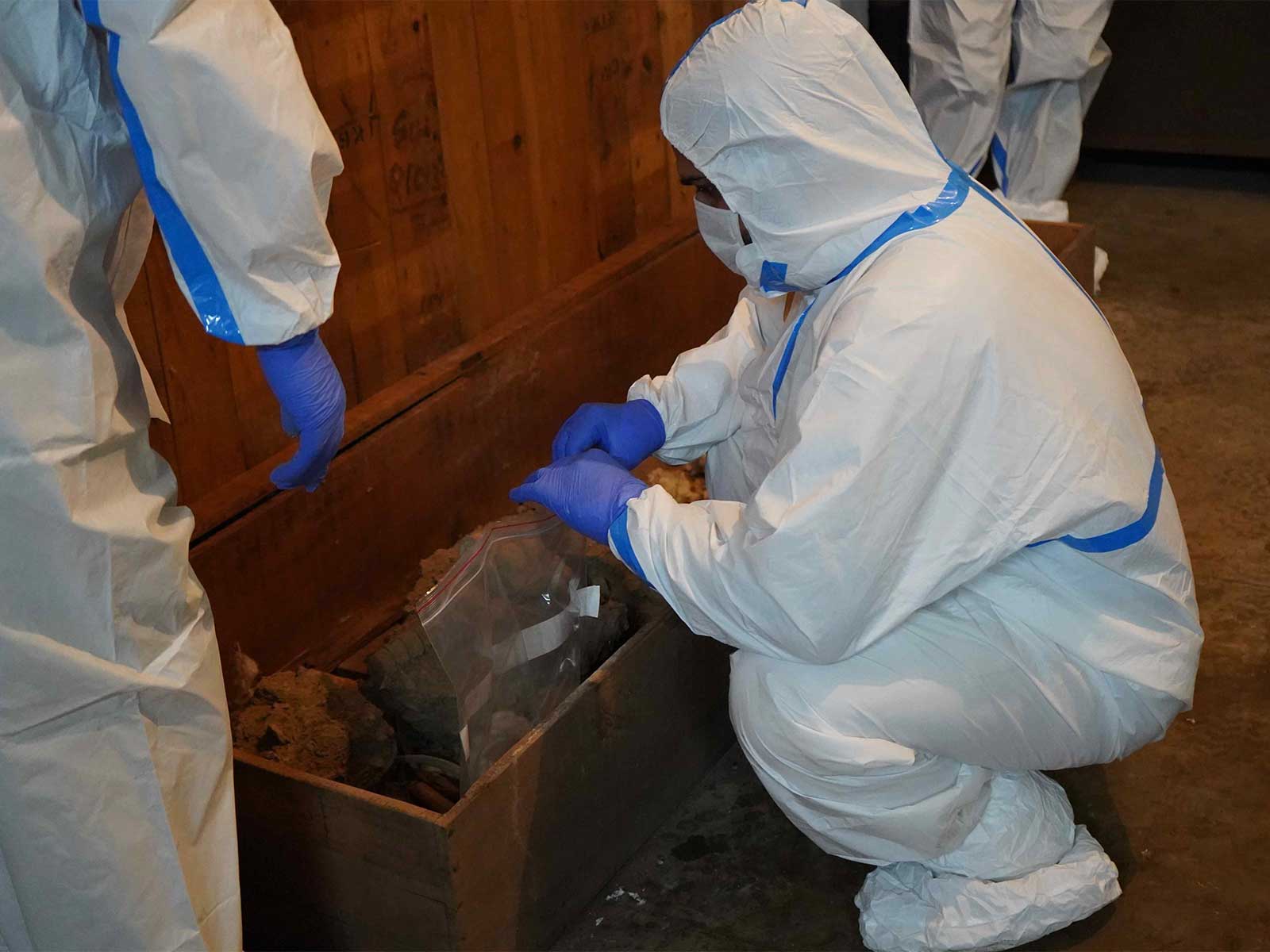
At the initiative of the department’s current Head, Prof MP Ahirwar, a formal proposal for a rigorous scientific study was advanced. Today, Dr Prajwal Pratap Singh, an expert in ancient DNA, successfully collected biological samples from the skeleton.
Highlighting the importance of the project, Prof Ahirwar stated: “Rajghat serves as vital evidence of the antiquity and continuity of Kashi. Preserving this skeleton was a responsibility of our department. Now, through modern scientific methods, we will attempt to understand who the ancient inhabitants of the Ganga Valley were, what their lifestyle was like, and what their genetic identity was. This collaboration with Gyan Lab is a meaningful step towards bridging the gap between archaeology and science.”
The study is being conducted in close collaboration with Professor Gyaneshwer Chaubey of BHU’s Department of Zoology. Emphasising the scope of the research, Prof. Chaubey noted, “This study offers a rare opportunity to understand the genetic diversity of the ancient population of the Ganga Valley. We will trace their ancestry through ancient DNA analysis and gain insights into their diet and lifestyle using isotope analysis. It will be particularly significant to observe the extent of genetic similarity or difference between this individual from Rajghat and the skeletons from Rakhigarhi (Harappan period). This could reveal new information regarding the genetic connections between the populations of the Indus Valley and the Ganga Valley.”
The comprehensive research project encompasses three core scientific pillars.
Ancient DNA Analysis: To determine the individual’s genetic ancestry, population affinities, and enable direct cross-comparisons with other ancient South Asian samples, including Harappan specimens from Rakhigarhi.
Stable Isotope Analysis: To reconstruct ancient dietary habits, primary food sources, and track potential geographical mobility or migration patterns.
Bio-Archaeological & Chronological Studies: To assess the individual’s age at death, health status, and pathological markers, alongside precise radiocarbon dating to establish an absolute timeline for the remains.
As modern science decodes the secrets preserved in bone and DNA, this BHU initiative promises to reshape our understanding of ancient migration, cultural continuity, and population dynamics across early Indian civilisations. (ANI)
Related reading