
Agartala (Tripura) [India], November 13 (ANI): Preparations for the second phase of Census 2027 have officially begun in Tripura, with a state-level conference held in Agartala on Friday to sensitise senior officials and key functionaries about the upcoming population enumeration exercise scheduled from January 25 to February 28, 2027.
The conference was jointly organised by the Directorate of Economics and Statistics, Government of Tripura, and the Directorate of Census Operations, Tripura, at Pragna Bhawan.
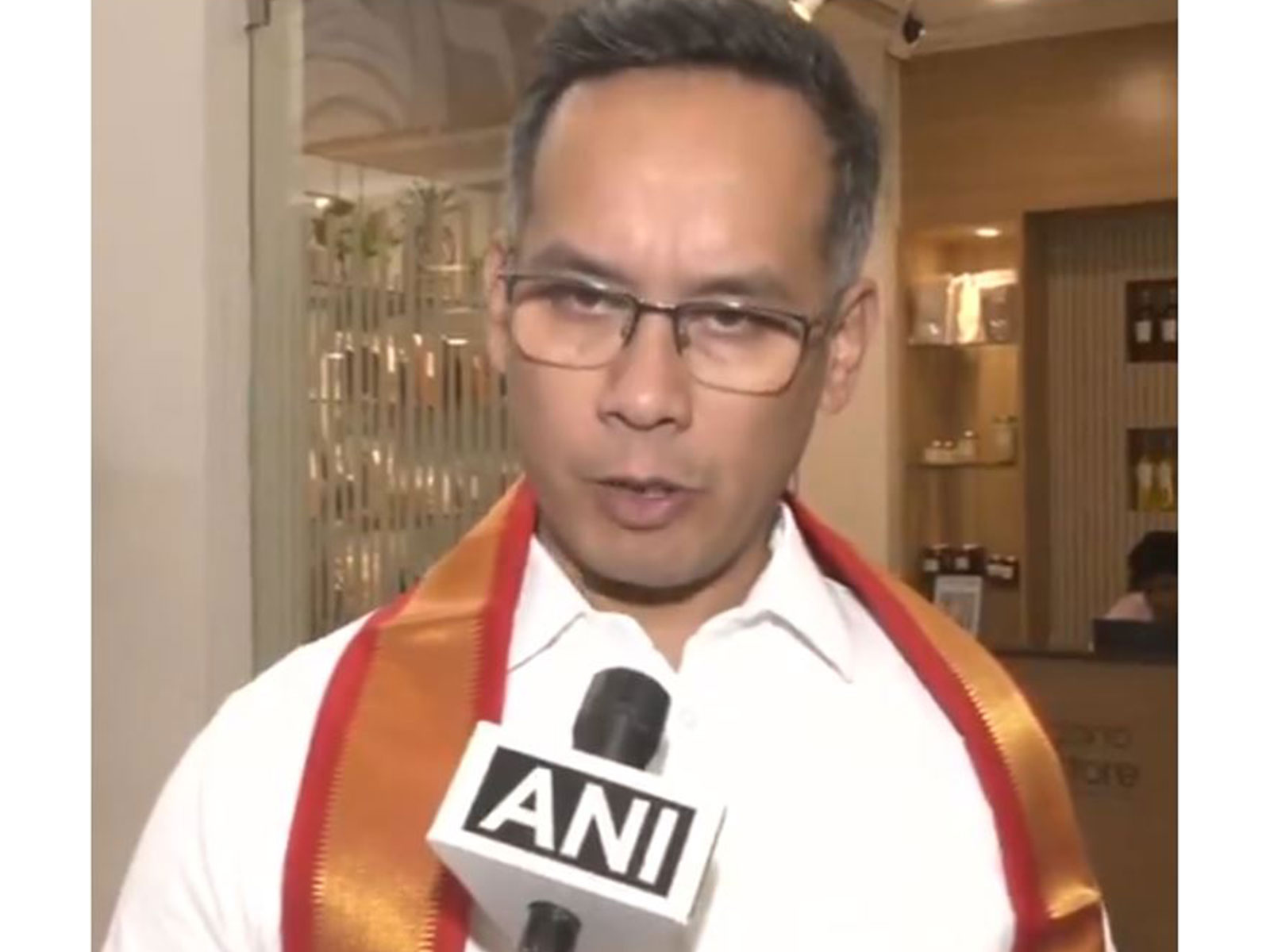
Addressing the media, Ratan Biswas, IAS, Director of the Directorate of Census Operations, Agartala, said the conference was attended by District Magistrates and Sub-Divisional Magistrates and focused on the procedures and technical aspects of the upcoming Census exercise.
“Today, a workshop was held regarding Phase-II of Census 2027, attended by all District Magistrates (DMs) and Sub-Divisional Magistrates (SDMs). The conference was inaugurated by the Chief Secretary in the presence of members of the State-Level Coordination Committee and representatives from the Government of India, including officials from the Office of the Registrar General and Census Commissioner of India,” Biswas said.
He said the discussions covered the Census questionnaire, enumeration procedures, use of digital tools and the publicity campaign, with detailed presentations explaining the various aspects of the exercise.
“With today’s conference, the preparatory journey for Phase-II of Census 2027 has officially begun in the state. The training programme will now be conducted in a phased manner, starting at the state level, followed by district-level training. Subsequently, master trainers, field trainers and supervisors will receive training to ensure the smooth implementation of the exercise,” he said.
Biswas added that a publicity and awareness campaign would also be undertaken, with the entire preparatory and implementation exercise scheduled to continue until March 2027.
Tripura Chief Secretary JK Sinha attended the conference as the chief guest and underscored the importance of Census 2027 as a foundation for evidence-based governance, policy formulation and inclusive development. He also highlighted the transition towards a fully digital Census ecosystem.
Sinha emphasised the need for strong inter-departmental coordination, timely completion of preparatory activities and comprehensive capacity-building of Census personnel to ensure smooth execution.
Vikas Singh, IAS, Nodal Officer for Census 2027 and Secretary of the Planning (Statistics) Department, Government of Tripura, urged officials, particularly Principal Census Officers, to make dedicated efforts towards the successful completion of the population enumeration exercise.
He said Census 2027 would capture the demographic, socio-cultural and economic characteristics of individuals across the country, describing it as more than an administrative or statistical exercise and an empirical foundation for building Viksit Bharat.
Singh also stressed that the accuracy, completeness and integrity of Phase-II data would depend on the quality of training imparted to the large workforce involved in the exercise.
The conference was attended by senior state officials, including District Magistrates and Collectors, Municipal Commissioners, Additional District Magistrates, Sub-Divisional Magistrates, heads of departments and other stakeholders. Representatives from the Office of the Registrar General of India (ORGI), New Delhi, also participated.
Census 2027 will be India’s 16th Census since 1872 and the eighth since Independence. It will be the country’s first fully digital Census, using mobile applications and web-based monitoring systems to improve efficiency, transparency and real-time data validation.
The Census is being conducted in two phases, with Phase-I already completed. Phase-II, or Population Enumeration, will take place in Tripura from January 25 to February 28, 2027, while the self-enumeration facility will remain available from January 10 to January 24, 2027.
The second phase will collect demographic, social, economic, migration and fertility-related information through a structured questionnaire comprising 40 questions. House-to-house enumeration will also cover the houseless population.
The conference included technical presentations by senior Census officials on methodology, digital architecture, field operations and monitoring mechanisms, besides discussions on the roles and responsibilities of functionaries at different levels. (ANI)
Related reading