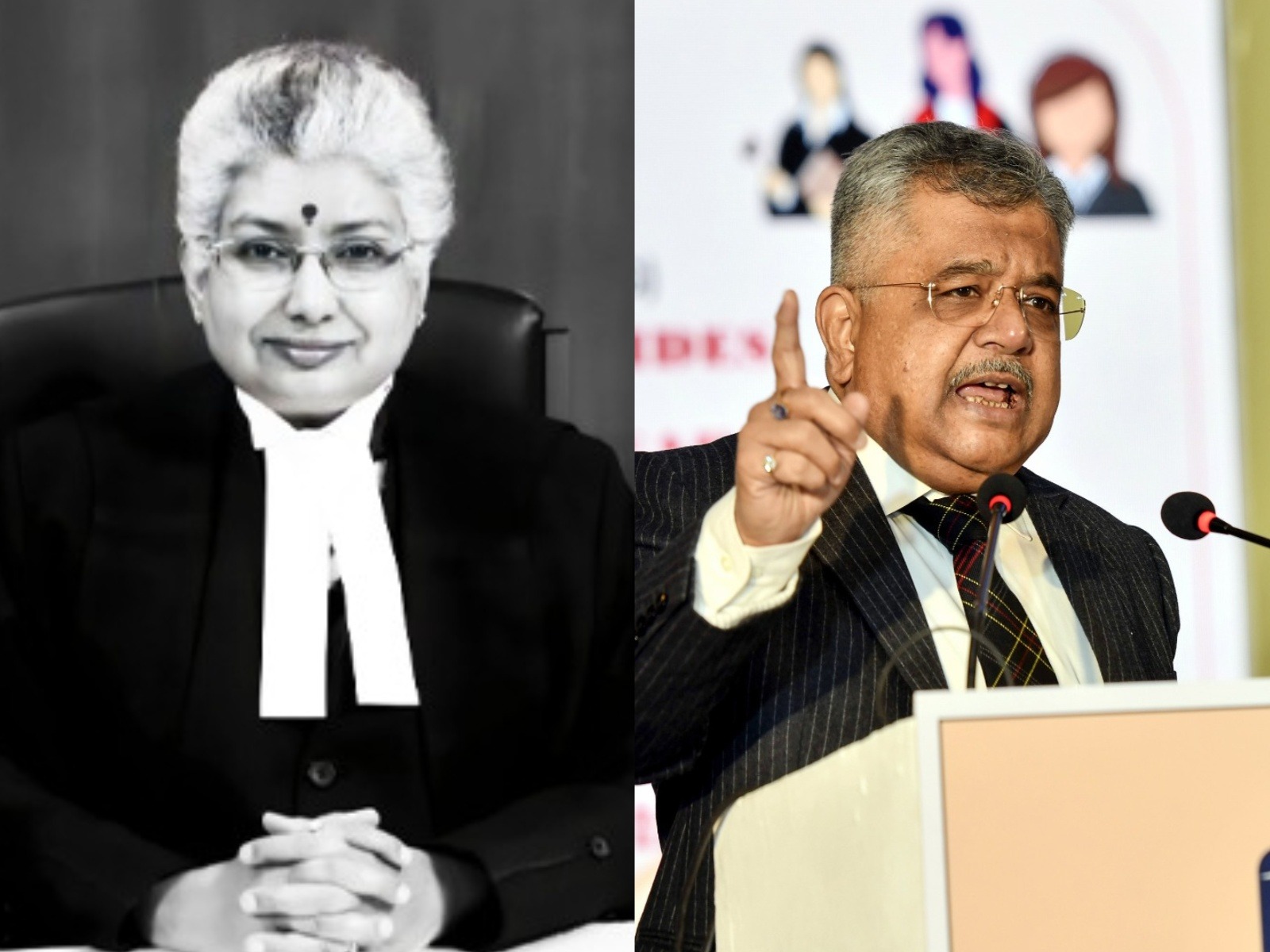
New Delhi [India], September 20 (ANI): Supreme Court Justice BV Nagarathna and Solicitor General Tushar Mehta on Sunday called for stronger environmental laws, effective institutions and greater cooperation across jurisdictions to address climate change, biodiversity loss and other environmental challenges.
Addressing the valedictory session of the National Green Tribunal’s international conference on “The Future of Environment and Climate Dynamics”, Justice BV Nagarathna said environmental law must not remain confined to addressing completed violations but must also respond to emerging risks, scientific uncertainty and potentially irreversible ecological consequences.
She said the Supreme Court has made a significant contribution to environmental jurisprudence and is increasingly advocating a shift from an anthropocentric to an ecocentric approach, recognising that human interests should not automatically take precedence over the interests of the non-human world.
Justice BV Nagarathna said environmental governance must also address the unequal impact of environmental degradation on different communities, regions and generations. She highlighted key principles of environmental jurisprudence, including sustainable development, the polluter pays principle, absolute liability, the precautionary principle, the public trust doctrine and intergenerational equity.
She said climate change, pollution, biodiversity loss, land degradation and water scarcity do not respect territorial boundaries, making cooperation between jurisdictions, knowledge-sharing and equitable responsibility-sharing essential.
Solicitor General Tushar Mehta said environmental challenges can no longer be addressed by a single institution or discipline and require the combined wisdom of law, governance, science, economics and society.
He said climate change is a present reality affecting air, water, forests, biodiversity, cities and agriculture, adding that environmental law has evolved into a framework concerning life, dignity, equality and responsibility towards future generations.
Mehta called for a balance between environmental protection and development, supported by scientific assessment, technological innovation and sustainable development. Referring to Articles 48A and 51A(g) of the Constitution, he said India’s commitment to environmental protection is reflected in its constitutional framework.
He called for stronger institutions, sustainable and liveable cities, green infrastructure and responsible energy solutions, while stressing that courts, tribunals, governments, legislatures, scientists, experts and citizens must work together to translate environmental commitments into effective implementation. (ANI)
Related reading