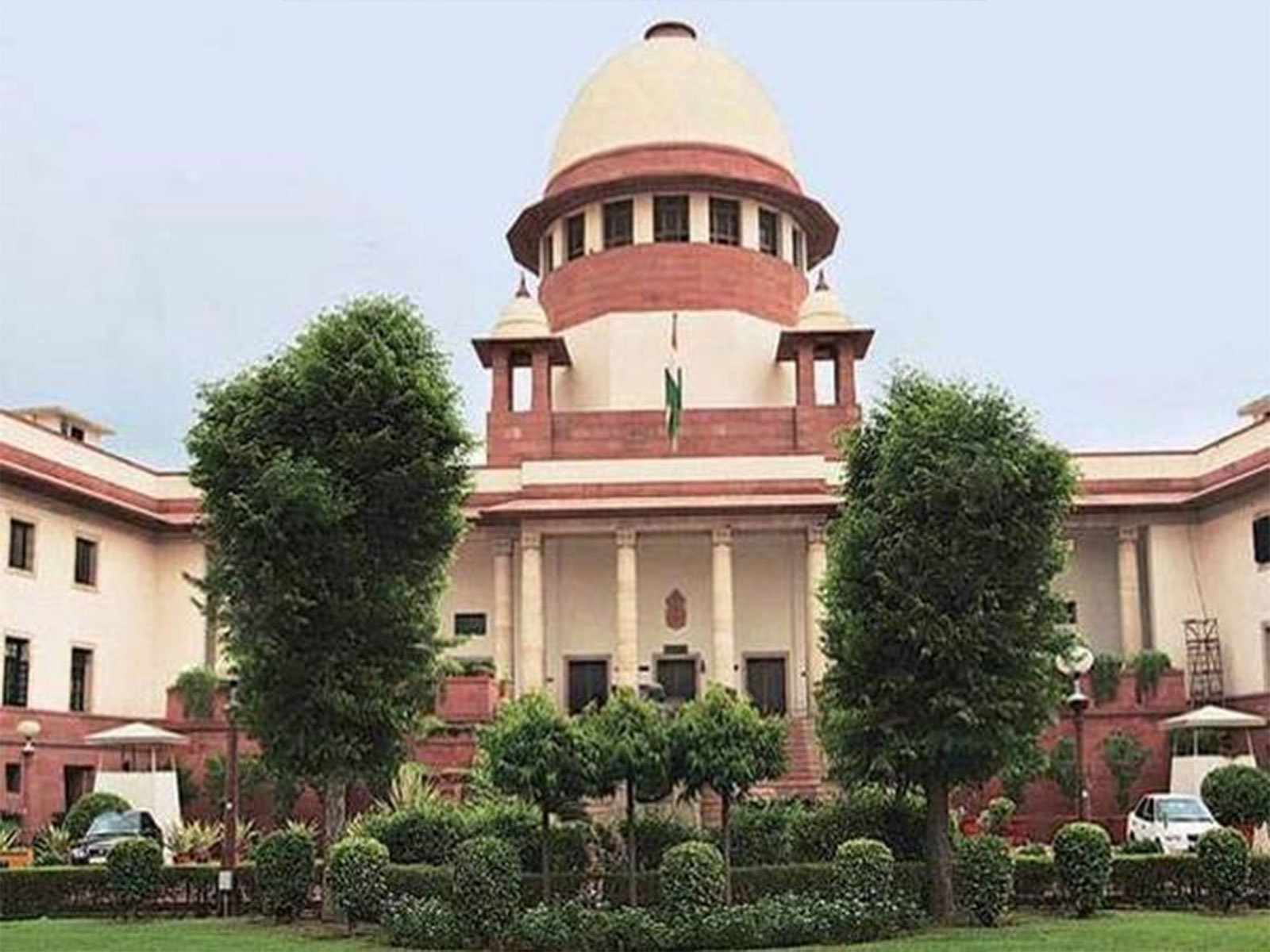
New Delhi [India], August 12 (ANI): The Supreme Court on Wednesday examined whether the Election Commission of India (ECI) can rely on subsequent political developments and organisational support while deciding a Paragraph 15 dispute over a party’s election symbol.
Paragraph 15 of the Election Symbols (Reservation and Allotment) Order, 1968 empowers the ECI to decide disputes when rival groups or factions of a recognised political party claim the party’s name and election symbol. The decision of the Commission is binding on all rival sections.
A bench of Chief Justice of India Surya Kant and Justices Joymalya Bagchi and V Mohana was hearing the Uddhav Thackeray faction’s challenge to the ECI’s recognition of the Eknath Shinde-led faction as the “real Shiv Sena” and allotting it the party’s name and “bow and arrow” symbol.
During the hearing, Justice Bagchi asked senior advocate Kapil Sibal, appearing for Shiva Sena (UBT), whether the ECI must assess the factual position as it stood when Paragraph 15 was invoked or could consider subsequent developments as the dispute evolved.
“When the Commission ultimately decides the symbol dispute, is the relevant factual position frozen on the date Paragraph 15 is invoked, or can the Commission take into account subsequent developments as the dispute evolves?” asked the bench.
Justice Bagchi further observed that a split may begin in the legislature party and subsequently “percolate” into the organisation and primary membership.
Sibal insisted that a prima facie split in the political party had to exist before the ECI could assume jurisdiction.
Subsequent developments, he conceded, could then be considered.
Sibal also argued that the Shinde faction’s later organisational strength could not retrospectively establish a split, pointing out that after Shinde became Chief Minister, party members naturally gravitated towards him.
The bench observed that the court was dealing with “a living democracy”.
Sibal responded, “Absolutely. I don’t know how democratic it is, but we are certainly living in aspirational India.”
The top court will continue its hearing in the case tomorrow.
The Shiv Sena split into two factions in 2022, with one group led by Uddhav Thackeray and the other by Eknath Shinde.
Following the split, Shinde approached the Election Commission of India seeking recognition as the real Shiv Sena and claiming the party’s name and its iconic bow and arrow symbol.
In deciding the dispute, the ECI primarily relied on the numerical strength of the party’s legislators, instead of giving greater weight to the organisational wing. (ANI)
Related reading