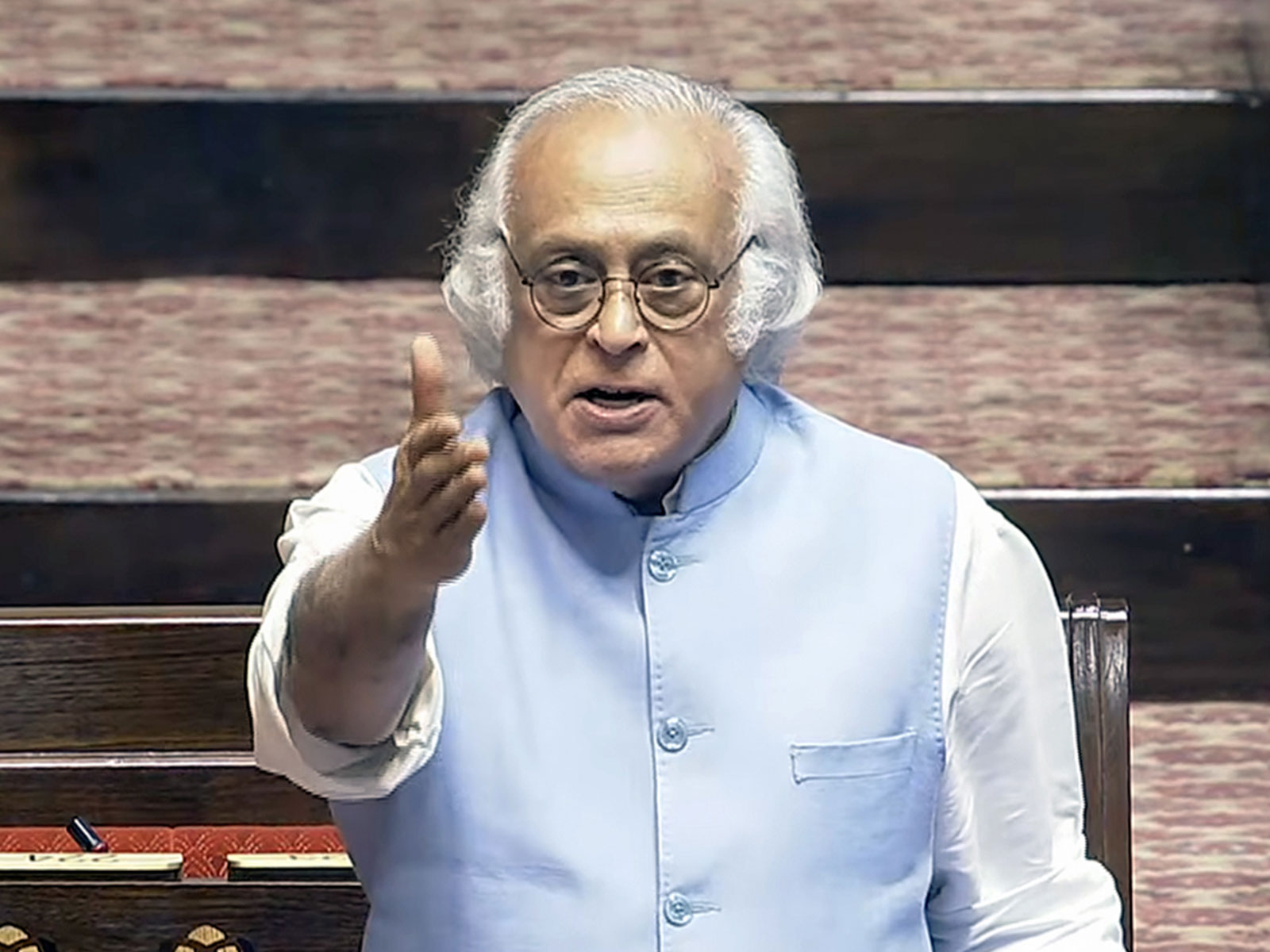
New Delhi [India], August 10 (ANI): Congress leader Jairam Ramesh on Friday stated that the first month of the PM Modi government’s the Viksit Bharat – Guarantee for Rozgar and Ajeevika Mission (Gramin) [VB-G RAM G] scheme has exposed the cost of replacing the Mahatma Gandhi National Rural Employment Guarantee Scheme (MGNREGS) pointing out a steep drop in rural employment generation for July 2026 compared to July 2025 and added that the ruling government has centralised the scheme.
The Congress leader, in a post on X, conveyed sharp criticism against the administration’s policy shift, slamming the Centre’s dip in Person-Days under the Modi Government’s VB-G RAM G.
“The first month of the Modi Government’s VB-G RAM G is already exposing the cost of destroying MGNREGA.In July 2026, the first month since the new law was adopted, rural employment generation fell sharply compared to July 2025 when MGNREGA was in operation,” he wrote.
The Congress leader further shared figures revealing a massive contraction in rural work generation during July 2026, the first month since the adoption of the VB-G RAM G framework, compared to the previous year under MGNREGA.
“49.94% decline in person-days of work. 51.45% fewer households availed employment. Nearly 50% fewer person-days of employment generated. This is precisely what was predicted by @INCIndia and the entire Opposition when the MGNREGA was bulldozed by the Modi regime,” Jairam Ramesh wrote.
“MGNREGA gave rural workers a legal guarantee of employment and empowered Gram Panchayats to implement it. The spirit of MGNREGA was to free workers from dependence on the political whims of the Government of the day,” he said.
He further conveyed his strong opposition to the new framework and noted, ” The Modi Government has instead centralised the scheme, imposed a heavy financial burden on State governments, made access increasingly dependent on technology and biometric authentication, removed the guarantee of employment, and made it harder for workers to claim their rights. VB-G RAM G is simply rozgar chori.”
On the other hand, earlier this week, Karnataka Rural Development and Panchayat Raj Minister Eshwar B Khandre directed officials to organise “Job Card Melas” across the state within a week to employ eligible beneficiaries under Viksit Bharat-Guarantee for Rozgar and Ajeevika Mission (Gramin) [VB-G RAM G] Scheme, the restructured version of the Mahatma Gandhi National Rural Employment Guarantee Act (MGNREGA), 2005.
In a written instruction to the department secretary, Khandre said inactive job cards had been cancelled but stressed that adequate care must be taken to ensure poor rural families are not unjustly denied benefits.
He directed officials to hold Job Card Melas within a week across all 5,927 Gram Panchayats and issue job cards immediately to all eligible rural families seeking employment.
The minister said the exercise should cover Scheduled Castes, Scheduled Tribes, minorities, persons with disabilities, women-headed households and landless labourers.
According to Khandre, Rs 2,900 crore has been allocated under VB-G RAM G, comprising Rs 1,700 crore, which is 60 per cent, from the Centre and Rs 1,200 crore, which is 40 per cent, from the state government.
He said Rs 1,000 crore out of the allocation had already been released to all Gram Panchayats in the state for wage payments.
Khandre said the government had taken serious note of reports that implementation of VB-G RAM G was unsatisfactory in some Gram Panchayats despite there being no shortage of funds. He directed officials to ensure that the employment guarantee is provided to the rural population and that eligible beneficiaries are able to access the scheme.
Earlier in July, Karnataka Minister Eshwar Khandre said the state government was fully prepared to implement the Centre’s newly launched VB-GRAM G scheme, which came into effect on July 1, but expressed concern that its revised funding pattern would impose a significant financial burden on states compared to MGNREGA.
Speaking to ANI, Khandre said that while the Centre earlier bore 90 per cent of the wage costs under MGNREGA, the revised funding pattern under VB-GRAM G would increase the financial responsibility of state governments.
“Under MGNREGA, the central government bore 90% of the wage costs, while the state government contributed 10%. But the BJP government at the Centre has now replaced MGNREGA with VB-GRAM G. Under this new VB-GRAM G scheme, the funding pattern is a 60:40 ratio, which will place a very huge financial burden on the states,” he added. (ANI)
Related reading