
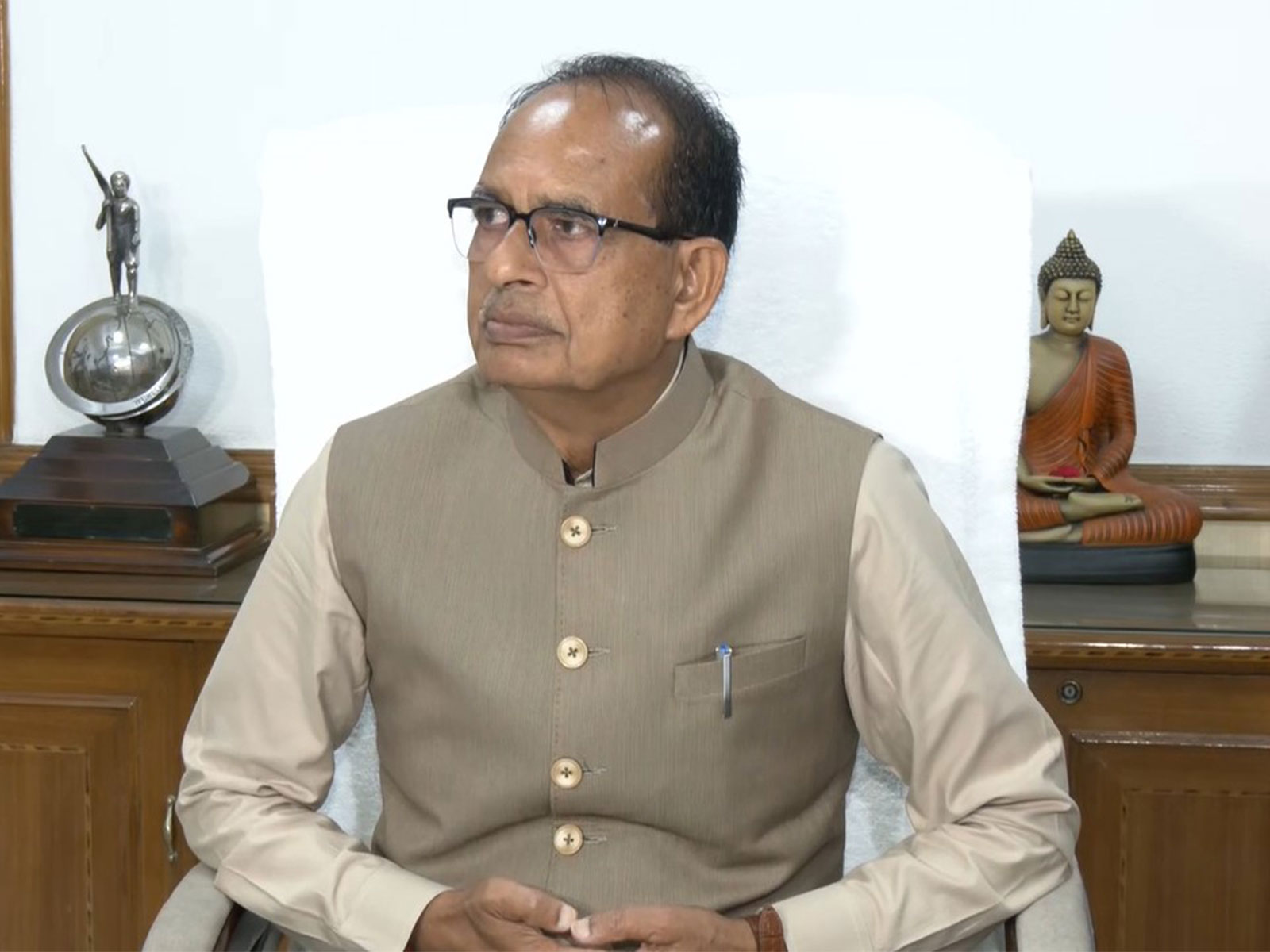
New Delhi [India], September 29 (ANI): On the second day of the National Agriculture Conference (Rabi Campaign-2026), Agriculture Ministers and senior officials from various states participated in a session chaired by Union Minister for Agriculture and Farmers Welfare and Rural Development Shivraj Singh Chouhan.
Union Ministers of State for Agriculture and Farmers Welfare Ramnath Thakur and Bhagirath Choudhary, Union Agriculture Secretary Atish Chandra and Indian Council of Agricultural Research (ICAR) Director General ML Jat, along with senior officials from the Centre and states, scientists and representatives from various agricultural institutions, were present at the conference.
Addressing the gathering, Chouhan said that under the leadership and guidance of Prime Minister Narendra Modi, the Centre and states must rise above partisan politics and work with the spirit of ‘Team Agriculture’ to ensure the nation’s food security and improve farmers’ livelihoods.
He emphasised that governments and political parties come and go, parties rise and fall, but the nation and the farmers are eternal. There is no place for politics on this platform; the sole objective is to improve agriculture and ensure the progress of farmers. He proudly highlighted that under PM Modi’s leadership, the interests of farmers have been accorded the highest priority in every policy decision and international agreement.
On this occasion, the Union Minister handed over financial sanction letters worth Rs 1,082 crore to Agriculture Ministers from 10 states right on the dais under the Pradhan Mantri Rashtriya Krishi Vikas Yojana (PM-RKVY).
Chouhan distributed sanction letters under the PM-RKVY scheme directly from the stage, allocating Rs 290 crore to West Bengal, Rs 198 crore to Haryana, Rs 181 crore to Chhattisgarh, Rs 154 crore to Arunachal Pradesh, Rs 114 crore to Bihar, Rs 104 crore to Karnataka, Rs 75 crore to Mizoram, Rs 64 crore to Himachal Pradesh, Rs 58 crore to Jharkhand, and Rs 43 crore to Punjab.
He stated that the Central Government is not limited merely to formulating policies but is also ensuring the timely provision of resources to states so that the implementation of schemes can begin immediately at the grassroots level.
Highlighting the country’s agricultural achievements, he noted that since 2015, the agricultural growth rate has risen from 3 per cent to 4.5 per cent. The average annual increase in food grain production has more than doubled, rising from 4 million tonnes previously to 8.4 million tonnes per year.
Furthermore, an unprecedented increase of 20.5 million tonnes in Rabi food grain production has been recorded in just the two-year period from 2023-24 to 2025-26. He attributed this historic growth to the collective efforts of state agriculture departments, scientists, and the farmers who feed the nation.
Announcing a new operational framework aimed at strengthening cooperative federalism, Union Minister Shivraj Singh Chouhan stated that, following the model of weekly reviews held at the Centre, regular monthly virtual review meetings would now be conducted with the states to continuously monitor progress.
A robust state-level agriculture team will be formed by bringing together State Agriculture Ministers, Agriculture Secretaries, state agricultural universities, ICAR institutes, KVKs, ATMA, FPOs, progressive farmers, processors, exporters, and nodal officers from the Government of India. Meanwhile, monthly meetings involving the Collector, DDA, ATMA, KVK, ICAR scientists, bankers, and farmers will be held at the district level.
While finalising the annual calendar of interface meetings for the preparatory phase of agricultural campaigns, he directed that district-level meetings for the Kharif season be held on May 10 and state-level meetings on May 17 each year.
Similarly, for the Rabi campaign, district-level meetings on September 10 and state-level meetings on September 17 would be mandatory. Additionally, a special one-day meeting will be held simultaneously across the country, bringing together Agriculture Ministers, officials, and agricultural scientists to collaborate in the interest of farmers.
Emphasising soil health and environmental conservation, Union Minister Shri Chouhan called for a nationwide, extensive ‘Khet Bachao Abhiyan’ (Save the Farm Campaign) to be conducted from October 22 to November 30 this year. All key stakeholders, including scientists, will actively participate in this campaign.
The campaign will focus on the balanced use of fertilisers based on Soil Health Cards to preserve soil fertility and protect beneficial insects. Furthermore, the cultivation of pulses will be encouraged on a large scale in ‘rice-fallow’ lands, fields that remain vacant after the paddy harvest across the states of Eastern India: Jharkhand, Bihar, Odisha, and West Bengal.
As part of preparations for this year’s Rabi season, he stressed the importance of advising farmers on crop selection and the sowing of improved seeds based on soil moisture and water availability. He issued directives to ensure robust measures for protecting crops against diseases and pests, to provide Kisan Credit Cards (KCC) to all eligible farmers, and to conduct transparent Crop Cutting Experiments (CCE) under the crop insurance scheme. He emphasized that state ministers should personally review the implementation of all departmental schemes on a regular basis.
Describing the availability of seeds and fertilisers in the country as adequate, Shivraj Singh directed states to take strict legal action against spurious fertilisers, counterfeit seeds, and substandard pesticides, and to completely eliminate the practice of forced tagging. To make agriculture sustainable and profitable, he called for adopting natural farming, integrated farming systems, and crop diversification in ‘mission mode’.
Shivraj Singh stated that the government is working on a multi-pronged strategy to ensure farmers receive fair and remunerative prices for their produce. This strategy encompasses post-harvest management, scientific warehousing, and robust marketing systems.
He announced that 100% government procurement of Tur, Urad, and Masoor (lentils) at the Minimum Support Price (MSP) would be guaranteed, with a system in place to ensure payment within 48 hours.
Furthermore, in line with Prime Minister Narendra Modi’s vision, Indian agricultural products, including fruits, vegetables, and grains will be linked to global exports by leveraging new market policies under international Free Trade Agreements (FTAs); this aims to secure excellent prices for farmers’ produce and establish India as a leading global ‘food basket’. (ANI)
Related reading