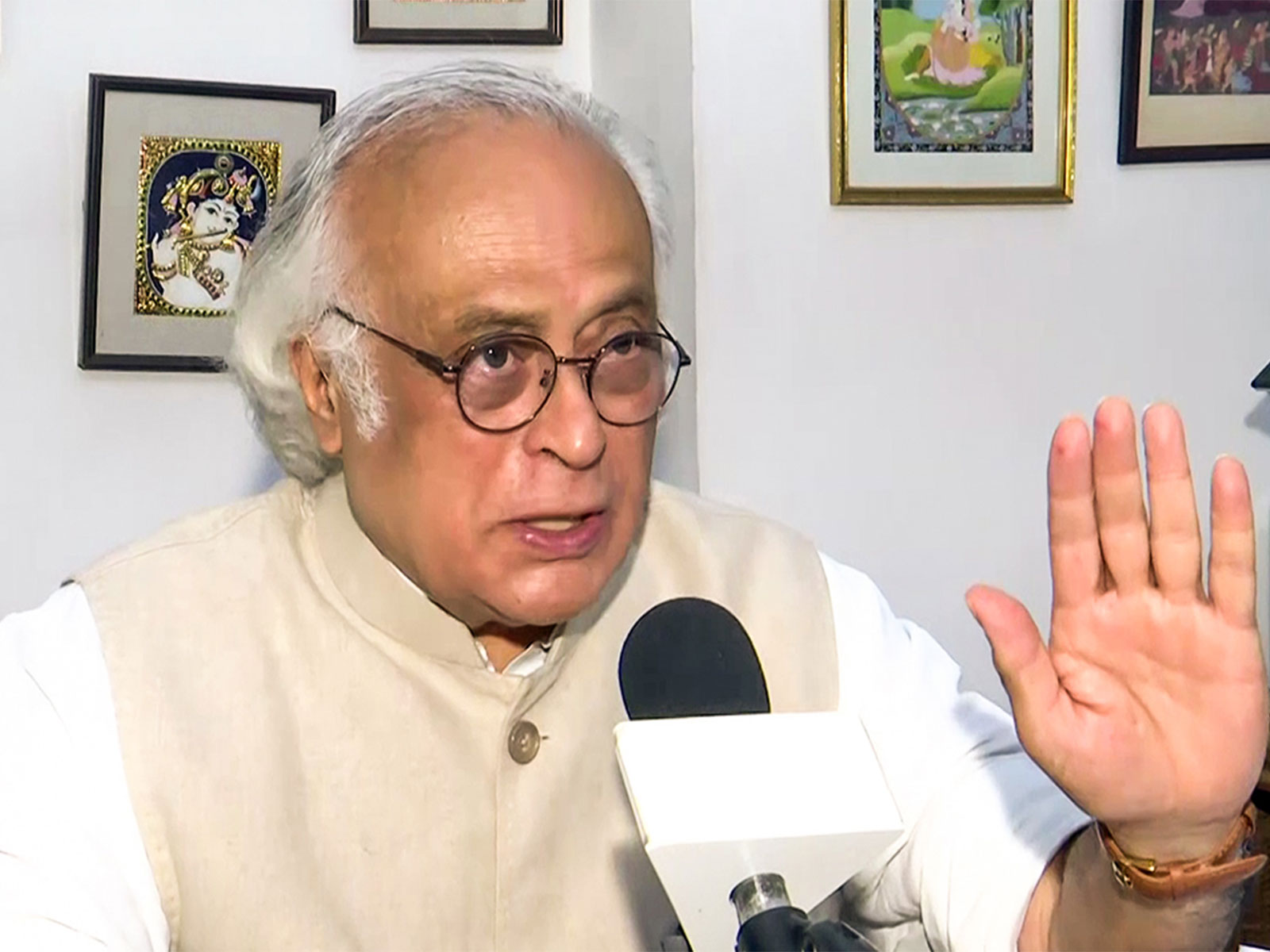
New Delhi [India], September 16 (ANI): Senior Congress leader Jairam Ramesh on Wednesday launched a sharp attack on Prime Minister Narendra Modi over his administration’s economic and diplomatic posture toward the United States, redefining the acronym NOTA as “Narendra’s Ongoing Trump Appeasement” and alleging that the Centre has capitulated to American pressure by ending zero-MDR on Unified Payments Interface (UPI) transactions.
Taking to social media platform X, the Rajya Sabha MP flagged that the United States is advancing legislation that imposes steep trade penalties on Indian exports while simultaneously tightening visa regulations for Indian tech professionals.
“Tomorrow, the US House of Representatives votes on a Bill that introduces 100% tariffs on India. The US Senate has already approved this draconian law. Meanwhile, the Trump regime has been cracking down on Indian immigrants and making tougher laws against them. H-1B visa costs have been increased, and such holders could soon be deported immediately when out of a job. Such holders are mostly IT professionals,” Ramesh said.
The Congress leader alleged that instead of countering Washington’s aggressive trade measures, the Union government has succumbed to US demands by removing the zero Merchant Discount Rate (MDR) regime for UPI transactions to benefit American card networks.
“Here, the Modi Govt has given into a US demand to get rid of zero MDR and charge for UPI. The U.S. Trade Representative earlier this year criticised UPI for being free and having driven out Visa and Mastercard,” Ramesh wrote.
Questioning the rationale behind the proposed 0.4 per cent MDR on UPI transactions, Ramesh asked whether the decision was intended to dilute UPI’s competitive edge against foreign financial corporations.
“Why 0.4% MDR? Is it because debit card MDR is also 0.4%? Is this being done to enable US card companies to compete with UPI?” he questioned.
Dismissing the government’s justification that transaction charges are necessary to make the digital payments infrastructure financially viable, Ramesh pointed out that the operational costs represent only a small fraction of the central bank’s annual surplus transfers.
“Is this going to make UPI ‘sustainable’ as the Govt claims? The estimated cost of running the entire UPI ecosystem is around Rs 20,000 crore annually. This is less than 10% of what the RBI has been transferring to the Union Govt in the past few years so as to show healthy public finances for the Modi Govt,” he argued.
Taking a dig at the Prime Minister’s foreign policy approach, Ramesh concluded: “The PM has redefined NOTA—Narendra’s Ongoing Trump Appeasement.”
UPI transactions above Rs 2,000 will attract a Merchant Discount Rate (MDR) of 0.4 per cent under a revised framework introduced by the National Payments Corporation of India (NPCI), while consumers will continue to transact free of cost using UPI.
The revised UPI Merchant Discount Rate framework will come into effect from October 15, 2026, and will apply to select merchant transactions.
Under the new framework, an MDR of 0.4 per cent will apply to Person-to-Merchant (P2M) UPI transactions above Rs 2,000, with the MDR capped at Rs 300 per transaction. (ANI)
Related reading