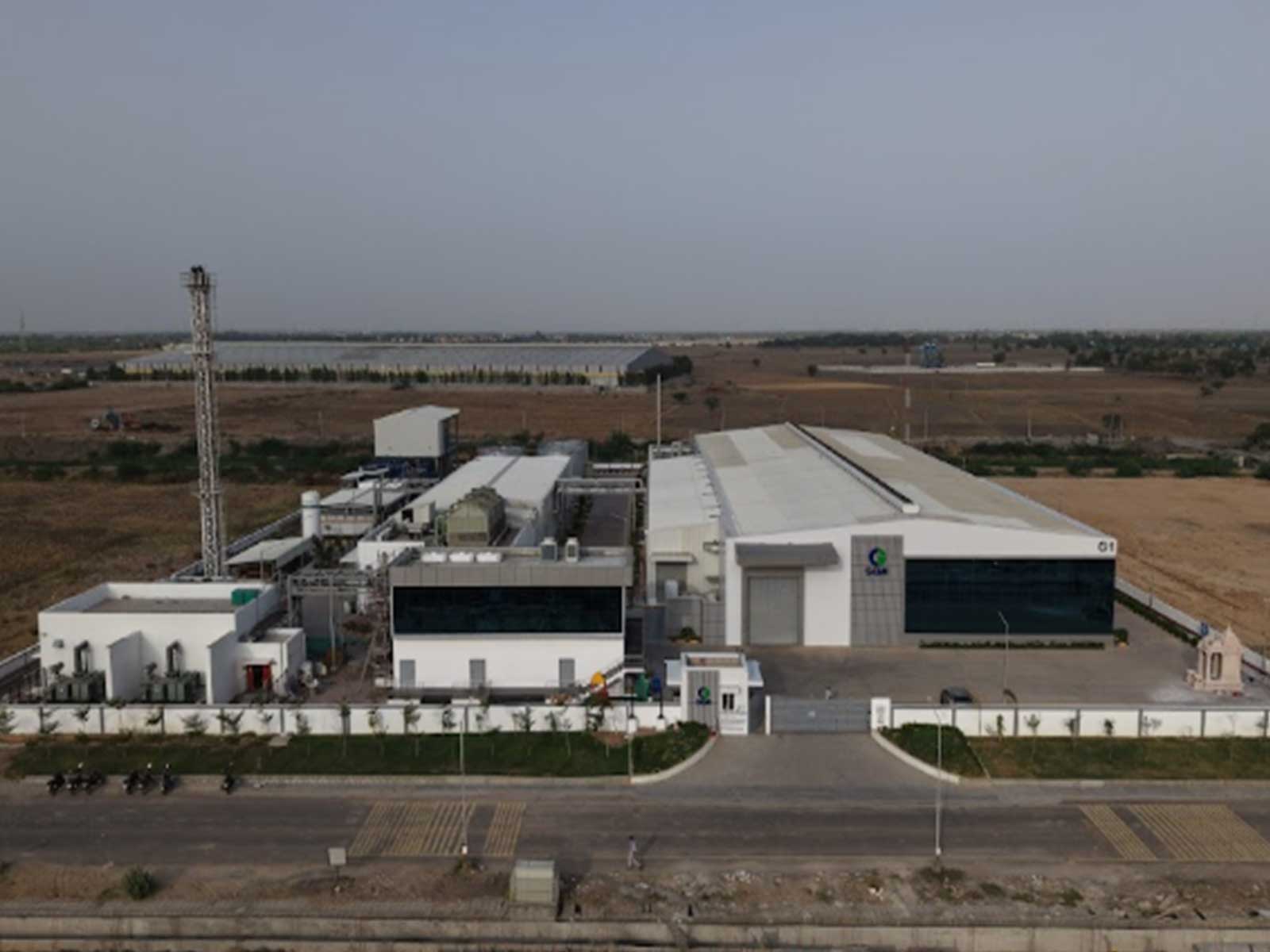
Gandhinagar (Gujarat) [India], July 3 (ANI): Prime Minister Narendra Modi will inaugurate the commercial production of semiconductor chips at CG Semi’s OSAT facility in Gujarat’s Sanand on July 4 (Saturday).
According to the Gujarat Chief Minister’s Office, following the launch by the Prime Minister, the company will begin supplying semiconductor chips to its customers across India and overseas.
The project was approved by the Union Cabinet in February 2024 under India’s Semiconductor Mission. CG Semi Pvt. Ltd., a subsidiary of CG Power and Industrial Solutions Limited, has established the OSAT facility in Sanand with an investment of Rs 7,600 crore. CG Semi has entered into a joint venture with Japan’s Renesas Electronics and Thailand’s Stars Microelectronics.
The commencement of this project will further strengthen Sanand’s semiconductor ecosystem. According to Prime Minister Narendra Modi, the rapid growth of India’s semiconductor sector will make this decade the biggest turning point in the country’s technological future.
Following the inauguration of the Micron plant, the launch of Kaynes Semicon’s facility and now CG Semi’s OSAT facility will provide a significant boost to local economic development. OSAT, which stands for Outsourced Semiconductor Assembly and Test, is responsible for testing, packaging and preparing semiconductor chips for the market. Construction of a second plant by CG Semi is also currently underway.
Together, the two OSAT facilities will have a combined production capacity of 1.5 crore chips per day.
On July 4, the Prime Minister will visit CG Semi’s OSAT facility and inspect various semiconductor processes.
The event will be attended by Union Minister for Electronics and Information Technology Ashwini Vaishnaw, Gujarat Chief Minister Bhupendra Patel, Deputy Chief Minister Harsh Sanghavi and Minister for the Science and Technology Department Arjun Modhwadia. Following the inauguration of the OSAT facility, the Prime Minister will address a public gathering.
The OSAT facility will manufacture legacy chips such as QFN and QFP, as well as advanced FC-BGA and FC-CSP chips, serving the needs of the automotive, electronics, industrial equipment, 5G equipment and power application sectors. The company currently employs more than 300 people. The commissioning of this plant will generate around 5,000 direct and indirect employment opportunities over the next five years.
The Prime Minister said, “Our goal is not limited to establishing a single factory, but to building an entire ecosystem. India is now focusing on the complete semiconductor value chain, which includes all levels from design engineers to machine manufacturers and logistics. The announcement of the India Semiconductor Mission 2.0 is a major step in this direction. As production scales up, demand for materials and components within India will also rise, creating the biggest opportunity for domestic industries.”
Gujarat is playing a leading role in advancing India’s Semiconductor Mission. To support the growth of the semiconductor sector, Gujarat was the first state to announce a dedicated Semiconductor Policy. Under the Semiconductor Mission, six projects have so far been approved in the state. These include Tata Electronics, Micron Technology, CG Semi, Kaynes Semicon, Suchi Semicon and Crystal Matrix. Together, these six projects represent a total investment of USD 14.7 billion in the semiconductor sector.
The commencement of operations at Micron Technology’s ATMP facility in February 2026 and Kaynes Semicon’s OSAT facility in March 2026 marked significant milestones for India’s semiconductor industry. Recently, Suchi Semicon and Crystal Matrix have also received approval to establish new semiconductor units. These projects will accelerate semiconductor manufacturing in India and further strengthen Gujarat’s position as a leading semiconductor hub.
According to the release, within a remarkably short span, Sanand has witnessed a transformational phase in its industrial development. Following Micron Technology and Kaynes Semicon, CG Semi has now established its semiconductor plant in the city. Once known primarily as an automobile hub, Sanand is now emerging as India’s first chip packaging cluster and a key centre in the global semiconductor value chain. Similar to Hsinchu in Taiwan and Gyeonggi in South Korea, Sanand is rapidly evolving into India’s semiconductor hub.
Under the leadership of Chief Minister Bhupendra Patel, Gujarat’s identity has evolved beyond being merely an investment destination.
The state has developed into a holistic semiconductor ecosystem encompassing manufacturing, design, packaging, supply chains, skill development, research, logistics and innovation. Through strong policies, world-class infrastructure, speedy approvals and business-friendly governance, the Gujarat Government has consistently supported the growth of the semiconductor industry.
From project planning to commencement of production, the state continues to provide an environment that encourages investment and builds global confidence. (ANI)
Related reading