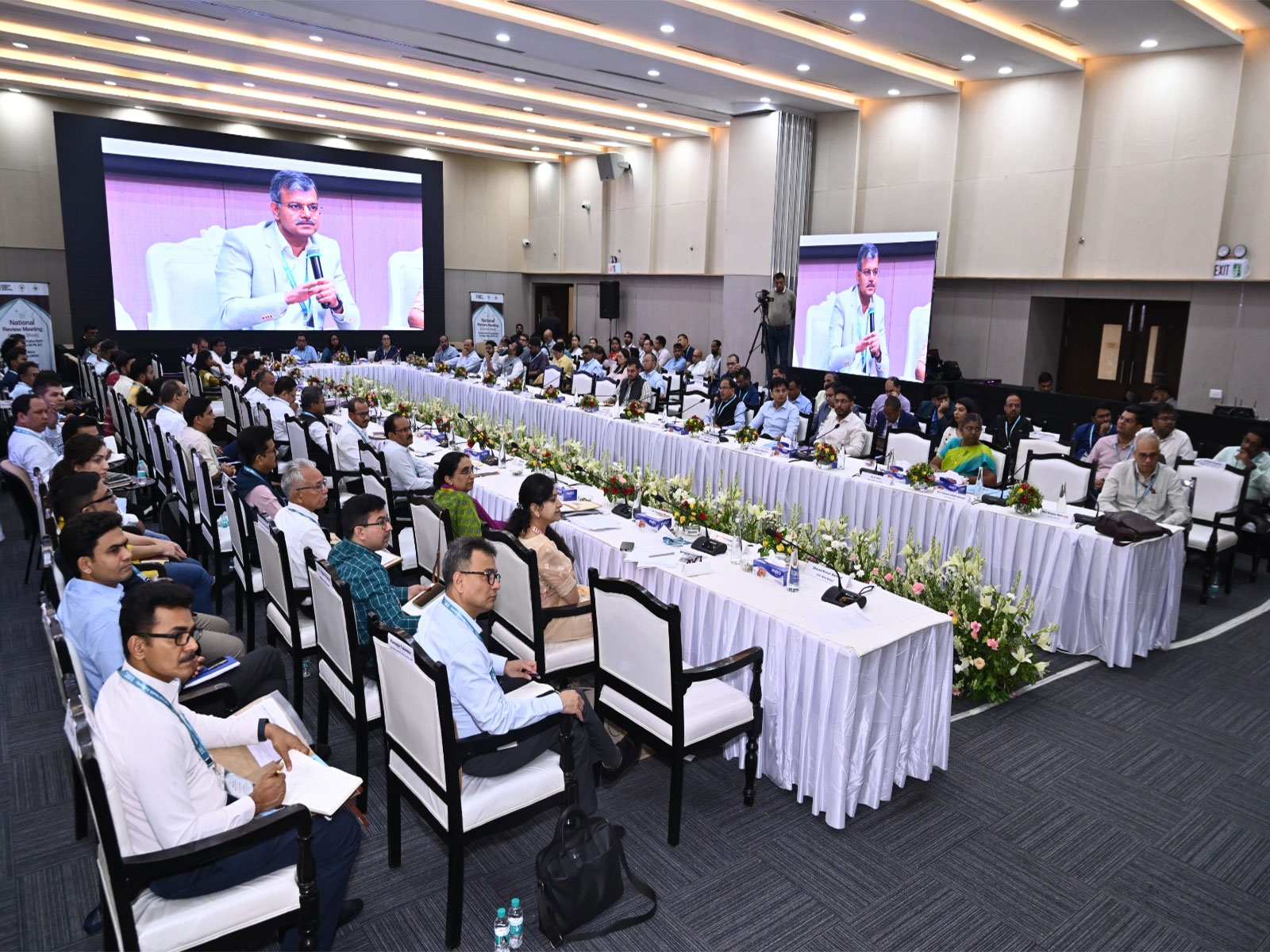
New Delhi [India], July 18 (ANI): The National Health Authority (NHA) under the Ministry of Health and Family Welfare on Saturday concluded the two-day National Review Meeting (Chintan Shivir) on Ayushman Bharat Pradhan Mantri Jan Arogya Yojana (AB PM-JAY) and the Ayushman Bharat Digital Mission (ABDM), organised on July 17-18 at Madhya Pradesh Bhawan in New Delhi.
According to a release, the two-day National Review Meeting brought together senior officials from the Ministry of Health & Family Welfare, the National Health Authority, State Health Agencies, development partners and other stakeholders to review the progress of AB PM-JAY and ABDM, deliberate on key implementation priorities, showcase best practices from States and Union Territories, and chart the roadmap for the next phase of India’s health sector reforms.
Building upon the deliberations held on the first day, the second day focused on financial sustainability, strengthening public healthcare institutions, health analytics, artificial intelligence and accelerating digital transformation across the healthcare ecosystem.
The National Review Meeting also recognised outstanding performance by States and Union Territories through 15 awards across key implementation indicators under Ayushman Bharat Pradhan Mantri Jan Arogya Yojana (AB PM-JAY) and the Ayushman Bharat Digital Mission (ABDM).
Under AB PM-JAY, six awards were presented across two performance categories. Andhra Pradesh, Sikkim and Lakshadweep were honoured for achieving the highest number of VVS Cards per lakh population in the Large State, Small State and Union Territory categories, respectively. Madhya Pradesh, Meghalaya and Andaman & Nicobar Islands were honoured for recording the highest number of pre-authorisations with biometric authentication in their respective categories.
Under ABDM, nine awards were presented across four categories. Andaman & Nicobar Islands, Chandigarh, Dadra & Nagar Haveli and Daman & Diu, Ladakh, and Lakshadweep were honoured for achieving ABDM Registry (HPR & HFR) Saturation.
Jammu & Kashmir and Ladakh were honoured for achieving the highest health record linking per lakh population in the Medium State/Union Territory and Small State/Union Territory categories, respectively. Uttar Pradesh was honoured for its outstanding performance in ABHA creation and the adoption of Scan and Pay services under ABDM, said the release.
Addressing the valedictory session, Punya Salila Srivastava, Secretary, Ministry of Health & Family Welfare, observed that AB PM-JAY and the Ayushman Bharat Digital Mission (ABDM) have emerged as integral pillars of India’s healthcare ecosystem.
She emphasised that, as these digital public health platforms continue to mature, the focus must now shift towards their wider adoption and effective utilisation across the health system. Urging States and Union Territories to maximise the use of digital health services and applications, she highlighted that the true value of these initiatives lies in making them useful for citizens, healthcare professionals and health facilities alike. She also underscored the importance of ensuring data privacy, cybersecurity and responsible use of health data to sustain public trust in the digital health ecosystem.
Discussions on financial management under AB PM-JAY and ABDM focused on strengthening fund utilisation, improving financial planning and ensuring timely release and utilisation of grants by states and Union Territories. Participants deliberated on revised grant-in-aid guidelines, fund management practices and measures to enhance financial accountability for the effective implementation of both flagship schemes.
The deliberations also focused on state-led initiatives to strengthen health systems and improve financial sustainability under AB PM-JAY. Kerala presented its integrated approach towards the convergence of state health protection programmes with AB PM-JAY, highlighting the role of scheme convergence in expanding access to healthcare and strengthening financial protection.
Tamil Nadu presented its experience in claim revenue utilisation under the Chief Minister’s Comprehensive Health Insurance Scheme (CMCHIS) and its integration with AB PM-JAY, demonstrating how systematic reinvestment of claim revenues has strengthened public health institutions through investments in infrastructure, medical equipment, human resources and digital systems.
The Health Analytics and AI Unit of the National Health Authority showcased advanced analytical tools developed to support evidence-based decision-making under AB PM-JAY. The presentations demonstrated new analytical frameworks for beneficiary portability, district-level accessibility, hospital activity and healthcare utilisation, enabling States to identify service gaps, optimise hospital empanelment strategies and improve healthcare delivery through data-driven planning.
As per the release, the meeting also deliberated on innovative financing of hospital receivables, highlighting how the National Health Claims Exchange (NHCX) can facilitate settlement of approved AB PM-JAY claims, enabling faster access to working capital for empanelled hospitals without waiting for reimbursement by State Health Agencies. Participants discussed the role of interoperable digital infrastructure in improving transparency, reducing payment uncertainty and strengthening financial efficiency across the healthcare ecosystem.
Highlighting the growing adoption of digital health in medical education, Raghav Langer, Secretary, National Medical Commission (NMC), shared the Commission’s ongoing efforts towards ABDM enablement across medical colleges. He highlighted the integration of Hospital Management Information Systems (HMIS) with ABDM standards, wider adoption of ABHA-linked clinical records and the development of an NMC dashboard to facilitate technology-enabled and objective assessment of medical colleges through digital health indicators and clinical workload data.
The meeting also discussed the deployment of artificial intelligence in publicly funded healthcare, with Sarvam AI showcasing emerging AI-enabled solutions to strengthen clinical decision support, improve operational efficiency, enhance health system planning and enable more citizen-centric healthcare delivery. Participants emphasised the importance of responsible, safe and scalable adoption of AI technologies to strengthen India’s digital health ecosystem.
Reflecting on the deliberations of the two-day National Review Meeting, Sunil Kumar Barnwal, Chief Executive Officer, National Health Authority, said, “The National Review Meeting has become a two-way exchange of ideas and information, enabling States and the Centre to learn from each other and collectively strengthen the implementation of AB PM-JAY and ABDM.”
He highlighted that the discussions over the two days had enabled States and Union Territories to review progress, exchange best practices and identify innovative solutions to implementation challenges. He emphasised that greater use of digital health technologies, health analytics and evidence-based decision-making would be instrumental in improving programme implementation and service delivery. He further expressed confidence that the deliberations would provide a strong roadmap for the next phase of AB PM-JAY and ABDM, while reinforcing cooperative federalism and accelerating the country’s digital health transformation.
The National Review Meeting concluded with a renewed commitment from the Centre and States to further strengthen the implementation of AB PM-JAY and ABDM through collaborative governance, digital innovation, financial sustainability and evidence-based policymaking.
The deliberations over the two days reinforced the importance of continued knowledge sharing, adoption of best practices and leveraging technology to build a more resilient, inclusive and citizen-centric healthcare system.
The outcomes of the National Review Meeting are expected to guide the next phase of reforms to guide the next phase of reforms aimed at expanding equitable, affordable and digitally enabled healthcare for citizens across the country. (ANI)
Related reading