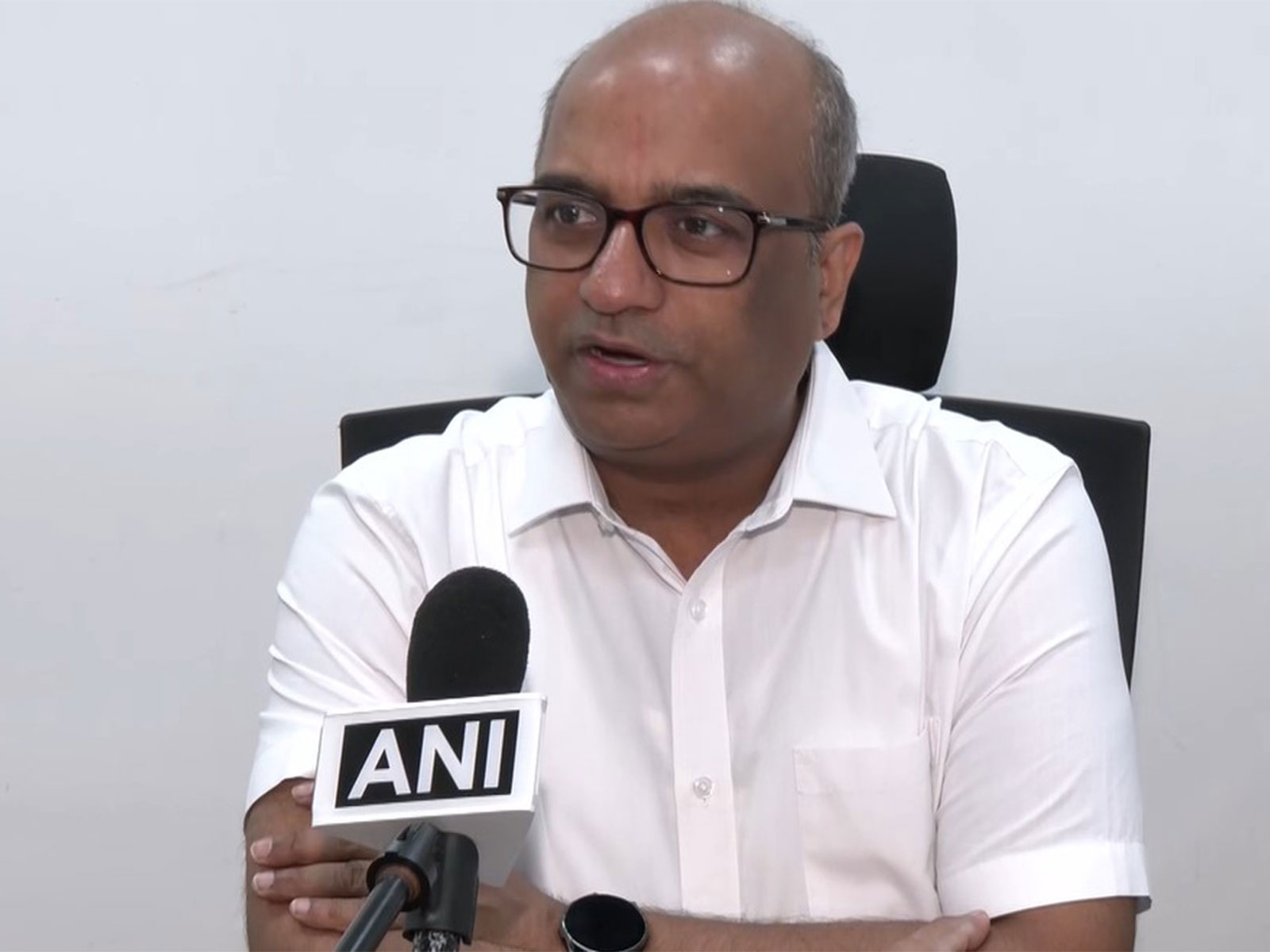
New Delhi [India], June 22 (ANI): The re-examination for NEET-UG was conducted error-free and flawlessly, said National Testing Agency (NTA) Director General Abhishek Singh on Monday, while emphasising the security efforts made to ensure a smooth experience for all participating candidates without any malpractice.
Following the conclusion of the exam a day earlier, Singh emphasised that the Telegram ban before the re-test was necessitated to prevent added stress for candidates, claiming that these platforms were “sending a fake perception of leak” and “encouraging fraudsters”.
Speaking to ANI, he said that the NTA focused heavily on maintaining security while being mindful of the pressure students face, noting, “This was as error-free and as flawless as it can be. We took every necessary step to do a balance between security and the convenience of students… We worked with all agencies, all security agencies to ensure that we are able to conduct an examination which is not only glitch-free, but which is also a zero-error examination with zero tolerance for any malpractice
To combat the spread of misinformation regarding paper leaks, he said that the agency took firm action to restrict certain platforms, viewing them as a source of unnecessary stress for candidates.
“We were 100% sure that the papers were safe, everything was safe, secure, and we have complete control of the chain of custody. What these platforms were doing was that they were sending a fake perception of a leak, which adds to the mental stress and trauma of students because we are dealing with 17 and 18-year-olds, and if these rumours keep on floating, they keep on wondering what if something goes wrong again, and it is not fair to the young minds?”, he said.
“Then, these platforms were also encouraging fraudsters to fool people with fake question papers and playing on the anxiety and the vulnerability of people that they will pay up small amounts to get a document which will have nothing to do with the question paper. It was required to ensure that the fake perception of a leak or a system failure in cybercrime, in which the fraudsters would scam people into losing money, that has to be prevented,” he added.
The Centre had ordered the temporary blocking of Telegram from June 16 to 22, following a request from the NTA, which alleged that the platform was being used by organised cheating rackets to mislead and defraud candidates appearing for the NEET-UG 2026 re-examination scheduled on June 21.
Asserting that the law will deal strictly with individuals who circulate misinformation and fake posts to scam the public, he said that such wrongdoers are under surveillance. He further assured the public that the integrity of the exam remains fully intact, with no scope for a leak.
“Anybody who tries to spread misinformation, share fake videos, share fake posts in order to scam someone or in order to increase the mental stress of people, the strong arm of the law will come very strongly on it. All such cases are in our radar and we have reported to them and those who are perpetrating them will be dealt with very strongly by the police and the law enforcement agencies…There is no possibility of any leak in this examination,” said Singh.
Describing the process as a massive collective effort, Singh stated, “It was a whole of government approach, a whole of India approach in which all government of India departments, state governments, district machinery, students, parents, all stakeholders came together to convey a message to all the fraudsters and scamsters that you cannot beat the system.”
The high-stakes re-examination for the National Eligibility cum Entrance Test (NEET-UG) 2026 concluded on Sunday across the country and 14 destinations abroad, even as the process remained under the shadow of the paper leak controversy. The examination, saw over 20 lakh candidates appearing at 5,440 centres under a multi-layered security net.
The National Testing Agency (NTA) said the examination was conducted smoothly across the country. The examination was held in 13 languages under extensive security measures, including Aadhaar-based biometric and facial authentication, CCTV surveillance, signal jammers, two-layer frisking and real-time monitoring through command-and-control centres established at the NTA, Ministry of Education, state headquarters and district collectorates. (ANI)
Related reading