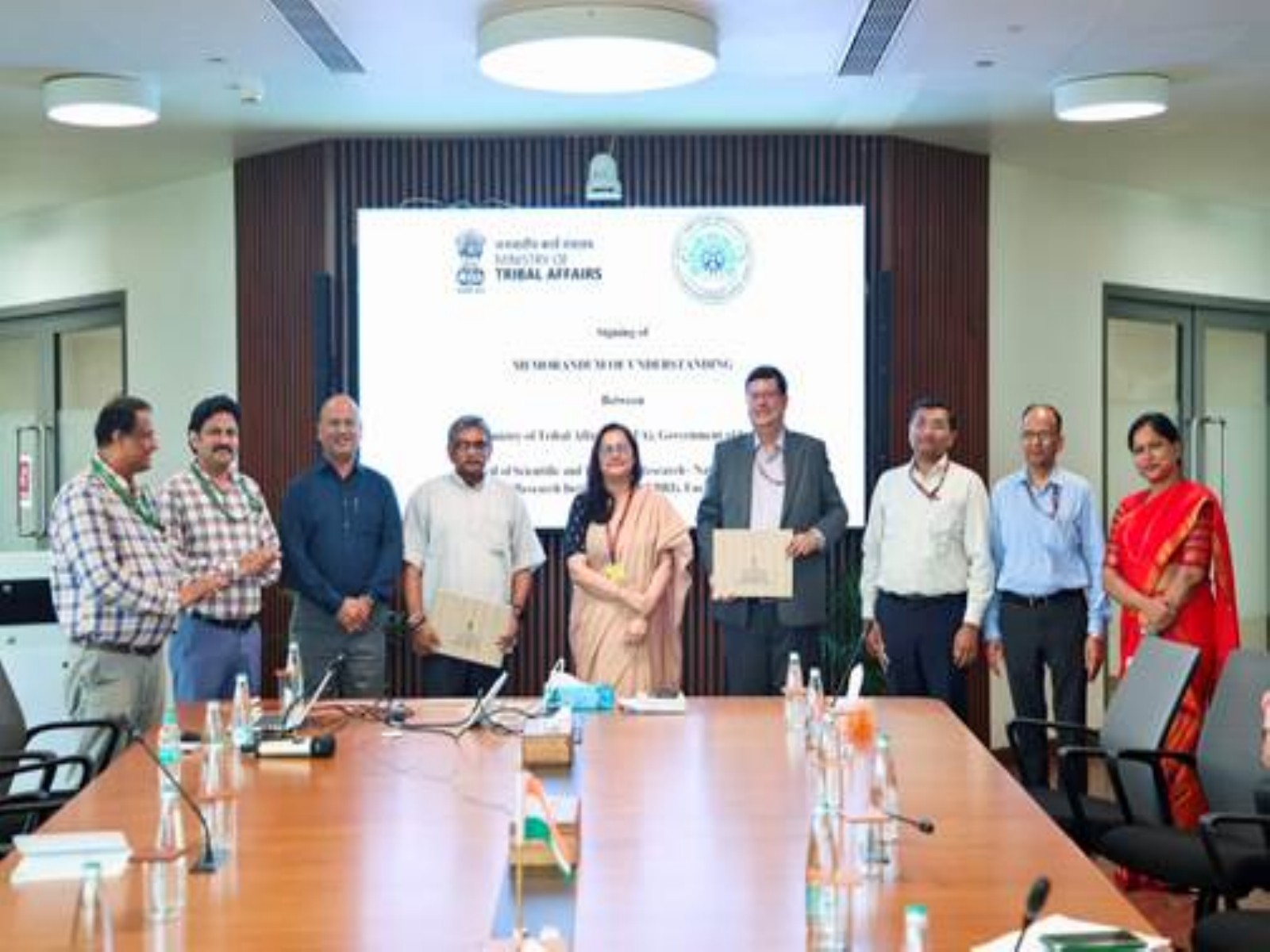
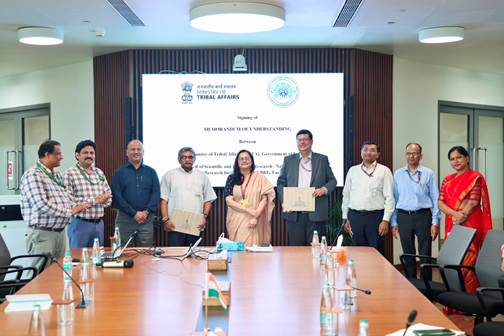
New Delhi [India], July 30 (ANI): In a major initiative to drive tribal welfare, foster sustainable livelihoods, and preserve traditional knowledge, the Ministry of Tribal Affairs (MoTA), Government of India, on Thursday signed a Memorandum of Understanding (MoU) with the CSIR-National Botanical Research Institute (CSIR-NBRI), Lucknow.
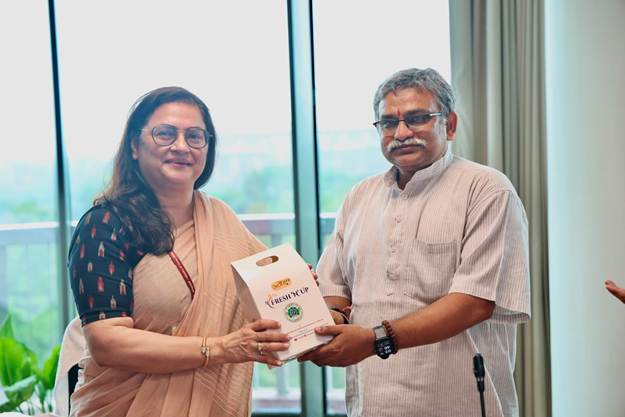
As per the release, “The primary objective of this three-year partnership is to establish a sustained, synergetic linkage between the two organisations to promote research and development for the conservation and ethnobotanical assessment of tribal bioresources across India.”
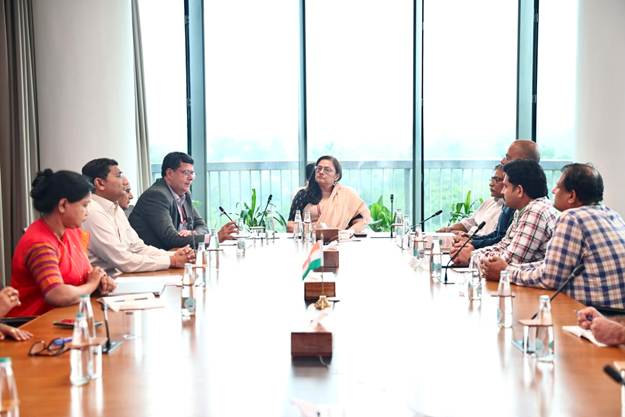
The MoU was signed by Manish Thakur, Additional Secretary, Ministry of Tribal Affairs, and Ajit Kumar Shasany, Director, CSIR, in the presence of Ranjana Chopra, Secretary, Ministry of Tribal Affairs.
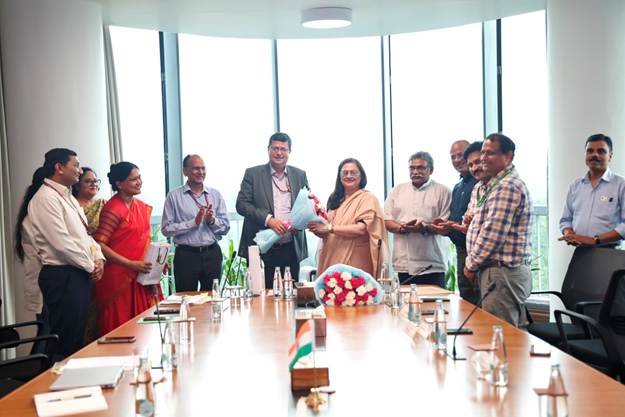
The occasion was also attended by Sharad Srivastava, Chief Scientist, CSIR; Dr Sachitra Ratha, Scientist, CSIR; and Manish Bhoyar, Scientist, CSIR, along with senior officials from the Ministry of Tribal Affairs.
Under this agreement, tribal welfare and community sovereignty serve as the foundational principles for all scientific activities. The partnership focuses heavily on the conservation of Rare, Endangered, and Threatened (RET) medicinal plant species through advanced interventions, including the development of tissue culture facilities and specialised seed banks.
To ensure long-term, community-managed sustainability, local tribal youth will receive hands-on capacity building and technical training in these propagation and conservation techniques. Furthermore, all field assessments and research activities will strictly require the Prior Informed Consent (PIC) of local Gram Sabhas and tribal communities, fully complying with the Biological Diversity Act, 2002.
Every joint project proposal will feature a dedicated budget line item for grassroots community development, local value addition, and capacity building. To protect local interests, any intellectual property generated will be jointly owned by MoTA and CSIR-NBRI, held in trust for, or shared equitably with, contributing tribal communities, with financial gains funnelled back through National or State Biodiversity Funds and dedicated MoTA welfare schemes.
The agreement explicitly recognises Traditional Knowledge as the intangible cultural heritage of tribal peoples, requiring strict compliance with national Access and Benefit Sharing mechanisms to prevent unauthorised commercialisation.
Through joint thematic events, seminars, and sustained exchange programmes involving traditional practitioners and scientists, MoTA aims to bridge tribal community knowledge with cutting-edge botanical science.
“By empowering tribal youth and strengthening local capacity, the alliance ensures that bioresource conservation directly translates into sustainable community development and cultural preservation,” the release said. (ANI)
Related reading