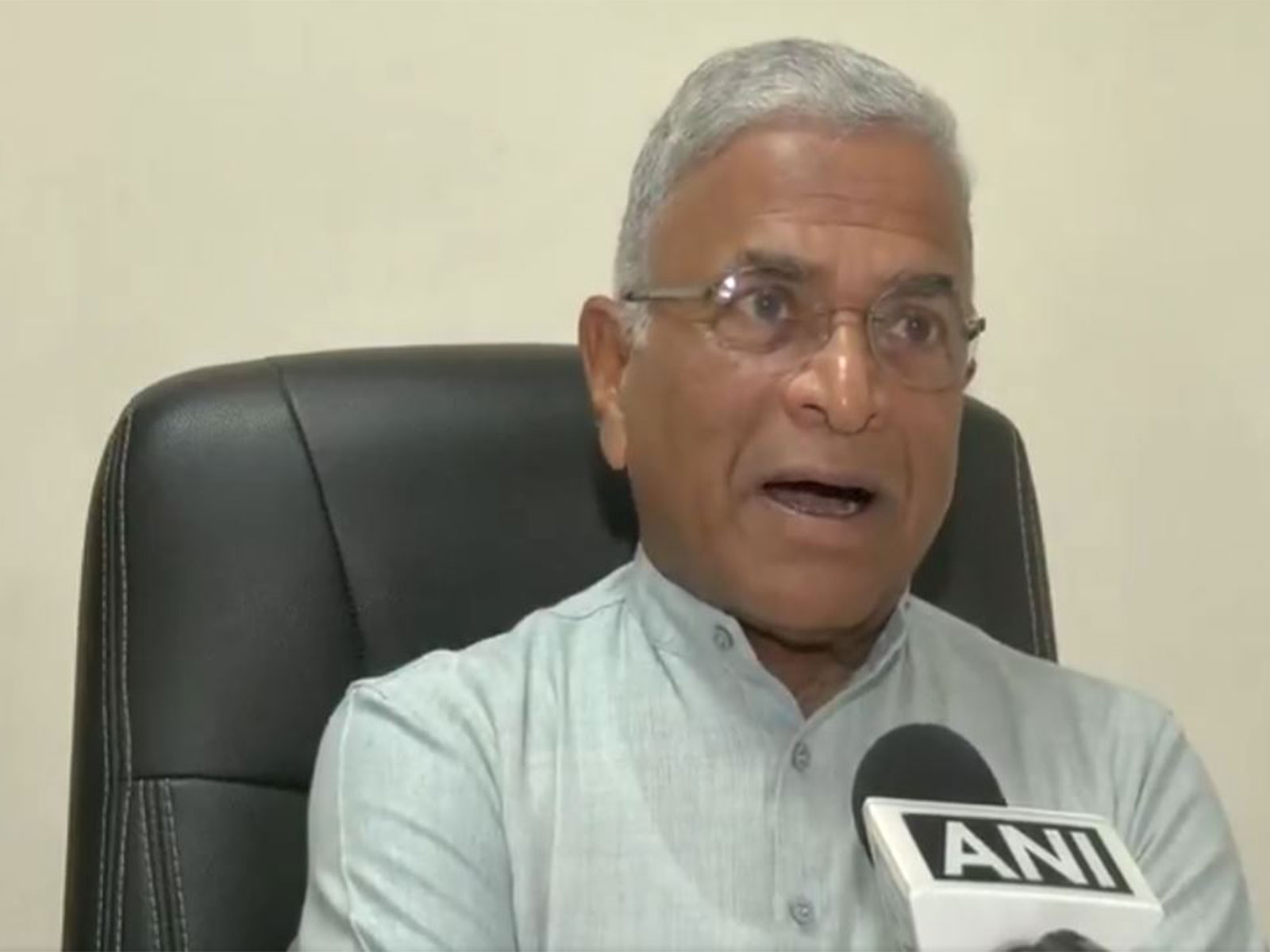
New Delhi [India], July 26 (ANI): Rajya Sabha Deputy Chairman Harivansh delivered the valedictory speech at the two-day orientation workshop ‘Prarambh’ for newly-elected members of the House on Sunday and said large-scale digitization has made the House increasingly paperless and efficient.
Harivansh stated that the two-day Orientation Programme organised for the newly elected and nominated Members of the Rajya Sabha had been meticulously designed to familiarize Members with the rules, procedures, conventions and traditions of the House, enabling them to play an effective role in the Chamber.
The Deputy Chairman congratulated the newly-elected members for their active participation and expressed confidence that the programme had helped them become acquainted with the nuances of parliamentary functioning and the various aspects of the Rajya Sabha Secretariat.
He observed that the programme had been organised into distinct sessions so that Members could gain a thorough understanding of the Rules of Procedure and the functioning of the Secretariat. Presentations by senior Members and officials, he noted, had explained parliamentary practices through factual and real-life examples, and Members had undoubtedly benefited from the experience.
He said that officials of the Secretariat possess immense institutional memory and are always ready to assist Members with courtesy and professionalism.
Harivansh underlined the importance of security cooperation in Parliament, describing Parliament as both a representative institution and a high-security zone that has historically faced security threats. He said the Security Department performs its responsibilities while balancing security requirements with the needs and amenities of Members, and called upon Members to cooperate in maintaining the security of the institution. He described the Parliament building as a magnificent structure and a modern temple of democracy carrying the essence of India’s ancient culture.
Harivansh said that senior Member Arun Singh had introduced Members to the nuances of the Budget and emphasized the need for Parliament to scrutinize the Budget meticulously. He urged Members to familiarize themselves with budgetary terminology and procedures. He also referred to the session conducted by Dr. Sasmit Patra on the significance of Starred and Unstarred Questions in ensuring government accountability, while noting that disruption of Question Hour deprives members of an important parliamentary privilege.
He further stated that experienced officials of the Secretariat had provided a step-by-step overview of the legislative process, while Dr. John Brittas had demonstrated the effective use of parliamentary devices available under the Rules through practical examples. Parliamentary diplomacy, Harivansh said, is an important dimension of parliamentary responsibility, and Members must remain aware of international developments and geopolitical issues. He highlighted India’s participation in several international parliamentary organisations, including the IPU, CPA, P20, CSPOC, BRICS and other parliamentary forums, as well as bilateral exchanges with friendly nations.
Harivansh said Ghanshyam Tiwari had introduced Members to the concept of parliamentary diplomacy, while Union Minister Bhupender Yadav and Dr. Medha Vishram Kulkarni had explained the role of Department-related Parliamentary Committees. Describing these committees as “Mini Parliaments,” he said they provide opportunities for direct interaction with departmental officials, subject experts and representatives of non-governmental organisations, besides enabling detailed examination of departmental budgets, annual reports, performance and legislation referred to committees. He emphasized that committee reports constitute an important source of authentic information and should be utilized effectively by Members.
Highlighting the impact of the technological revolution on parliamentary functioning, the Harivansh said that large-scale digitization had made the House increasingly paperless and efficient, and that all Members are provided with digital devices. He stressed that these devices must be protected from cyber-attacks and unauthorized access, describing login credentials as assets of the House whose security is the responsibility of every Member. He noted that technology experts had briefed Members on digital security in Parliament and emerging technologies in governance, and asserted that Parliament can lead the nation through the technological revolution only when Members themselves are well-versed in technology.
The Deputy Chairman emphasized that Members’ learning does not end with the Orientation Programme and described the programme as only the beginning of a continuous process of self-improvement. He encouraged Members to study past parliamentary procedures, read notable debates, watch recordings of distinguished parliamentarians such as Atal Bihari Vajpayee, Arun Jaitley and Chandrashekhar, and observe parliamentary traditions in other countries. (ANI)
Related reading