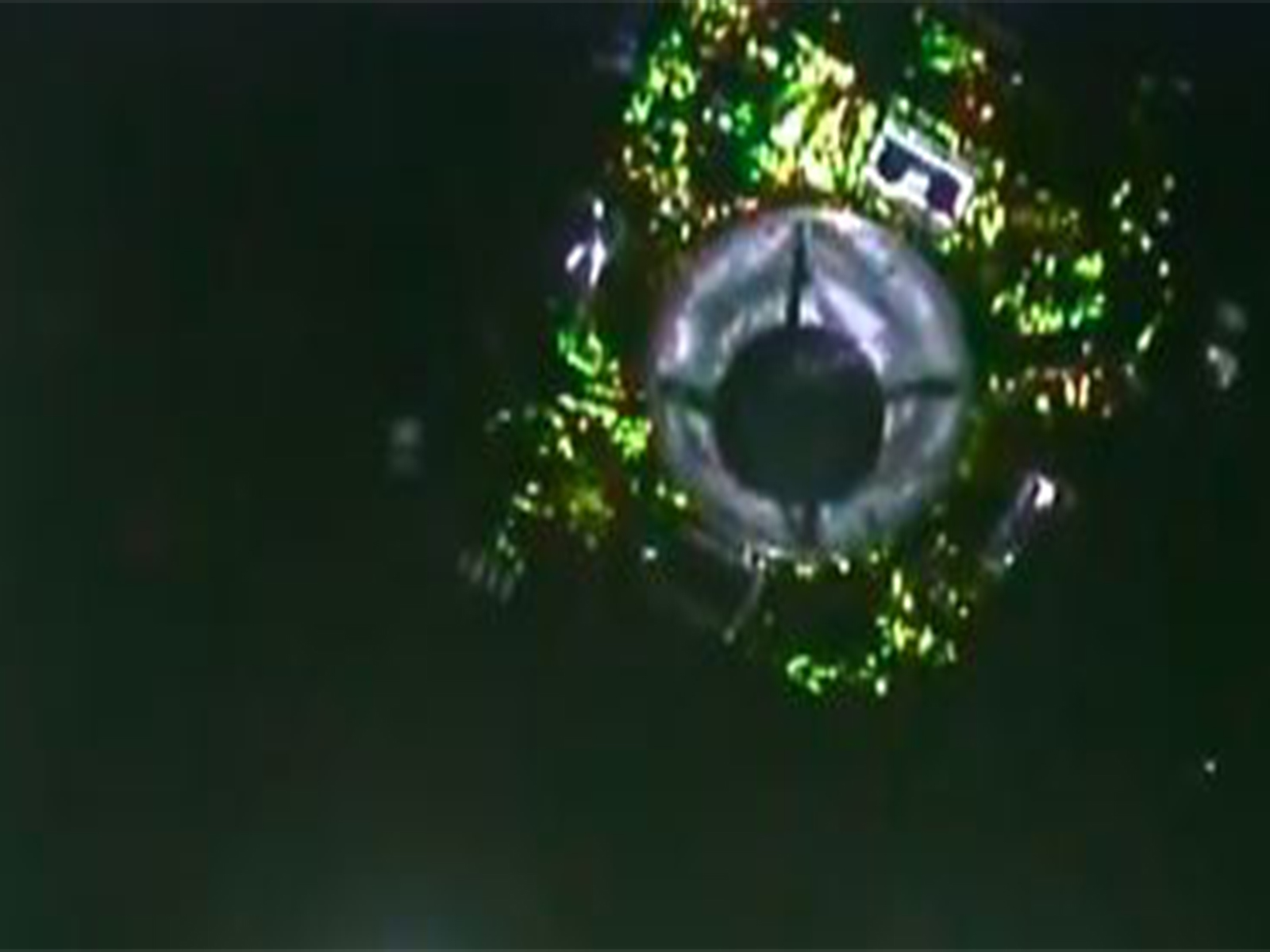
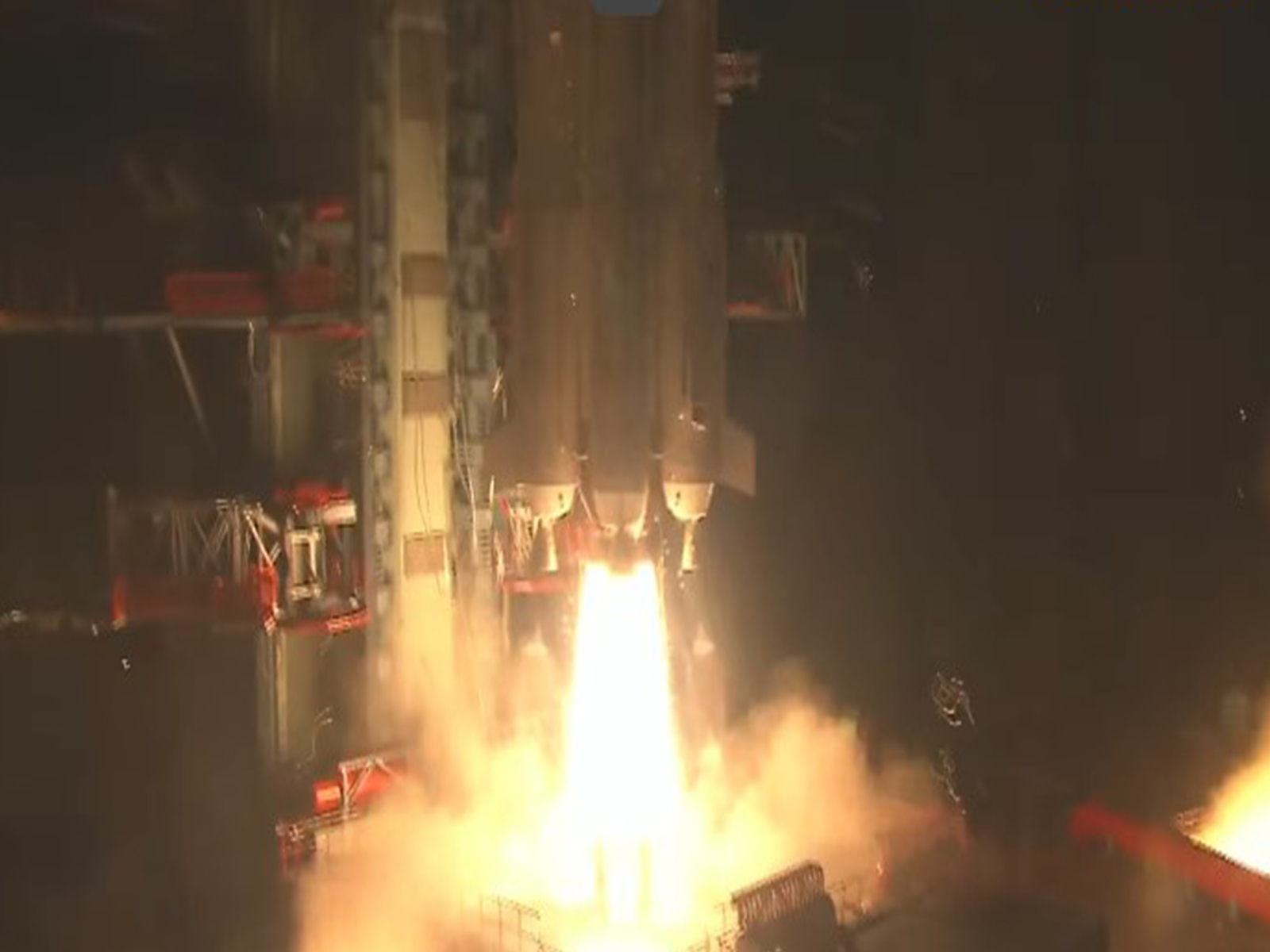
Sriharikota (Andhra Pradesh) [India], October 31 (ANI): Indian Space Research Organisation (ISRO) has placed its third indigenous atomic clock in orbit aboard the NVS-03 navigation satellite, ISRO Chairman V Narayanan said on Saturday, highlighting a key development in India’s regional navigation programme.
Speaking to ANI after the successful launch of the GSLV-F18/NVS-03 mission, Narayanan said two indigenous atomic clocks were already functioning in orbit, while the third was deployed aboard the newly launched satellite.
He said the satellite was launched as part of India’s Regional Navigation Satellite System, which aims to provide navigation services across India and up to 1,500 kilometres beyond its borders.
“India has got a navigation programme. And as per the programme, we are supposed to provide navigation services for India plus 1,500 kilometres from the Indian border, called the Regional Navigation Service. For that, seven satellites are supposed to be in orbit,” Narayanan said.
He said NVS-03 was the fourth satellite launched under the programme, adding that the constellation would need to be completed before the navigation service could be integrated with mobile systems for wider public use.
“a very important point today is that in this satellite, one of the important components is called the atomic clock, and we have placed one of the indigenous atomic clocks. Till now, two indigenous clocks are already functioning perfectly in orbit, and today we have placed the third indigenous clock also in orbit. Not for the common public immediately. Already I am telling you, for mobile integration it will take some time because we have to complete the entire constellation,” he said.
Narayanan added that with four satellites in orbit, the signals could be used for multiple purposes.
Earlier, ISRO launched its next-generation navigation satellite NVS-03 aboard the GSLV-F18 rocket from the Satish Dhawan Space Centre in Sriharikota on October 30.
Following the launch, NVS-03 successfully separated from the launch vehicle and was injected into its intended Geosynchronous Transfer Orbit (GTO).
Addressing the gathering after the launch, Narayanan said the 2,250-kg satellite was precisely injected into its intended elliptical orbit.
He said the mission was accomplished with a turnaround time of 56 days between successive GSLV missions, the shortest interval achieved so far.
Congratulating ISRO’s teams, industrial partners and academia, Narayanan said the NavIC constellation was a strategic national asset that provided India with independent access to position, navigation and timing services.
“With the success of this launch, the NavIC constellation is restored to the minimum operational configuration with four satellites,” he said, adding that NavIC satellites were also used for civilian applications. (ANI)
Related reading